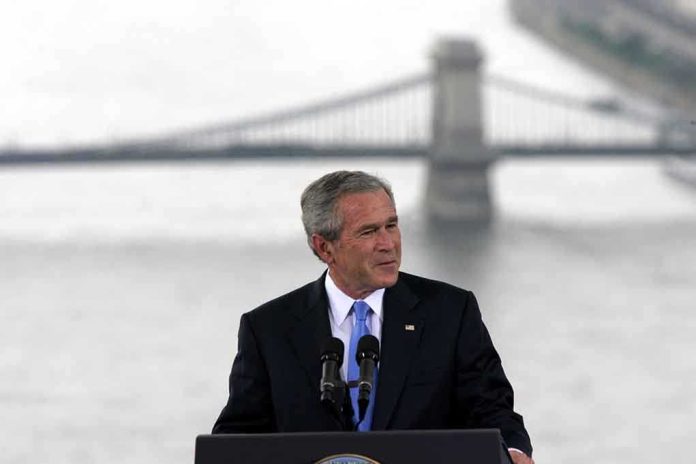
Twenty-five years after 9/11, George W. Bush used the anniversary to stress unity, honor sacrifice, and warn that America’s guard can never drop.
Story Snapshot
- Bush recalled his first words and actions on 9/11 and the days that followed.
- He framed the legacy as courage, national unity, and ongoing vigilance against terrorism.
- Former presidents planned to gather at Ground Zero; the sitting White House was set to be represented in New York.
- The memory of 9/11 still shapes how the nation debates security, liberty, and trust in government.
Bush’s Immediate Response Then, and His Message Now
George W. Bush served as president on September 11, 2001. Within hours, he called the attacks an act of terrorism and ordered the full resources of the federal government to aid victims and investigate. That night, he addressed the nation from the White House and spoke of resolve, justice, and national unity. On the 25th anniversary, he again focused on the same themes. He praised first responders, honored the fallen, and urged Americans to stay vigilant while guarding core freedoms.
Bush’s anniversary reflections echoed language he used in past landmark addresses. On earlier anniversaries, he described how the attacks seared the date into America’s memory, and he outlined a long war against terror networks that target civilians and open societies. He has often highlighted the courage of ordinary people who acted under extreme pressure, from firefighters at the towers to passengers on Flight 93. His message linked grief to civic duty and stressed unity over division in public life.
Anniversary Events and Who Planned to Attend
Plans for the 25th anniversary included a high-profile gathering at Ground Zero in New York. Reporting indicated that several former presidents, including George W. Bush, would attend the ceremony there. Coverage also noted that the White House would have a presence in New York for the event, alongside other national figures. These ceremonies aimed to center the families of the victims, recognize first responders, and remind the country of the stakes in preventing future attacks.
These observances have evolved over two decades, but their core remains steady. Names are read, moments of silence are held, and the country remembers the lives cut short. Officials and former leaders often use the day to underline lessons learned and to call for continued alertness. The rhythm of public mourning, remembrance, and recommitment reflects how the nation has worked to carry the weight of that morning in 2001 into its civic culture.
How 9/11 Shaped Policy, Security, and Public Trust
Bush’s reflections tie directly to major policy shifts that followed the attacks. He previously described sweeping steps to protect Americans and to reorganize government for homeland defense. He also used anniversary addresses to defend counterterror policies at home and abroad, linking them to the promise to stop future plots. On this 25th year, his message again connected memory to mission: honor the lost, support those who serve, and keep faith with American principles while staying prepared.
The anniversary also stirs wider debate that cuts across party lines. Many Americans agree the government must stop threats, but they want that work done within the bounds of liberty and fiscal sense. Families who lost loved ones ask for accountability and care. Voters worry about competence, waste, and whether leaders are serving the public or political careers. Bush’s call for unity lands in a time when trust is low and people on the left and right feel let down by Washington.
Memory, Meaning, and the Next Generation
Public memory of 9/11 continues to shape how the country sees risk and responsibility. Researchers have shown how presidential speeches helped build a shared national story from private grief and shock. That story stresses resilience, civic duty, and resolve. Bush’s words on this anniversary fit that pattern. He sought to pass on the lessons to those who were not yet born, to explain why the attacks changed daily life, and to argue that unity and vigilance must outlast fear.
UNITY: Former Presidents Joe Biden, Bill Clinton, George W. Bush, and Barack Obama will all attend the ceremony marking the 25th anniversary of the September 11 attacks in New York. Donald Trump refused to go after being told he couldn’t give a campaign-style speech, per reports.… pic.twitter.com/lZxYnjXq9F
— Ethical American (@AmericanEthical) September 3, 2026
For families and first responders, the day is personal. For the nation, it is a test of values. The balance between security and freedom remains hard work. Bush’s reflections do not settle those debates, but they frame them: remember who we lost, care for those who served, and measure leaders by results, not slogans. As the 25th year closes, that standard challenges every institution that claims to protect the American Dream and the people who still fight to reach it.
Sources:
youtube.com, georgewbush-whitehouse.archives.gov, abcnews.go.com, presidency.ucsb.edu, georgewbushlibrary.gov, usatoday.com, yahoo.com