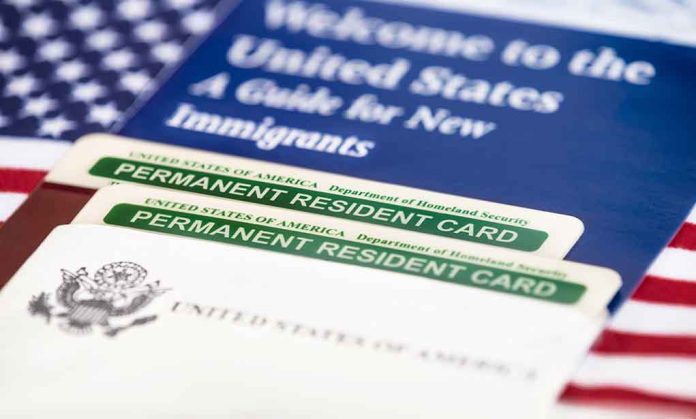
Trump’s new immigration strategy allows wealthy foreigners to pay $5 million for US citizenship while charging tourists an extra $1,000 to skip visa interview lines, sparking both praise from supporters and legal concerns from critics.
Key Takeaways
- The Trump administration is considering implementing a $1,000 premium fee for expedited non-immigrant visa interviews, on top of the existing $185 processing fee.
- A “gold card” initiative is being explored that would allow foreign investors to obtain US citizenship in exchange for a $5 million investment.
- State Department lawyers have raised legal concerns about the premium visa fee, warning it could be rejected if it exceeds actual processing costs.
- The expedited visa program could be piloted as early as December, potentially affecting millions of tourist visa applicants.
- International travel spending in the US is already projected to decline by about 7% in 2025 due to immigration policies and dollar strength.
Premium Visa Processing: America First Approach to Immigration
President Trump’s administration is advancing a strategic approach to immigration that prioritizes American interests while creating revenue streams from foreign visitors. The State Department is currently evaluating a $1,000 premium service fee that would allow non-immigrant visa applicants to expedite their interview appointments. This fee would be in addition to the standard $185 processing fee already in place for these applications. The initiative represents a clear shift toward a more business-minded approach to visa processing, treating premium access as a service for which applicants can pay if they value expedited processing.
The premium visa processing initiative could be implemented as early as December, according to internal State Department documents. In the 2023 fiscal year, the State Department issued 10.4 million non-immigrant visas, including 5.9 million tourist visas. If even a small percentage of these applicants opt for the premium service, it could generate substantial revenue while providing a market-based solution to the visa interview backlog that has plagued the system for years.
The Gold Card: Citizenship Investment Program
Perhaps the boldest component of the administration’s immigration strategy is the proposed “gold card” initiative. This program would provide a pathway to American citizenship for wealthy foreigners willing to invest $5 million in the United States. Unlike existing investment visa programs that often require complex business development plans, the gold card concept offers a straightforward transaction: substantial investment in exchange for the privileges of American citizenship. This approach recognizes the economic value of attracting high-net-worth individuals who can contribute significantly to the American economy.
“The department’s scheduling of non-immigrant visa interview appointments is dynamic and we are continually working to improve our operations worldwide,” said a State Department spokesperson.
The gold card program aligns with President Trump’s business-oriented approach to governance, treating immigration as a valuable commodity rather than merely a humanitarian concern. By setting a high bar for entry, the program ensures that new citizens will be financially stable and able to contribute to the economy without requiring public assistance. Critics may view this as prioritizing wealth in immigration decisions, but supporters see it as a practical way to ensure new citizens strengthen rather than strain American resources.
Legal Concerns and Implementation Challenges
Despite the administration’s enthusiasm for these innovative approaches to immigration, the State Department’s legal team has raised significant concerns about the premium visa fee proposal. According to internal documents, the fee could face rejection by the White House budget office or U.S. courts if it substantially exceeds the actual cost of providing expedited service. Supreme Court precedent suggests that government agencies cannot simply charge arbitrary fees as revenue-generating measures without clear congressional authorization.
“The Trump administration is considering a $1,000 fee for tourists and other non-immigrant visa applicants seeking an expedited interview appointment though government lawyers have raised legal red flags over the plan, according to a US official and an internal State Department memo,” stated US official and an internal State Department memo.
These legal challenges come amid broader changes to America’s immigration landscape. Since returning to office, President Trump has increased scrutiny on various visa categories, particularly focusing on student visas from countries like China. Some economic analysts project that international travel spending in the US could decline by approximately 7% in 2025, partly due to immigration policies and the strong dollar. However, supporters argue that temporary reductions in tourism are a reasonable price to pay for strengthened national security and a more merit-based immigration system that puts American interests first.