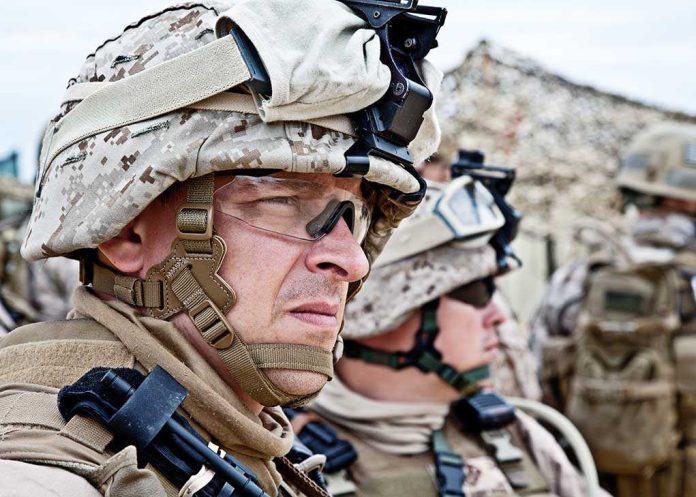
When Marines are forced to call in ICE just to keep foreign nationals from breaching our own military bases, it’s time to ask what on earth is happening to American security—and who’s asleep at the wheel.
At a Glance
- Marines and ICE are teaming up at three major US bases after a high-profile breach attempt by foreign nationals.
- Pentagon officials frame the move as a necessary step to counter escalating threats at home.
- Critics question whether this partnership signals a deeper erosion of military self-reliance and transparency.
- The program could set a precedent for future military and ICE collaborations nationwide.
Marines Now Need ICE to Guard the Gate—Why?
The United States Marine Corps—once the world’s most formidable fighting force—has launched a pilot program with Immigration and Customs Enforcement (ICE) to bolster security at Camp Pendleton, Quantico, and Marine Corps Base Hawaii. This abrupt partnership comes on the heels of a 2023 incident where two Jordanian nationals tried waltzing onto the Quantico base, triggering alarm bells all the way to the Pentagon. Now, ICE agents are stationed at these bases, screening visitors and verifying identities as of May 2025. Apparently, decades of military training and billions in defense budgets aren’t enough to stop foreign nationals from testing our fences. What’s next? The FBI manning the chow hall?
The Pentagon insists this isn’t a sign of weakness, but an “enhancement” of threat awareness—because, as every taxpayer knows, nothing says “secure” like bringing in another federal agency when something goes wrong. Ostensibly, ICE’s role is to help deter unauthorized access, especially from foreign nationals, a concern that’s only grown as border security elsewhere becomes a political football kicked back and forth between administrations. It’s a sign of the times when even our most elite military bases are forced to outsource basic gatekeeping in the name of national security.
A Band-Aid on a Bullet Wound: What’s Driving This Decision?
The Pentagon points to this new partnership as a logical extension of post-9/11 collaboration between military law enforcement and ICE. In reality, it looks like a patchwork response to years of open border lunacy and bureaucratic paralysis. With border encounters dropping sharply after a change in administration and a string of executive orders, you’d think federal agencies could finally focus on their core missions. Instead, we’re witnessing an all-hands-on-deck mentality—throwing ICE agents at Marine bases because, evidently, the military can’t keep track of who’s coming and going on its own soil.
Meanwhile, Congress is busy funneling billions into state border security grants and new “enforcement funds.” But ask yourself: How does this solve the underlying problem if our own military installations—supposedly the best-defended sites in America—require ICE agents to do the job? One economics and defense professor, Abby Hall Blanco, suggests the real issue isn’t just security, but a lack of transparency and the troubling optics of the Corps needing outside help to do what used to be a matter of pride and principle.
The Real Risk: Erosion of Military Confidence and Public Trust
This pilot program might deter a few would-be intruders in the short term, but the long-term consequences are harder to swallow. If this “Marine-ICE” partnership becomes the new normal, Americans will have to reckon with a military that’s increasingly dependent on other agencies for its own security. That’s not just a logistical concern—it’s a blow to the confidence and autonomy of our armed forces.
For military personnel and their families, it means more scrutiny and potentially more hoops to jump through just to get to work or visit loved ones. For local communities and the nation at large, it raises questions about the militarization of federal law enforcement and the blurred lines between military and civil authority. And for every taxpayer watching the endless money-printing and government overreach with mounting frustration, it’s just one more reminder that, in today’s America, even the Marines have to ask for backup—while the folks who created this mess keep throwing our dollars at the symptoms and ignoring the disease.