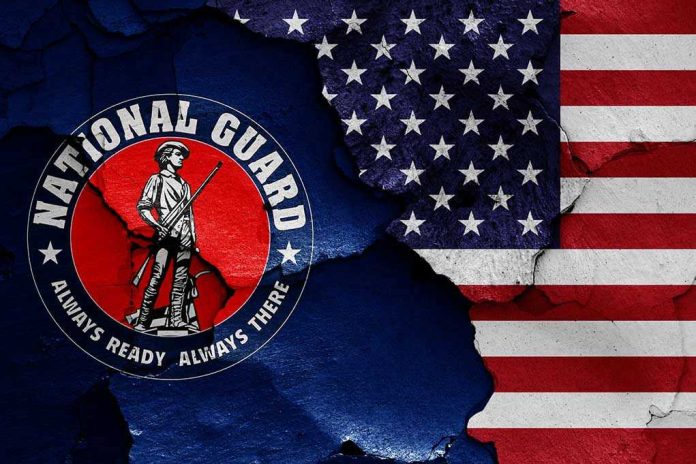
A new Pentagon proposal could deploy National Guard troops nationwide within just one hour, raising concerns about federal overreach and constitutional rights.
Story Snapshot
- The Pentagon plans a rapid deployment Quick Reaction Force (QRF) of National Guard troops.
- Up to 600 personnel could be stationed in Alabama and Arizona, ready for civil unrest.
- Deployment could occur within one hour at the President’s command.
- This move raises questions about states’ rights and military involvement in civilian affairs.
Details of the Proposed Deployment
The Pentagon is reportedly planning a new Domestic Civil Disturbance Quick Reaction Force (QRF) composed of approximately 600 National Guard personnel. These troops would be stationed across bases in Alabama and Arizona, ready to rapidly deploy across the nation to address civil unrest. This strategic placement allows for a swift response time, with the initial wave of troops ready within one hour, followed by additional deployments at two and twelve-hour intervals.
This proposal, described as “predecisional,” was prepared for the Defense Secretary by the Pentagon’s policy office. However, the Department of Defense (DoD) has remained tight-lipped about the leaked plans, reiterating that it routinely plans for various contingencies without confirming the adoption of this specific proposal.
Concerns Over Federal Overreach
While quick response capabilities might seem beneficial in maintaining order, this plan has sparked significant debate. Critics argue it could lead to federal overreach, infringing upon states’ rights and potentially violating the Posse Comitatus Act, which limits the use of federal military personnel in domestic law enforcement. The proposal’s potential to shift the balance of power between federal and state authorities is a major point of contention.
Historically, National Guard units have been activated by state governors during civil unrest. This new plan, however, introduces a centrally organized, cross-state solution, which might encroach upon states’ autonomy and decision-making capabilities regarding their National Guard units.
Implications for Civil Liberties and Public Trust
The prospect of a nationwide, rapid-deployment force raises concerns about civil liberties and public trust in military actions on domestic soil. The potential for using military force against civilians, even in scenarios deemed necessary to maintain order, could have a chilling effect on lawful assemblies and protests, potentially deterring citizens from exercising their First Amendment rights.
Moreover, the financial and operational demands of maintaining such a force could be substantial. Keeping air assets and personnel on standby could drive costs into the hundreds of millions, straining defense budgets and possibly diverting resources from other essential missions.
Pentagon drawing up quick reaction force of National Guard ready to quell civil unrest at any moment: report https://t.co/hel4vd7Fma
— Fox News (@FoxNews) August 12, 2025
As the proposal remains under consideration, its future is uncertain. With no official DoD announcement of activation, the debate continues over the balance between security needs and preserving civil liberties. The Trump administration’s inclination toward robust domestic defense postures reflects a larger conversation about the role of military force in civilian governance and its implications for the future.
Sources:
Trump planning new military unit to rapidly crush unrest