Democratic leaders are fuming as President Trump’s federal crime crackdown sweeps Washington, DC, raising serious questions about where their priorities truly lie—and igniting a constitutional showdown over states’ rights and public safety.
Story Snapshot
- President Trump deploys National Guard and federal agents to DC, promising to expand the crackdown to other Democrat-led cities.
- Democratic governors condemn the intervention, claiming it undermines local authority and is politically motivated.
- Vice President JD Vance questions why Democrats oppose federal action more than the rising tide of crime itself.
- Over 600 arrests reported in DC since federal intervention began, fueling intense national debate over law, order, and the Constitution.
Trump’s Federal Crime Crackdown Sparks Constitutional Clash
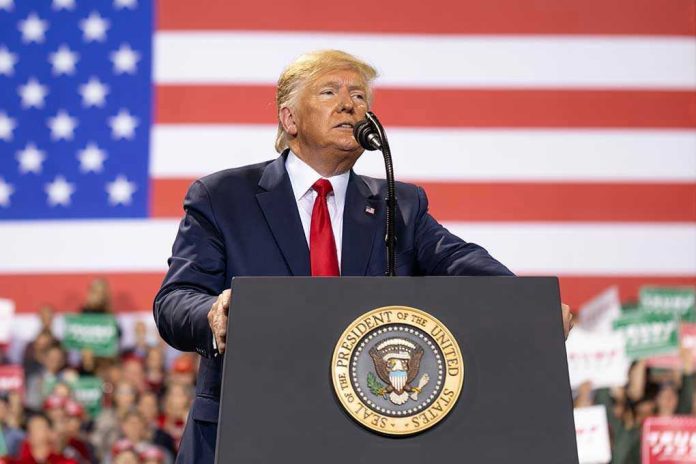
President Donald Trump’s decision to declare a crime emergency in Washington, DC on August 11, 2025, marked a dramatic escalation in federal involvement in local law enforcement. By authorizing the deployment of National Guard troops and federal agents, Trump responded to skyrocketing violent crime rates and public pressure to restore order in the nation’s capital. The administration signaled this aggressive approach may soon target other major cities led by Democrats, setting the stage for a high-stakes battle over the limits of federal power and the responsibilities of local governments.
Democratic governors, including Gavin Newsom of California, JB Pritzker of Illinois, and Wes Moore of Maryland, have forcefully condemned Trump’s intervention. They argue that federal takeovers are politically motivated stunts aimed at undermining local governance and shaping the narrative ahead of the 2028 presidential race. These leaders insist that local officials are better positioned to address crime through reforms and community engagement. DC Mayor Muriel Bowser echoed these sentiments, stating, “Crime has gone down in our city… those are the facts.” This stance, however, is sharply disputed by federal officials, who cite DC’s 2024 homicide rate of 27.54 per 100,000—the highest in years—and the nation’s worst vehicle theft rate as justification for action.
JD Vance’s Challenge: Where Do Democrats Stand on Crime?
Vice President JD Vance has emerged as a central figure in this national debate, publicly questioning why Democratic leaders appear more outraged by federal intervention than by the crimes devastating their communities. During his August 21 visit to DC, Vance faced vocal protests but doubled down on defending the crackdown, declaring that restoring law and order is essential for all Americans. Vance’s pointed remarks resonate with conservatives frustrated by years of progressive policies that, in their view, have prioritized political correctness and government overreach above the safety of law-abiding citizens. The administration’s messaging frames the crackdown as a necessary course correction—one that exposes the left’s misplaced priorities and reluctance to confront criminality head-on.
The political stakes are significant. Trump and Vance have openly linked the results of the crackdown to the 2028 presidential campaign, predicting that Democratic resistance will “sully the records” of their likely rivals. Over 600 arrests have already been reported since the federal intervention began, providing the administration with tangible evidence of action. Critics, however, warn that such federal deployments risk eroding local autonomy, inflaming public protests, and setting a dangerous precedent for future executive overreach. Law enforcement experts caution that while federal resources can supplement crime-fighting efforts, poorly coordinated interventions may undermine trust between police and the communities they serve.
Implications for American Liberty and the Road Ahead
The core dispute centers on constitutional principles: the balance of power between the federal government and the states, and the right of communities to self-governance. For conservatives, Trump’s crackdown is seen as a restoration of law, order, and accountability after years of progressive mismanagement and rising urban crime. Yet, the resistance from Democratic officials and activists has fueled concerns about the erosion of constitutional rights, the potential for politically motivated government overreach, and the undermining of traditional American values. As the federal presence in DC continues and possible expansion looms, the nation faces a defining test of its commitment to limited government, individual liberty, and the rule of law.
Vance questions why Democrats are angrier about Trump’s plan to tackle crime than crime itself https://t.co/3mSCjhC0cE
— Observing Time 🏴☠️ (@TimeObserving) August 26, 2025
Public opinion remains sharply divided, with supporters applauding decisive federal action and opponents warning of civil liberties violations and the politicization of public safety. The outcome of this confrontation will not only shape crime policy in America’s cities but could also influence the national debate on the Constitution, the role of government, and the direction of the country heading into the next presidential election. Both sides appear determined, leaving the future of crime control—and the principles that underpin American democracy—hanging in the balance.
Sources:
Trump and JD Vance Attack 2028 Rivals in National Guard Push
Declaring a Crime Emergency in the District of Columbia
Protesters heckle Vance, Hegseth, Miller at photo op in DC