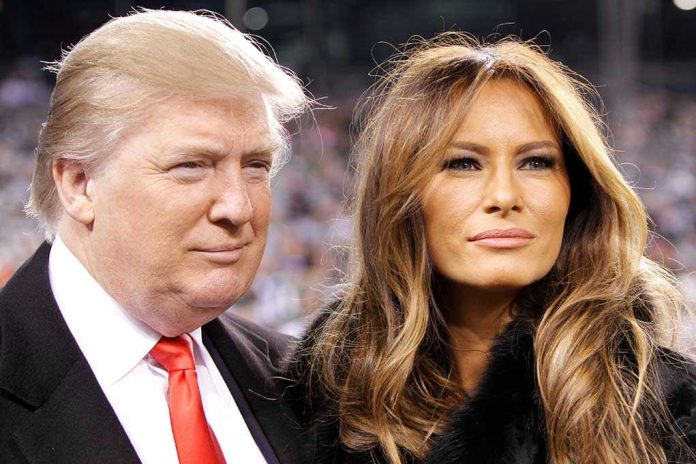
What if the world’s most powerful escalator suddenly stopped moving—right beneath the feet of the U.S. president and the First Lady, with the world watching and suspicion in the air?
Story Snapshot
- White House presses for a United Nations investigation into the breakdown of a key escalator as Trump and Melania descend.
- Speculation swirls: was this technical failure or deliberate sabotage inside UN headquarters?
- The incident prompts scrutiny of UN security and internal protocols at the highest levels.
- Political stakes rise as American officials demand answers and accountability from international partners.
Leavitt’s Outcry: A Demand Echoes Through the UN Halls
White House press secretary Karoline Leavitt’s voice reverberated through international headlines after she demanded that United Nations officials launch a formal probe into the possibility that a staff member “deliberately” stopped the escalator just as President Trump and First Lady Melania Trump stepped onto it. The incident, which occurred in the full view of global media, instantly turned a routine descent into a spectacle loaded with political overtones and international intrigue.
Leavitt’s demand did not come out of thin air. Escalators in such high-security environments are meticulously maintained, and their operation is typically overseen by multiple layers of technical staff and security personnel. The timing of the escalator’s halt—right as the president and first lady boarded—has fueled suspicions among Trump’s allies and conservative commentators, who are demanding transparency and a full accounting of the facts.
UN Security Protocols and the Chain of Custody
United Nations headquarters operates with strict security protocols, particularly when heads of state are present. The UN’s internal maintenance staff, along with contracted security teams, manage not just the physical security of dignitaries but also the operational integrity of everything from elevators to conference room microphones. Any deviation from standard procedure, especially during a high-profile visit, triggers automatic reviews and incident reports. Yet, the question remains: was this an innocent technical glitch or an act of calculated disruption?
Mechanical failures can occur, but the odds of such a failure coinciding with the precise moment the president steps onto the apparatus are exceedingly slim. Security experts have noted that any deliberate tampering would require both insider access and detailed knowledge of presidential movement schedules—an unsettling prospect for those tasked with safeguarding international leaders.
Political Fallout and the Weaponization of Technical Glitches
Leavitt’s call for a UN investigation is more than a routine press briefing soundbite; it signals a broader trend of weaponizing technical incidents for political leverage. For the Trump camp, the escalator stoppage quickly became a symbol of possible institutional hostility or negligence within the UN bureaucracy. Conservative commentators argue that if deliberate sabotage occurred, it would constitute a breach of international protocol and a direct affront to American sovereignty. The stakes are high, not merely for the reputations of those involved but for the trust underpinning international cooperation.
Calls for Transparency: What Comes Next?
As the demand for answers grows louder, the UN faces mounting pressure to conduct a transparent, thorough investigation. The organization must balance the need for internal accountability with the imperative to reassure member states that such incidents will not compromise the safety or dignity of their leaders. International observers will closely watch how the UN manages both the technical investigation and the public relations fallout. The question is no longer just about a broken escalator—it’s about the integrity of global institutions in a hyper-scrutinized age.
Sources:
Embarrassing U.N. escalator debacle sets off another Trump rage cycle