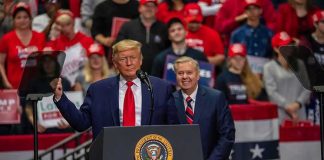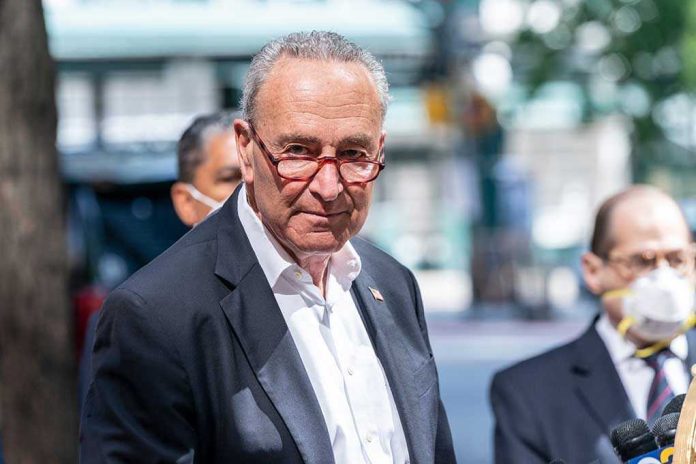
Federal workers brace for a third week without paychecks as President Trump holds firm against Democrat demands and blasts Chuck Schumer for caving to radical progressives, fueling the longest shutdown in years.
Story Highlights
- President Trump blames Senate Minority Leader Schumer for prolonging the government shutdown amid Democrat infighting.
- Progressive pressure within the Democratic Party has led to stalled negotiations and threats to Schumer’s leadership.
- Federal services remain disrupted as Democrats push policy riders, while Trump insists on a clean funding bill.
- Political fallout intensifies, with Schumer facing potential primary challenges and growing public frustration over the shutdown’s impact.
Schumer’s Standstill: Progressive Pressure and Breakdown in Negotiations
As the government shutdown stretches into its third week, President Trump has taken direct aim at Senate Minority Leader Chuck Schumer. Trump accuses Schumer of prioritizing the demands of the far-left over the needs of working Americans, citing Schumer’s refusal to support a straightforward funding bill free of progressive policy riders. The standoff has left federal workers in limbo and exposed deep rifts within the Democratic Party as Schumer faces mounting criticism from both moderates and the progressive wing.
President Trump Calls Out Chuck Schumer as Schumer Shutdown Enters its Third Week https://t.co/JlmGqT13dD
— J. Metz (@Metz1245John) October 22, 2025
Schumer’s leadership has become increasingly precarious as progressive insurgents, including Rep. Alexandria Ocasio-Cortez, threaten primary challenges and call for sweeping changes to social policy. The collapse of late September negotiations reflects the growing influence of the left, which demanded permanent Obamacare subsidies and the reversal of Trump-era Medicaid reforms. Trump’s insistence on fiscal discipline and opposition to what he calls “reckless leftist spending” have set the stage for a partisan showdown with high stakes for both parties.
Impact on Federal Services and American Families
The shutdown’s toll is felt nationwide, with essential federal services stalled and thousands of employees furloughed or working without pay. Military families, veterans, air traffic controllers, and those relying on disaster relief or food assistance face uncertainty as political leaders remain at an impasse. Conservative critics argue that this disruption is a direct result of Democrat obstruction and an unwillingness to negotiate in good faith, citing the clean continuing resolution offered by Trump as a fair solution undermined by partisan gamesmanship.
Businesses that depend on government contracts and vulnerable communities reliant on federal aid are also caught in the crossfire. The longer the shutdown drags on, the greater the economic damage, undermining public trust in government institutions and fueling frustration among those who see the crisis as avoidable. The shutdown’s duration already rivals the 2018-2019 standoff, with no clear resolution in sight as Senate Democrats remain divided and Schumer’s hold on leadership weakens.
Democrat Divisions and Trump’s Messaging Strategy
Within the Democratic Party, Schumer faces opposition from all sides—progressives demanding more aggressive policy concessions and moderates worried about the optics of a prolonged shutdown. House Minority Leader Hakeem Jeffries has withheld support for Schumer’s leadership, signaling deeper fractures within party ranks. President Trump, meanwhile, uses public statements and social media to frame the shutdown as “the Schumer Shutdown,” casting himself as the defender of fiscal responsibility and constitutional governance.
Insiders note that Senate filibuster rules, which require 60 votes to advance most legislation, have contributed to the legislative gridlock. As some Senate Democrats begin to signal openness to compromise, Trump’s strategy appears to be putting maximum pressure on Schumer to break with the far-left and end the stalemate. The political fallout for Democrats could be severe, especially as primary challenges loom and voter frustration grows over the unresolved crisis.
Expert Analysis: Historical Context and Future Outlook
Political analysts draw comparisons to previous shutdowns, but emphasize that the current standoff is especially severe due to heightened polarization and the intensity of intra-party conflict among Democrats. Experts warn that the longer the shutdown persists, the more lasting damage it inflicts on public trust and government effectiveness. While some predict that mounting public pressure may eventually force a resolution, uncertainty remains over whether Schumer can bridge the divide within his own party or whether Trump’s hardline stance will ultimately prevail.
For conservatives, the episode underscores the importance of strong leadership and unwavering commitment to constitutional principles in the face of progressive overreach. As the shutdown endures, many on the right view Trump’s refusal to capitulate to leftist demands as a necessary stand against government expansion, reckless spending, and attacks on traditional American values. The coming days will test whether Democrats can resolve their internal divisions or if the shutdown will become a defining moment in the battle over the nation’s future direction.
Sources:
White House government shutdown clock
CBS News: Government shutdown history
Wikipedia: Government shutdowns in the United States