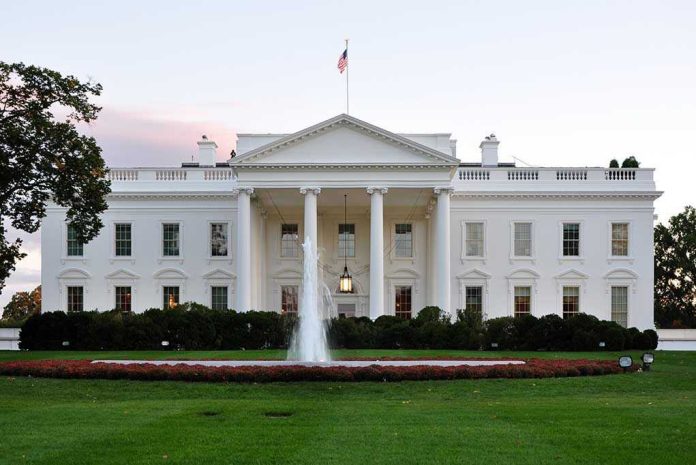
A controversial White House ballroom expansion threatens historic preservation as Trump dismisses architect over design disputes.
Story Highlights
- President Trump replaces architect James McCrery II amid scale disagreements.
- New architect Shalom Baranes tasked with larger, faster ballroom project.
- Concerns arise over historic preservation and private funding transparency.
- Potential legislative action could impose stricter oversight on White House projects.
Architectural Leadership Change Sparks Debate
President Donald Trump recently made headlines by removing architect James McCrery II from the White House ballroom project. This decision comes after McCrery reportedly expressed concerns about the scale and architectural appropriateness of the proposed ballroom.
The new lead, Shalom Baranes, a Washington-based architect with significant federal project experience, is expected to implement a larger, faster-moving version of the project. This replacement highlights ongoing tensions between preserving historic architecture and accommodating modern needs.
Financially, the project is largely dependent on private donations, estimated to cost between $200 million and $300 million. This approach has sparked discussions about transparency and the potential influence of donors on public infrastructure projects. Critics argue that using private funds for such significant alterations to the White House might sidestep necessary public scrutiny and oversight, raising concerns about accountability and historic preservation.
Historic and Cultural Considerations
The proposed 90,000-square-foot ballroom is designed to host nearly 1,000 guests, making it one of the largest expansions of the White House in recent history. The demolition of the East Wing to accommodate this new structure has raised alarms among preservationists, who argue that such a project could overshadow the historic Executive Residence. These developments continue to fuel debates about the balance between modernizing presidential facilities and maintaining their historical and cultural significance.
Further complicating matters is the potential introduction of legislation akin to a “No Palaces Act” which would require National Capital Planning Commission review and congressional approval for large, privately funded projects on White House grounds. Such measures aim to reinforce public oversight and prevent excessive executive influence over national heritage sites.
Political and Legislative Reactions
In response to the ballroom controversy, congressional critics have voiced the need for more stringent regulations on privately funded White House projects. This includes potential statutory changes to ensure future projects undergo thorough review processes. The administration argues that current regulations suffice, but opponents claim that loopholes have been exploited, allowing the project to proceed without adequate checks.
As the situation unfolds, the project’s impact on the relationship between private funding and public accountability remains a focal point. With significant economic and symbolic implications, the White House ballroom expansion is poised to be a highly scrutinized example of executive power and its limits in the realm of historic preservation and governance.
Sources:
Trump Fires Ballroom Architect Over Size Dispute – The Daily Beast
Trump Ousts Architect Amid Growing Scrutiny – SAN
Trump Replaces Architect After Clashes – WUNC
Architect Change for White House Ballroom – KUNC