Democratic leadership demanded body cameras for ICE agents one week, then scrambled to limit their use the next, exposing a political miscalculation that reveals more about strategy than surveillance concerns.
Story Snapshot
- Senate Minority Leader Chuck Schumer and House Minority Leader Hakeem Jeffries initially demanded body cameras for ICE agents as a funding condition, only to reverse course days later when privacy advocates raised surveillance concerns.
- The flip-flop occurred after video footage from a Minneapolis shooting incident exonerated an ICE agent, contradicting activist narratives about the encounter.
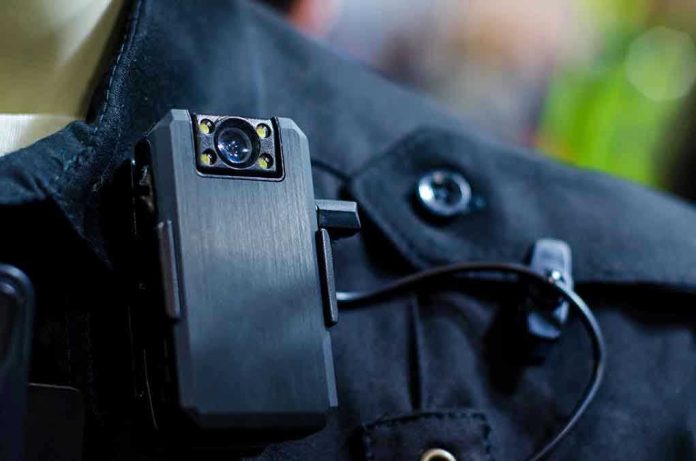
- House Republicans passed a $20 million funding bill for ICE body cameras with bipartisan support, even as Democratic leadership proposed legislation limiting footage use.
- President Trump and DHS Secretary Kristi Noem support the cameras, arguing they protect law enforcement officers from false accusations.
When the Camera Tells the Wrong Story
The Democratic reversal on ICE body cameras traces directly to what the footage actually showed in Minneapolis. On January 7, ICE agent Jonathan Ross shot Renee Nicole Good, a legal observer, during an enforcement operation. When video emerged, it revealed Good striking the agent after obstructing the operation, not the accidental tragedy activists initially claimed. That footage changed everything. Within weeks, Democratic leadership went from demanding cameras as accountability measures to proposing restrictions on how the footage could be used, citing concerns about facial recognition technology and mass surveillance of protesters.
The Political Calculus Behind the Camera Debate
This represents a textbook case of unintended consequences in policymaking. Schumer and Jeffries sent their letter to Republican leadership in early February demanding body cameras among ten “guardrails” for Department of Homeland Security funding ahead of a February 13 expiration deadline. The request seemed reasonable on its surface, mirroring similar accountability measures for local police departments. DHS Secretary Kristi Noem announced on February 3 that all federal agents in Minneapolis would wear body cameras, with plans for nationwide expansion pending funding. The House passed a homeland security bill allocating $20 million for the cameras with bipartisan support.
Then reality set in. Left-wing privacy advocates raised alarms about the technology enabling mass surveillance through facial recognition capabilities, particularly targeting protesters and immigrants. Democrats quickly shifted from demanding cameras to proposing legislation limiting their use. The timing reveals the core issue. Heritage Foundation’s Lora Ries pointed out what should have been obvious from the start: body cameras protect agents from false misconduct claims, just as the Minneapolis footage demonstrated. When cameras debunk preferred narratives rather than confirm them, suddenly surveillance becomes the primary concern.
The Surveillance Smokescreen
The privacy argument deserves scrutiny because it arrived conveniently late to the debate. Body camera technology for law enforcement has existed for years, with well-documented benefits and limitations. A 2020 review found no firm evidence that cameras alter officer behavior, though they show potential effectiveness under specific conditions. The Department of Homeland Security denies using facial recognition on body camera footage, yet advocates maintain fears about downloaded footage being exploited. These concerns existed before Democratic leadership made their initial demand, making the sudden reversal appear tactical rather than principled.
President Trump supports the cameras precisely because they protect officers, noting they shield law enforcement from lies and false accusations. This represents common sense application of available technology. When someone claims police brutality or excessive force, video evidence either confirms or refutes the allegation. The Minneapolis case proved footage can exonerate officers facing unjust accusations. That protection works both ways, holding officers accountable for genuine misconduct while defending them against fabricated claims. Democrats seemingly forgot that cameras record what actually happens, not what activists wish had happened.
Follow the Money and the Motives
The financial dimension adds another layer to this story. Axon Enterprise, the primary body camera and weapons manufacturer, lobbied extensively on the DHS bill and donated to Democratic lawmakers including Senator Ruben Gallego of Arizona. The company stands to benefit substantially from the $20 million allocation, adding to a $5 million contract ICE signed with Axon in March 2025. Jesse Franzblau from the National Immigrant Justice Center criticized the funding as a contractor giveaway rather than genuine reform, a fair point given Axon’s market position and political influence.
Yet this criticism rings hollow coming from the same political coalition that demanded the cameras in the first place. If Democrats genuinely worried about enriching defense contractors or enabling surveillance overreach, those concerns should have surfaced before making body cameras a funding prerequisite. The reversal exposes the reality that policy positions often depend less on principles than on perceived political advantage. When cameras seemed likely to document ICE misconduct, Democrats embraced them. When footage instead validated enforcement actions, privacy suddenly became paramount.
What This Reveals About Immigration Enforcement
This episode illuminates broader tensions in immigration policy during the Trump administration’s enforcement surge. The Minneapolis incidents, including the January 24 Border Patrol shooting of Alex Pretti, sparked protests and clashes with federal agents amid nationwide unrest over ICE tactics. Democrats hold minority leverage in funding negotiations but conceded on most demands, with the GOP offering the $20 million camera allocation as a compromise. Seven Democrats broke ranks to support the bill, citing the body camera provision among their reasons.
The political whiplash demonstrates what happens when ideology collides with evidence. Body cameras represent straightforward accountability technology. They document encounters, protect both officers and civilians, and provide objective records when disputes arise. The technology works regardless of political preferences about immigration enforcement. Democrats discovered too late that objective documentation might not serve their preferred narratives about ICE operations. Rather than accepting that reality, they pivoted to limiting how exonerating footage could be used, revealing that the initial camera demand was never really about transparency or accountability in the first place.
Sources:
Democrats Flip-Flop On ICE Agents And Body Cameras
Democrats ICE Reform Body Cameras
Senate Dems Demand Immigration Agents Unmask Wear Body Cameras and Carry IDs Shutdown Looms
DHS Secretary Noem Stands Body Camera Requirement Federal Agents Following Trump Comments
House GOP Offer to Dems Explicit Funding for ICE Body Cameras Following Minneapolis Shooting