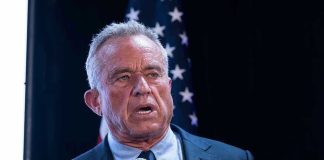
President Trump bypasses the failed UN system with a bold new Board of Peace, securing billions in pledges for Gaza reconstruction while demanding Hamas disarmament—finally delivering real peace through strength.
Story Highlights
- Trump convenes 45 nations in Washington on February 19, 2026, launching the Board of Peace to rebuild Gaza postwar, excluding UN powers and Palestinian politicians.
- Gulf nations pledge at least $5 billion, with UAE and Kuwait each committing $1.2 billion, proving America’s leadership attracts real allies.
- Board prioritizes technocratic governance and Hamas demilitarization as prerequisites for any Palestinian statehood pathway.
- Israel joins, ensuring security focus amid fragile ceasefire; old UN approaches rightly sidelined as ineffective.
- U.S. Ambassador Mike Waltz affirms this innovative structure ditches the “old ways” that never worked.
Trump Launches Board of Peace in Washington
President Donald Trump gathered representatives from 45 nations for the inaugural Board of Peace meeting on February 19, 2026, in Washington, D.C. At least 27 countries serve as official members. The board coordinates Gaza reconstruction after Israel’s military operations created urgent needs. This framework departs from UN-centered diplomacy by excluding permanent UN Security Council members except the U.S. and Palestinian political representation. Trump positions America as central mediator, advancing his peace vision through decisive action.
Financial Pledges Signal Global Buy-In
Nations pledged at least $5 billion for Gaza rebuilding at the meeting. The United Arab Emirates and Kuwait each committed $1.2 billion. Gulf Arab and Central Asian countries lead contributions, drawn by regional stability prospects and reconstruction contracts. This outpouring reflects Trump’s ability to rally U.S.-aligned partners, bypassing globalist institutions that wasted decades on fruitless talks. Financial commitments provide capital, though disbursement depends on progress.
Structure Prioritizes Security and Technocracy
The board favors technocratic governance over political representation. Palestinian technocrats form a separate committee for daily administration, but Israel blocks their Gaza entry. Hamas faces exclusion and demilitarization demands, linking any statehood path to disarmament. Israel maintains security control amid near-daily strikes on threats. U.S. Ambassador Mike Waltz defended the setup, stating the “old ways” failed. This asymmetrical power dynamic protects Israeli interests and U.S. objectives.
A fragile ceasefire holds, with Israel partially opening the Rafah crossing. UN agencies evacuated 108 patients and returned 269 people, but missions face blocks from security risks. Experts like Dennis Ross and David Makovsky stress Hamas disarmament as pivotal. Without it, Gaza risks partition, tyranny, or renewed war.
Trump Hosts Inaugural 'Board of Peace' Meeting, Announces $10 Billion U.S. Contribution https://t.co/XTHK59iOy6 pic.twitter.com/te32neoyef
— FutureTrump2️⃣⏺2️⃣4⃣🍊 (@RealTrump2020_) February 19, 2026
Challenges Ahead for Lasting Peace
Implementation hurdles persist. Technocrats lack Gaza access, humanitarian missions stall, and truce violations continue. Long-term, technocratic rule raises legitimacy questions without political input. Regional shifts empower Gulf nations, enhancing U.S. influence. Success hinges on Hamas compliance, uncertain given their resistance. Trump’s model sets a precedent for bypassing UN bureaucracy, prioritizing results over endless negotiation.
Short-term gains include funding and Rafah access, aiding Gaza civilians. Israel secures cost-sharing and assurances. Palestinians gain potential infrastructure rebuilds, conditioned on demilitarization. Broader dynamics favor self-determination tied to peace, rejecting terror rewards.