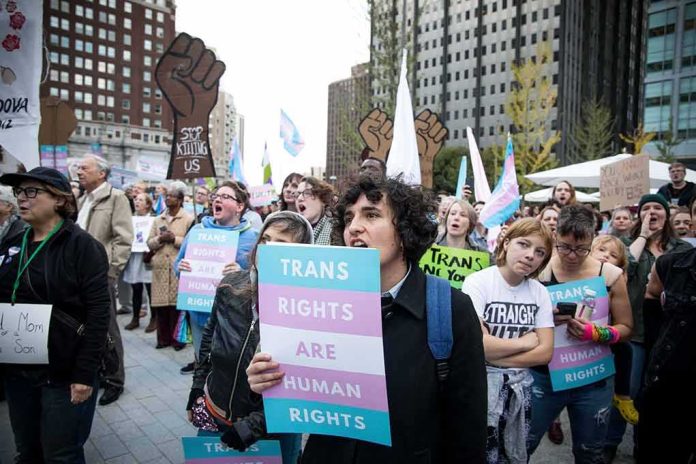
America’s most prominent gay Republican group just dropped transgender advocacy and redrew its battle lines inside the party.
Story Snapshot
- Log Cabin Republicans’ board voted to focus on lesbian, gay, and bisexual issues only.
- Leaders framed the change as aligning with conservative values and member input.
- Polling shows Republican support for same-sex marriage has fallen to near four-decade lows.
- Critics call the move an abandonment of transgender Americans.
A clear and public mission shift
Log Cabin Republicans announced its board voted to refine the group’s national focus to sexual orientation issues, describing itself as an “LGB advocacy organization.” Leaders tied the change to extended talks with members and a push to center conservative values in policy fights. The group said the decision is not anti-trans and framed it as protecting children and common sense, a theme it has repeated in statements about youth medicine, sports, and schools. The announcement marks a formal break with its prior LGBT umbrella position.
The move lands at a tense time for center-right politics on gay rights. Surveys this year show a sharp drop in Republican support for legal same-sex marriage compared with 2021–2022 highs. One widely-cited set of figures places Republican support at about the high 30s to low 40s, down from a slim majority a few years ago. That slide matters. Advocacy groups read polls the way campaigns do. When the home team’s numbers sink, coalitions crack, agendas narrow, and donors ask harder questions.
Why the coalition split now
Leaders pointed to growing conflict over transgender policy in youth medicine, school policy, and sports. They argue those fights crowd out consensus work on speech, public safety, and equal treatment for gay and lesbian adults. That theory fits a classic movement pattern: when a party base hardens on one set of issues, allied groups retrench to salvage wins where voters still listen. Whether one cheers or boos, the timing follows the trend lines inside the Republican electorate.
Critics on the left and inside queer media called the change a betrayal. They say the group benefited from a broad rights banner and now leaves transgender people behind. One commentary described Log Cabin Republicans as “pulling the ladder” up after crossing the wall. That is a potent line, but it skips the group’s claim that dignity for all should not erase fairness for women or safety for kids, a frame Log Cabin Republicans has used before when staking out guardrails. Adults can debate the policy lines; they should not pretend there are none.
What this signals inside the GOP
The practical outcome is simple. The group will spend time and money on issues tied to sexual orientation and on broad conservative planks like free speech, religious freedom, and strong families. Expect less lobbying on gender identity policy and more energy on protecting marriage recognition, parental rights, and viewpoint neutrality in public institutions. That last point is key. Once Republican support for same-sex marriage dips to near four-decade lows, even basic recognition work becomes a defensive fight again.
Log Cabin Republicans, a leading group for gay conservatives, abandons transgender advocacyhttps://t.co/NSxRryjg0W
— HomoGenius 🏳️🌈🏳️🌈🏳️🌈 (@HomoGenius3) August 23, 2026
Some conservatives will cheer the focus. They see transgender policy battles as overreach that hurts girls’ sports and pressures schools to hide facts from parents. Others on the right will still oppose any gay-rights agenda, and the polls show that group grew louder over the past two years. The strategic bet here is that a leaner mission can rebuild trust with skeptical Republicans while holding ground for gay and lesbian Americans who want stable rules for work, faith, and family life.
How to judge the pivot by common-sense standards
Three tests will tell if this works. First, clarity: can Log Cabin Republicans state a small set of simple goals and hit them? Voters respect clear asks. Second, courage: will the group defend equal treatment for gay couples even when local activists or lawmakers push back? Principles mean action when the room is hostile. Third, fairness: can it argue for limits on youth and sports policy without smearing adults who disagree? That balance reflects conservative values of order, parental duty, and equal rules under law.
One caution remains. Coalitions win big fights. If the party’s internal divide on marriage deepens, an LGB-only posture may not stop further erosion. Marriage laws are settled by courts and statutes, but they live or die by public support. When that support slips, opponents get bolder, and friendly lawmakers get quiet. The next year will show whether this pivot slows the slide or signals a longer retreat from the big tent that once looked possible inside the Republican Party.
Sources:
cnn.com, yahoo.com, nytimes.com, en.wikipedia.org, logcabin.org