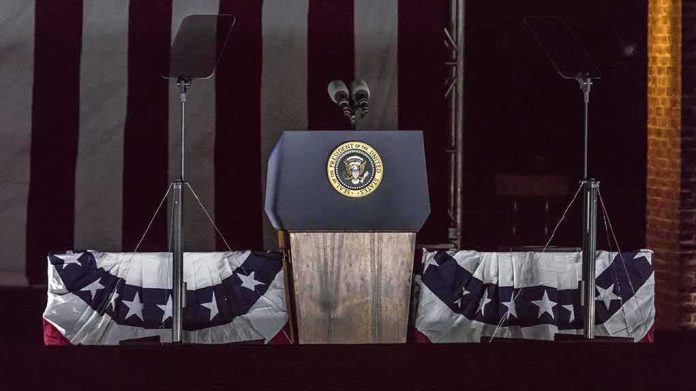
President Trump confirmed the United States agreed to continue talks with Iran, while insisting Tehran will never get a nuclear weapon and any deal must favor American interests.
Story Highlights
- Trump said Iran asked to keep talking; the U.S. agreed to continue negotiations.
- Trump has repeated that no deal will allow Iran to obtain a nuclear weapon.
- A June memorandum of understanding opened a path for de-escalation and trade routes.
- Critics warn early sanctions relief could reward Tehran before hard nuclear steps.
Trump Signals Conditional Openness To Talks With Iran
President Trump said Iran requested continued talks and that the United States agreed, signaling a path for diplomacy while fighting and tensions persist. His message underscored that negotiations move forward only on terms that protect U.S. security and keep maximum pressure in place. Trump’s stance has been steady on one core line: Iran will never obtain a nuclear weapon under his watch. Reuters captured both the outreach and the red line in recent statements and interviews.
Trump’s approach matches a familiar pattern: apply pressure, then offer an off-ramp if the other side moves. Supporters view this as strength with a door open to peace. Skeptics call it mixed messaging. The White House points to leverage gained at sea and in sanctions policy as proof the strategy works. The goal remains simple and firm: stop Iran’s path to a bomb, protect American lives, and restore safe global shipping without endless war or blank checks to hostile regimes.
What The Memorandum Of Understanding Actually Did
In June, the United States and Iran signed a memorandum of understanding that set a framework to wind down the conflict and reopen vital trade routes. The document, published in full by National Public Radio, laid out steps for a ceasefire window, maritime access, and future talks on nuclear and regional issues. It did not finalize a permanent nuclear accord. It created time and space to test Iran’s behavior and verify compliance before bigger moves by either side.
Some reporting said the framework tied limited economic steps to performance during talks. The idea was to reward verifiable steps and reverse them if Iran backslid. That carrots-and-sticks design aims to keep pressure while denying Tehran a free ride. Administration messaging has stressed that any access to funds or trade routes must be matched by measurable progress on preventing a nuclear breakout and reducing regional threats. Officials argued this keeps America’s leverage intact if Iran cheats.
Conservative Concerns: Front-Loaded Benefits And Nuclear Delays
Republican critics, energy analysts, and several outlets warned that early sanctions relief or oil waivers risk giving Tehran cash before it gives up anything hard. They argue the United States already had an open Strait of Hormuz and a pledge from Iran not to pursue nuclear weapons, so trading relief for repeats of past promises makes little sense. They also want immediate steps on enrichment, stockpiles, and missiles to come first, not later.
Others said parts of the framework read as favorable to Tehran, including reported waivers for crude exports and access to frozen assets. They fear money could fuel Iran’s proxies or help rebuild military capacity. They also worry delayed nuclear specifics could let Iran stall while banking relief. These are valid accountability questions for Congress to press. The administration counters that any economic opening is narrow, temporary, and reversible if Iran fails to deliver concrete results.
How To Judge The Next Phase: Verifiable Steps Or Empty Words
The test now is clear and simple: Does Iran take real, inspectable actions on its nuclear program and regional aggression during the talks? Verifiers must confirm reduced enrichment, tighter inspections, and movement on stockpiles before deeper relief. Shipping lanes must stay open without harassment. American forces and allies must see fewer attacks, not more. If Tehran stalls or lies, relief should snap back and pressure should rise fast and hard. That is how leverage works.
For conservative readers, the standard is accountability first. America cannot pay up front and hope for good behavior later. The path forward should keep maximum pressure, clear timelines, and strict verification. If Iran wants access to markets, it must prove it with actions that block any path to a bomb. Trump has said he will not allow Iran to get nuclear weapons and will keep the leverage to enforce that promise. The coming weeks will show if Tehran understands that line.
Sources:
insiderpaper.com, aljazeera.com, npr.org, fortune.com, reuters.com, whitehouse.gov