Kenya confirmed its first imported Ebola Bundibugyo case, and the patient died in Nairobi soon after arriving.
Story Snapshot
- The Health Ministry confirmed Ebola Bundibugyo in a Kenyan citizen returning from the Democratic Republic of the Congo.
- Labs in Nairobi detected the virus in testing at two facilities, according to officials.
- The patient traveled from the Democratic Republic of the Congo through Uganda before reaching Kenya and died days later.
- Kenya had boosted surveillance since May amid the regional outbreak risk.
Kenya’s First Confirmed Case: What Officials Said
Kenya’s Ministry of Health reported the nation’s first imported case of Ebola caused by the Bundibugyo strain. Health Cabinet Secretary Aden Duale identified the patient as a Kenyan citizen who had lived in the Democratic Republic of the Congo for seven years. He said the case was confirmed by testing at the National Virology Reference Laboratory and at the Kenya Medical Research Institute laboratory. The patient died in Nairobi shortly after arrival, according to multiple reports that cited ministry statements.
Duale said the individual became ill before reaching Kenya and had sought care at several clinics in the Democratic Republic of the Congo. Reports stated the traveler moved from the Democratic Republic of the Congo to Uganda and then continued to Kenya. Accounts differ on whether the route included a road leg to Kampala and a flight to Nairobi, but all agree on the cross-border path and final arrival in Kenya.
Airport Screening, Hospital Transfer, And Outcome
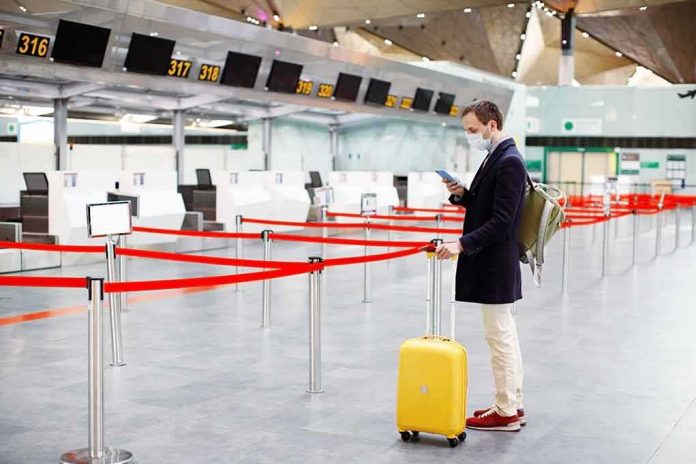
Officials said the traveler passed routine public health checks at Nairobi’s main airport. A family member then took the person to a hospital for care. The patient died on Monday, only days after arriving in the city. These details fit the pattern seen during Ebola incidents, where some patients do not show clear fever or may only develop severe symptoms later, making airport checks a partial but not perfect safety net.
Kenyan authorities emphasized that detection still depends on fast triage and isolation once a patient reaches a clinic. Early steps limit exposure to relatives, fellow travelers, and health workers. When systems work, they find contacts quickly and monitor them for symptoms. The ministry’s public stance stressed readiness and calm, paired with tracing and laboratory capacity to test suspected cases without delay.
Why This Case Fits A Regional Pattern
World Health Organization updates describe a fast-moving Bundibugyo outbreak in the Democratic Republic of the Congo with cross-border spread into Uganda in 2026. Imported cases have appeared in countries tied to this travel corridor. Kenya’s confirmation aligns with that pattern: mobile populations move faster than pathogens can be spotted, so detection often happens after border crossing. The core risk shifts from “if” a case arrives to “how fast” it is found and managed once it does.
Public health strategy in such events relies on three gears working together. First, border checks to catch obvious illness. Second, clinic triage to flag and isolate suspect cases within hours. Third, contact tracing to ring-fence exposures and watch them daily for fever and symptoms. The Centers for Disease Control and Prevention highlights the same approach across the region, backing countries with lab testing, tracing, and infection control support during the Bundibugyo outbreak.
Practical Guidance And What To Watch Next
Kenya’s message to the public stressed calm and caution. Ebola spreads through close contact with bodily fluids, not through the air like the common cold. People should seek care quickly if they have high fever, severe weakness, vomiting, or bleeding, especially after travel from areas with known cases. Hospitals have infection control steps for rapid isolation. These basics protect families, health workers, and communities when used without delay.
Kenya has confirmed its first imported Ebola case, caused by the Bundibugyo virus. The Kenyan patient fell ill in DR Congo, travelled through Uganda and was isolated after arriving in Nairobi.
The patient has since died while receiving treatment. Health authorities are tracing…
— Chemingoes (@Koecheruiyot) October 6, 2026
Two developments will matter most in coming days. First, whether contact tracing locates and monitors all close contacts from the trip and hospital visit. Second, whether any contacts develop symptoms. Kenya’s Ministry of Health said it had raised its alert level months ago due to the regional outbreak. That head start, paired with decisive tracing, should keep risk contained. The case is tragic, but fast action now can stop one imported case from becoming many.
Sources:
bbc.com, bbc.co.uk, english.news.cn, saudigazette.com.sa, allafrica.com, citizen.digital, chinadailyasia.com, health.go.ke, kenyanews.go.ke, who.int