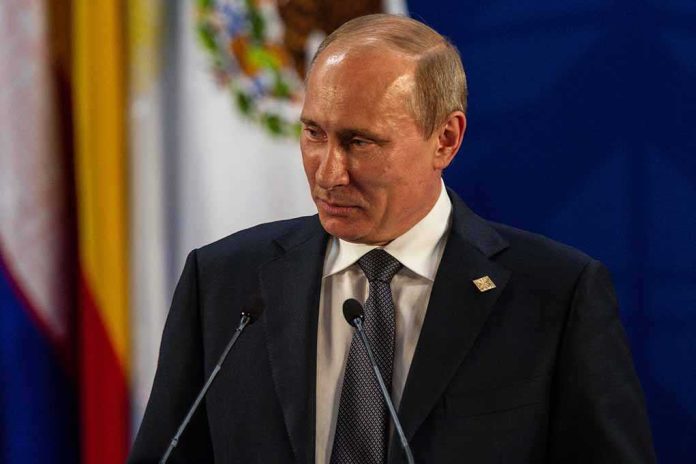
Russia freed American Stephen Hubbard after President Trump asked Vladimir Putin to release him, and a U.S. envoy confirmed the news on the ground.
Story Highlights
- President Trump said he asked Putin to free Stephen Hubbard, and Russia released him the next day.
- Special Envoy Steve Witkoff met Putin in St. Petersburg and confirmed Hubbard was heading home.
- Reports described the release as not part of a prisoner exchange or swap.
- The State Department had deemed Hubbard “wrongfully detained” before Trump took office.
What Happened: A Direct Appeal Followed By A Release
On October 20, 2026, President Trump told reporters he had spoken “at length” with Russian President Vladimir Putin about freeing Stephen Hubbard and had asked for his release. On October 21, Russian state media said Putin announced Hubbard had been freed and was preparing to leave the country. That same day, Special Envoy Steve Witkoff, who was meeting Putin in St. Petersburg, confirmed the release on site. The rapid sequence marked a clear win for an American family waiting years for relief.
Russian reports credited Putin with the decision and described Hubbard as at the airport preparing to depart. The New York Times reported that Putin told Witkoff that Hubbard was at the airport, underscoring that the confirmation came while U.S. and Russian officials were face-to-face. The timing lined up with Trump’s public comments, giving the White House a visible diplomatic result in less than twenty-four hours after the President’s on-camera appeal.
The U.S. Channel: Envoy Steve Witkoff On The Ground
Special Envoy Steve Witkoff served as the administration’s point man in Russia during the release. Witkoff met Putin in St. Petersburg, affirmed that Hubbard was being released, and conveyed appreciation, saying the American was on his way home to family. That operational channel showed an active U.S. presence tied to the outcome, rather than distant messaging. It also signaled that this White House paired direct presidential outreach with an empowered envoy working the details face-to-face.
Reports tied Witkoff’s visit to broader talks that included the war in Ukraine and bilateral issues. That context matters for readers who follow patterns in hard diplomacy. Deals often happen when leaders pair a clear, public ask with private, sustained talks. Here, the record shows a coordinated effort: a President making the request, and an envoy meeting the Russian leader as the release moved from promise to action.
Key Facts About The Case And What Was Not Exchanged
Coverage consistently stated that the release was not part of a prisoner exchange. No swapped detainee or U.S. concession was identified in the reports used for this story. That point matters to Americans who oppose lopsided trades that reward hostile regimes. While governments rarely publish every detail of sensitive talks, the available reporting framed this as a unilateral Russian release after a direct appeal and a timely meeting with the U.S. envoy.
BREAKING: TRUMP ANNOUNCES RUSSIA HAS RELEASED AMERICAN STEPHEN HUBBARD — NO PRISONER SWAP REQUIRED
President Trump announced that Russia has released Stephen Hubbard, a 74-year-old retired teacher from Michigan who was detained in eastern Ukraine in April 2022. Trump says he… pic.twitter.com/UTzsaKgPYI
— Sergeant News Network (@sgtnewsnetwork) October 21, 2026
Stephen Hubbard had already been designated “wrongfully detained” by the U.S. government under the prior administration, which confirms his case was on the State Department’s priority list before 2025. That history shows the long road many families travel in these cases. Still, the decisive week belonged to this White House. President Trump asked, Witkoff engaged in person, and Russian media said Putin announced the release, with confirmation as Hubbard moved toward departure.
Why It Matters To American Families And U.S. Strength
Americans want their country to bring citizens home without paying ransom or freeing dangerous criminals. This case matches that goal as reported: a release with no listed swap, delivered through direct leadership and clear lines to Moscow. For families, this is what success looks like. For U.S. strength, it shows how firm, personal engagement can cut through bureaucracy and produce results that respect our values and protect our people.
Sources:
facebook.com, abc7.com, edition.cnn.com, cnn.com, cbsnews.com, foxnews.com