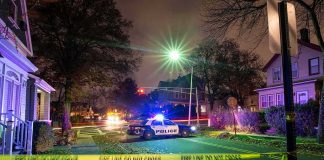
Gunmen opened fire on mourners at a Greek Orthodox church in Jordan, killing seven people and wounding dozens, in an attack officials called terrorism while the assailants remain unidentified.
Story Snapshot
- Seven killed and around three to four dozen wounded at a church funeral in Karak, Jordan.
- Jordanian officials labeled the assault a terrorist act by extremists; no group claimed responsibility.
- Reports differ on the number of attackers and total wounded, showing fast-moving early details.
- Authorities have not named suspects or confirmed ties to any organization as the manhunt continues.
What Authorities Confirmed So Far
Jordan’s Interior Minister said extremists carried out the shooting at a Greek Orthodox church during a funeral in Karak, a governorate south of Amman. Officials reported seven people killed and dozens wounded. Reuters and the Associated Press both cited the same death toll, with injuries reported between 34 and 40 as updates came in. The head of Jordan’s Public Security Directorate briefed reporters and described the incident as a coordinated armed assault on mourners.
Witness accounts and early security reviews point to multiple gunmen and a planned strike. Survivors told Al Jazeera that masked attackers entered after an explosion, while other reports referenced security footage and a rifle like an AK-pattern weapon. The attack targeted a church site during a service, which authorities and several outlets framed as consistent with an extremist motive, though they stopped short of naming any group.
Key Unknowns Clouding Attribution
Officials have not identified the attackers, announced arrests, or confirmed links to any known organization. The Interior Minister said it was too early to establish ties inside or outside Jordan, and there was no public claim of responsibility at the time of reporting. Newsrooms also reported different numbers of assailants, citing two suspects in some accounts and three visible in other footage, which makes the operational picture incomplete.
Casualty figures varied as hospitals updated counts. Outlets reported seven deaths, while injuries ranged from 34 to 40 as more families and responders reached clinics. Such shifts are common in the first hours after mass violence. They do not change the central fact: mourners at a church funeral faced gunfire from multiple attackers who then fled. The government labeled it terrorism based on early evidence, but full attribution awaits forensic and intelligence findings.
Why This Matters Beyond Jordan
Attacks on houses of worship cut across borders and faiths. They strike people at prayer or in grief, when they expect safety. The Karak assault risks stoking fear among Christian communities in the region and could strain Jordan’s model of coexistence if left unclear or unpunished. Clear facts and credible updates will shape public trust as much as the manhunt itself. That starts with transparent casualty lists, suspect identification, and evidence-backed motive statements.
Americans watching from afar see a pattern that feels familiar: officials move fast to brand an act as terrorism, while evidence the public can check lags behind. Many on the right and the left worry that governments close ranks, control footage, and ask people to “just trust us.” In Jordan, as in the United States, confidence grows when leaders release verified video, timelines, and forensic results and correct errors in plain language, not spin.
What To Watch Next
Watch for Jordan’s security services to publish a consolidated casualty count and identities of the victims, with family consent. Look for a release of verified security-camera clips, firearm and casing matches, and a clear sequence of events. Track whether suspects are named, arrested, or linked to a network through phones, vehicles, or money trails. Finally, note whether any group claims the attack and whether authorities provide corroborating proof beyond statements at a podium.
A survivor and an injured woman recount the terrifying moments of the attack on Hammoud Church in Jordan’s Karak governorate.
Speaking to Roya, they describe the incident, which took place as they attended a funeral, as an unimaginable nightmare. pic.twitter.com/UDjqZ07sk3
— Roya News English (@RoyaNewsEnglish) October 24, 2026
If those steps happen, the public can judge the case on facts, not fear. If they do not, doubts will grow, and bad actors will fill the gaps online. The victims and their families deserve answers backed by evidence. So do the faithful who now wonder if they are safe at worship. Precision and transparency are not public-relations chores; they are the core of justice after a crime like this.
Sources:
thegatewaypundit.com, reuters.com, apnews.com, vaticannews.va, aljazeera.com, bbc.com