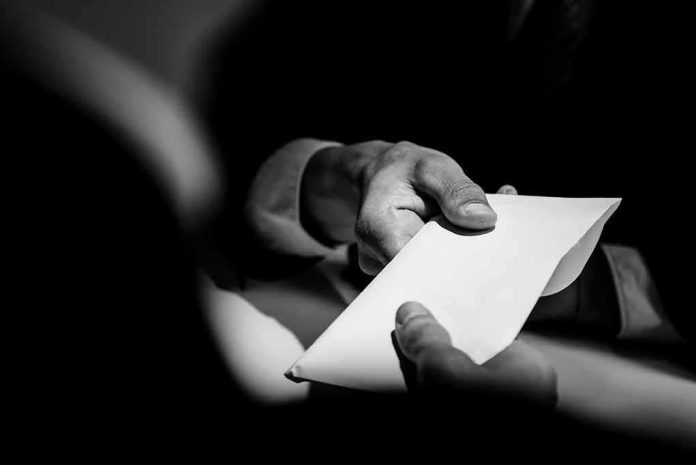
The suspect allegedly mailed white powder to Congress—and put his own name and home address on every envelope.
Story Snapshot
- Four Illinois congressional offices received near-identical letters with white granular material.
- The envelopes allegedly listed the sender’s full name and home address as return address.
- Tests found the substance nonhazardous; the complaint cites a hoax-letter statute.
- The suspect allegedly told agents he used table salt to mimic anthrax and “get a reaction”.
What Prosecutors Say Happened
The United States Department of Justice said a Quincy, Illinois, man was arrested after four congressional district offices received plain white envelopes postmarked October 19 from Springfield. Each bore a handwritten address, a matching return address, and a white granular substance inside. The United States Attorney’s Office charged violations tied to hoax threats and threatening communications. Agents and local responders treated each scene as hazardous until tests showed the material was not dangerous.
Federal filings and news summaries report the same pattern across the mailings. The letters looked alike, the postmarks matched, and all listed the same sender’s identity. Media accounts that drew from the complaint say notes included short taunts such as “HAH enjoy the gift” and “HA HA.” Those details align with a classic white-powder hoax profile: simple packaging, a triggering visual, and a message designed to alarm and disrupt, even when the substance is harmless.
The Alleged Admission And The Salt Detail
The account of the Federal Bureau of Investigation interview states the suspect said the substance was table salt and that he chose it because it “kind of looks like anthrax.” That description, if proven, goes straight to intent under the false information and hoaxes statute. Courts have long held that the law does not require a specific intent to threaten where a person knowingly stages a scenario that prompts emergency response to a fake biological threat. The Justice Department has used similar theories in prior white-powder hoax cases.
Agents also reported recovering an additional, unmailed envelope addressed to a congressional office during a residential search. That alleged find suggests more letters were planned or in progress, which would fit the same pattern. If the chain of custody and forensics confirm it, the government’s narrative gains weight. The complainant’s own return address on the mailed envelopes, if verified, would be a remarkable act of self-identification that tightens the link between sender and mailings.
What Is Known, What Is Not, And Why It Matters
The government brought the arrest on a criminal complaint, not an indictment or verdict. A complaint starts a case but does not prove it. Lab reports, fingerprints, DNA, handwriting analysis, and postal data will matter later. The testing result that the powder was not hazardous supports a hoax theory, not a real biological attack, and aligns with many past cases post-2001 where harmless powder triggered real emergency protocols. That does not make the impact small; hoaxes drain resources and scare staff.
The defense narrative so far comes from statements attributed to the suspect in the complaint and press reports. He allegedly said he was “joking,” used salt, and denied any part in other mailings outside Illinois. Even if a jury hears that, the core legal issue is whether he knowingly caused a false alarm about a dangerous substance. Common sense and conservative values put accountability first: prank or not, if you make people think poison is loose in the mail, you own the panic you cause, and you repay the costs it created.
Why The Return Address Detail Changes The Stakes
Prosecutors say all four mailed envelopes carried the same return address that matches government records for the suspect. That single detail, if established in court, simplifies the case. It makes identity less about shadowy forensics and more about what is printed on the envelope. It also undercuts the idea of a random imitator. People sometimes think hoaxes are clever. They are not. They are reckless, costly, and prosecutable. The law treats the panic as part of the harm.
An Illinois man allegedly mailed letters filled with white powder to four members of Congress — then put his own return address on every single one.
Matthew G. Unglesbee now faces two felony charges after the FBI says he sent the letters as a fake anthrax hoax, telling law… pic.twitter.com/IYM3rBsO7f
— Fox News Politics (@foxnewspolitics) October 27, 2026
Expect the next steps to focus on lab certifications, postal handling, and digital traces of preparation. Investigators will likely compare handwriting, lift prints if possible, and cross-check stamps and postmarks from the Springfield mail stream on October 19. If the evidence holds, the path resembles prior successful prosecutions over white-powder letters to public figures. The rule is simple and sound: free speech protects debate and even harsh criticism; it does not protect staged bio-threats that shut down offices and send first responders into harm’s way.
Sources:
reddit.com, latimes.com, yahoo.com, wpxi.com, justice.gov, wjla.com, cbsnews.com, fox32chicago.com, courtlistener.com, uscode.house.gov, case.hks.harvard.edu