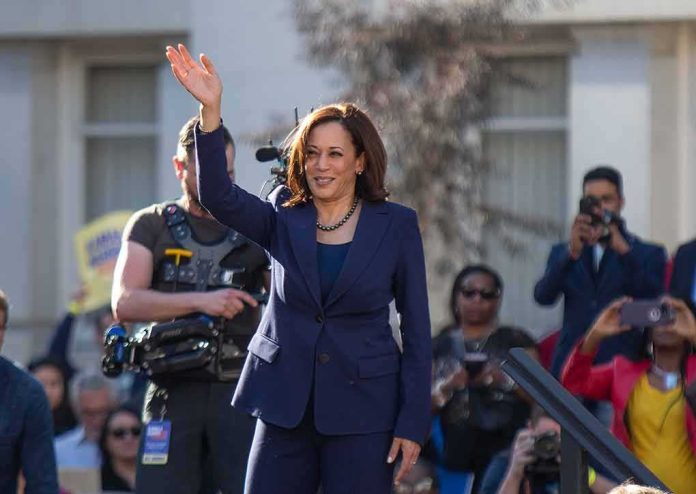
Kamala Harris told a New Hampshire audience Democrats should expand the Supreme Court to 13 justices and “be ruthless” in pushing structural reforms, if they win.
Story Snapshot
- Harris called for expanding the Supreme Court to 13 justices and tying it to broader reforms.
- She urged a fresh look at the Electoral College and said the popular vote should matter.
- Her agenda also mentioned statehood for Puerto Rico and Washington, D.C., and reversing Citizens United.
- She framed “ruthless” as uncompromising accountability, not cruelty.
Harris’s Core Proposal: Expand the Supreme Court
Kamala Harris told voters in Manchester, New Hampshire, that Democrats should add seats to the Supreme Court if they return to power. She backed a 13-justice court and linked the number to the count of federal circuit courts. She placed the idea within a “structural work” plan, presenting court expansion as a first-order priority, not a side issue. The remarks came during a campaign appearance supporting New Hampshire Democrats and were captured in event video.
Harris’s numerical case rested on having 13 federal circuit courts, though the Supreme Court is not one-justice-per-circuit by law. The comments did not include bill text, a nomination sequence, or a transition plan. Reporting from the event and videos establish the endorsement of expansion but not the legislative path. Supporters of expansion often note that Congress, not the Constitution, sets the Court’s size, and Congress has changed it several times in history.
Linked Reforms: Electoral College, Money in Politics, and Statehood
Harris urged a new look at the Electoral College and said the popular vote should matter. She did not say which path she favors, such as a constitutional amendment or a state compact. She also highlighted reversing Citizens United and granting statehood to Puerto Rico and Washington, D.C. These items formed a broader slate of political changes, though the event offered priorities rather than detailed timelines or bill language.
Her message aimed to turn voter anger into action. She framed the effort as structural, not symbolic. The campaign setting may help mobilize base voters, but it also invites critics to brand the ideas as partisan. The record does not show that the Democratic National Committee has formally adopted the full slate as a platform. The appearance focused on Harris’s statements and priorities in support of local candidates.
“Ruthless” Framing and Accountability Rationale
Harris said Democrats should “be ruthless,” then clarified she meant being firm about accountability and consequences, not cruelty. She tied that stance to pursuing structural reforms without hesitation. The word choice is politically loaded, and opponents often seize on it. In context, her explanation stressed having the backbone to enforce rules and follow through on stated reforms if voters grant power to do so.
Her pitch reflects a long-running fight over how far elected leaders should go to change institutions they view as out of line with public will. Advocates point to legal room for Congress to set the Court’s size and to past changes. Critics warn that expansion risks turning the Court into a tool of whichever party holds Congress and the White House. The clash is less about one number than about the guardrails of American governance.
What History and Law Say About Court Size
The Constitution does not set the number of justices. Congress has changed the size several times across United States history, including expansions and contractions. Past changes tracked national growth, circuit structures, and intense political battles. That history shows Congress can legally change the number by statute. It also shows why many people on both left and right fear spirals of retaliation if each party adds seats when it can.
What’s Missing: Specifics on How and When
The event materials and coverage do not include a draft bill, a calendar, or a nomination plan for adding four justices. They also do not show which Electoral College fix Harris backs. Those details matter because they shape costs, timelines, and coalition needs in Congress. For now, the public record shows priorities and arguments, not a legislative package. That gap leaves room for both support and concern to grow.
Why This Matters Beyond Party Lines
Many Americans think the system serves insiders first. To them, big changes sound overdue. Others hear the same plans and see a rush to power that could weaken checks and balances. Harris put a clear stake in the ground: grow the Court, press reform, and do not blink. Voters now must decide if they want that course, given the risks and the promise she laid out in New Hampshire.
Sources:
thegatewaypundit.com, patch.com, youtube.com, newhampshirepoliticalreporter.com