A former Army supervisor says Gov. Wes Moore’s combat story does not match the records now in the public eye.
Story Highlights
- Moore’s supervisor says Moore did not lead paratroopers in direct combat and was not in jump status.
- Records and reports show Moore received an Army Commendation Medal at his 2006 ceremony, not a Bronze Star.
- The Army awarded Moore a Bronze Star in 2024, almost 20 years after the deployment.
- A Combat Action Badge tied to rocket fire does not prove the firefights Moore described.
What the Supervisor Says About Moore’s Afghanistan Role
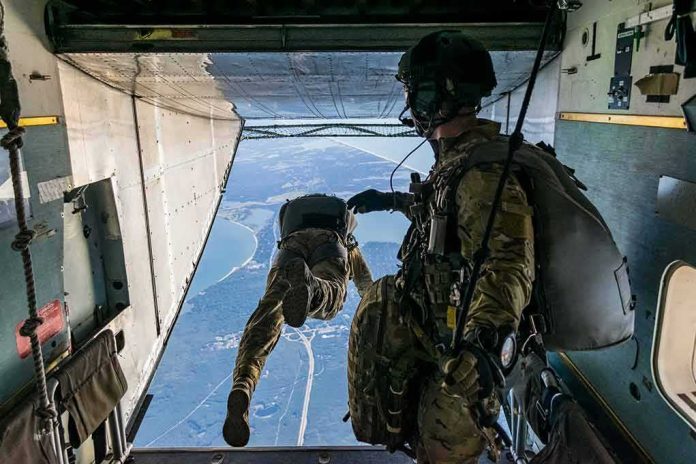
Retired Lt. Col. James Gottschling, who supervised Moore in Afghanistan, disputes Moore’s claim that he led paratroopers in combat. Gottschling says Moore worked on information-operations coordination and did not conduct direct-action missions. He also says Moore was not in jump status, did not receive jump pay, and did not serve in a parachutist position. These statements undercut Moore’s description of leading paratroopers in firefights during the deployment.
Gottschling acknowledges Moore served with the 82nd Airborne Division as an attached reservist and was airborne-qualified. But he says Moore neither trained with the brigade before deployment nor conducted training jumps. That distinction matters. It suggests Moore’s job connected to messaging and intelligence coordination rather than assault missions. It also challenges how the phrase “led paratroopers” has been used in public talks and interviews since the deployment.
What the Available Records and Photos Show
Reports and a ceremony photograph show Moore received an Army Commendation Medal at his March 1, 2006 end-of-tour event. That aligns with Gottschling’s account of Moore’s duties and time in theater. Separate reporting says the Army later awarded Moore a Bronze Star in 2024 after a reconsideration process. The gap creates a timeline problem because earlier materials had referenced a Bronze Star that was not in the file at the time.
Spotlight reporting says searches did not find after-action reports, radio logs, or witness statements confirming that Moore led troops in a direct-fire fight. Moore did receive a Combat Action Badge tied to a rocket attack at Forward Operating Base Salerno. That badge shows exposure to hostile fire. It does not, by itself, confirm a firefight or direct engagement with the enemy, which is the core of the dispute over his public narrative.
Why This Story Hits Public Trust and Cross-Party Frustration
Voters from both parties worry that powerful people stretch facts for image and gain. This case taps that fear. Media reports say a California senator and other senior figures helped secure the 2024 Bronze Star, which lacked a key commander’s endorsement. Even if the award was merited, the process looks unusual, and the timing invites doubt. People see a system that works faster for the well-connected than for regular service members.
This fight also shows how military language often gets blurred in politics. “Deployed to a combat zone” is not the same as “led paratroopers in firefights.” “Airborne-qualified” is not the same as “in jump status.” When leaders compress those terms, the public gets a tidy hero story but not the full truth. That gap fuels anger about elites, media spin, and institutions that seem to protect their own rather than level with citizens.
What Is Known, What Is Missing, and What Comes Next
What is clear: Moore served in Afghanistan with the 82nd Airborne Division as an information-operations officer; he received a Combat Action Badge for a rocket incident; he wore an Army Commendation Medal at his 2006 ceremony; and he was awarded a Bronze Star in 2024. What remains disputed: whether he led paratroopers in direct firefights, and whether earlier claims about a Bronze Star matched the records on file at the time.
For years, Maryland Gov. Wes Moore has described his Afghanistan deployment as the experience of an 82nd Airborne Division paratrooper who led soldiers in combat. Now, the Army officer who supervised Moore daily says his accounts of what happened there in 2005 and 2006 are… pic.twitter.com/hceMHnSLJd
— The Baltimore Sun (@baltimoresun) November 8, 2026
Key records remain out of public view, including the full 2024 Bronze Star packet and any 2006 recommendations. Without those documents, independent review is limited. That lack of transparency keeps the story alive and deepens public skepticism. The fastest path to clarity is a full release of the award files, unit logs, and any witness statements. Until then, the record supports service in a combat zone but not the specific firefight claims that stirred this controversy.