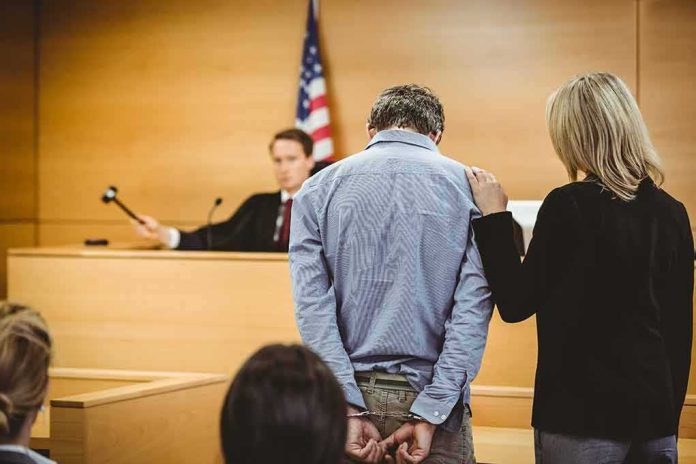
A Florida judge sentenced a former plastic surgeon to death for killing a lawyer whose body has never been found.
Quick Take
- Judge Joseph Bulone sentenced Tomasz Kosowski to death for the 2023 murder of attorney Steven Cozzi.
- The court found the killing was “cold, calculated and premeditated” and done partly for money.
- Cozzi’s body has never been recovered, and Kosowski defended himself at trial without presenting evidence.
- Kosowski argued the state never proved Cozzi was dead or explained how a body could vanish unnoticed.
- The case highlights how courts can convict and sentence someone to death using only circumstantial evidence.
Judge Hands Down Death Sentence
Judge Joseph Bulone sentenced Kosowski to death in a Pinellas County courtroom, telling him he had “forfeited his right to live” under Florida law. The sentence followed a September 2026 bench trial where a judge, not a jury, convicted Kosowski of first-degree murder. Court filings identify the case as 23-02935-CF-D, formally charging Kosowski with killing Steven Cozzi.
The judge cited two legal factors that made Kosowski eligible for execution. One finding said the murder was planned out in advance, not a crime of passion. The second finding said Kosowski killed Cozzi at least partly for financial gain. Reports have not disclosed the specific financial records or evidence backing that second finding.
A Lawyer Vanished Without a Trace
Cozzi disappeared from his law office in Largo, Florida, leaving behind his wallet, keys, and phone. Prosecutors argued Kosowski killed him inside a bathroom at the office complex and disposed of his body afterward. Despite extensive searches, investigators never found Cozzi’s remains, leaving no autopsy, murder weapon, or physical crime scene for jurors to examine.
Kosowski chose to represent himself throughout the trial. He cross-examined the state’s expert witnesses but presented no formal defense case of his own. In his closing argument, he told the court that “reasonable doubt exists in droves” because prosecutors could not produce a body or a death certificate.
Defendant Challenged the State’s Theory
Kosowski argued the state’s version of events made no physical sense. He said the bathroom where Cozzi was allegedly killed sat inside a busy office complex, yet no one nearby heard or saw an attack. He also questioned how he could have cleaned the scene, moved a body onto a cart, and loaded it into a truck without being seen.
He pointed to credit card transactions on Cozzi’s account made weeks after the date prosecutors say he died, suggesting the timeline did not add up. A true-crime podcast covering the case echoed these doubts, noting the absence of a body, autopsy, eyewitness, or confirmed murder weapon. The judge and prosecution evidently found the circumstantial case strong enough to convict and condemn him anyway.
🇺🇸 Former Florida plastic surgeon Tomasz Kosowski just received a death sentence for murdering attorney Steven Cozzi in 2023.
Kosowski held a years-long grudge after Cozzi represented the other side in a medical billing lawsuit.
Prosecutors said Kosowski kept a “murder bag”;… pic.twitter.com/ASFEeRiI0z
— NewsForce (@Newsforce) November 20, 2026
Florida law does not require a recovered body to convict someone of murder. Courts have upheld convictions built entirely on circumstantial evidence before, treating a strong enough case as proof of both a death and a killer’s guilt. That legal standard now faces its toughest test yet, playing out in a capital case where a man’s life depends on it and the public record of forensic proof remains largely sealed from view.
For many Americans watching true-crime cases unfold, this one lands differently. It raises a basic question that cuts across political lines: can the justice system impose its harshest punishment, death, when so much of the physical proof that normally underpins a murder case simply does not exist? That tension between finality and uncertainty will likely follow this case through any appeal.
Sources:
cnn.com, goodmorningamerica.com, yahoo.com, fox13news.com, miamiherald.com