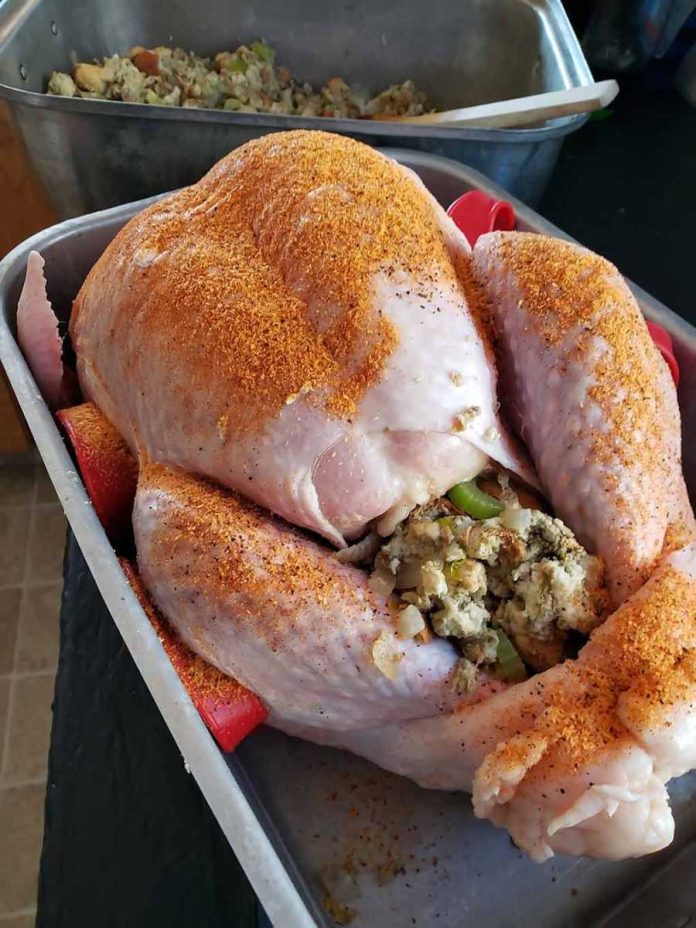
USDA says rinsing raw turkey can spray germs around your kitchen, but cooking to 165°F keeps families safe.
Story Highlights
- USDA warns that washing turkey spreads bacteria through kitchen splashes.
- Safety hinges on cooking turkey to 165°F and checking three spots with a thermometer.
- Cross-contamination risks rise when raw juices touch sinks, counters, or other foods.
- Most people still wash poultry, showing a big gap between habit and safety guidance.
USDA Guidance: Do Not Wash Raw Turkey
United States Department of Agriculture officials state that washing raw turkey does not remove bacteria and can spread germs through splashing. Water hitting the bird can carry microbes to sinks, counters, utensils, other foods, and your hands. This spread is called cross-contamination and can make people sick. USDA food safety experts advise against rinsing any raw poultry. They recommend keeping raw turkey juices contained and cleaning any contact surfaces with hot, soapy water and sanitizer.
Food safety pages from the United States Department of Agriculture detail how cross-contamination works and how to stop it. Raw juices should never touch ready-to-eat foods, like salads or fruit. Use separate cutting boards and tools for raw turkey and for cooked or ready foods. Wash hands with soap and warm water for 20 seconds before and after handling raw meat. Clean and sanitize sinks, knives, counters, and thermometers after use to reduce risk.
Cooking to 165°F Is the Proven Safety Step
United States Department of Agriculture and Food Safety and Inspection Service guidance says the way to make turkey safe is to cook it to an internal temperature of 165 degrees Fahrenheit. Heat at that level kills harmful bacteria. A food thermometer is the only way to be sure. Check three places: the innermost part of the thigh, the innermost part of the wing, and the thickest part of the breast. Serve only after all points reach 165°F.
A recent holiday advisory from the United States Department of Agriculture repeats this message and adds that cooks should always verify doneness with a thermometer, not color or juices. The agency explains that checking all three locations matters because heat can be uneven in large birds. Hitting 165°F across the bird means it is safe to eat and lowers the chance of foodborne illness for guests of all ages.
Americans Still Wash Poultry, Despite the Risks
Federal surveys show many home cooks still rinse raw chicken and turkey. A Food and Drug Administration survey reported that 68 percent of people said they always washed whole chickens or turkeys before cooking. Most used running water to rinse. This habit clashes with federal advice and raises the chance of dirtying nearby foods and tools. The pattern shows a long-standing gap between what people believe is “clean” and what actually lowers risk.
Ready for turkey day? 🦃 Make sure your Thanksgiving is memorable for all the right reasons! As you prepare to gather around the table, remember to follow these simple food safety tips to help keep everyone safe. For more helpful advice, visit https://t.co/WxELZfHTO9 pic.twitter.com/qaMbLdzfQQ
— Siouxland Health Dpt (@SiouxlandHealth) November 22, 2026
Laboratory and government research backs the warning about splashing. Scientists showed that water hitting raw poultry can move bacteria off the surface and onto nearby areas through droplets and spray. These germs can then transfer to foods that will not be cooked again, like salads, and can cause illness. The core message is simple: do not wash the turkey. Control raw juices, clean well, and rely on proper cooking to make the meal safe.
What To Do Instead: A Simple, Safe Game Plan
Plan ahead and thaw the turkey safely in the refrigerator. Keep raw turkey in a pan to catch juices. Prepare stuffing in a separate dish for even heating. Use different cutting boards for raw meat and ready foods. Wash hands often and sanitize surfaces after contact with raw poultry. When cooking, use a thermometer and confirm 165°F in the thigh, wing, and breast. Rest the turkey briefly, then carve with clean tools and keep leftovers chilled within two hours.
Sources:
washingtontimes.com, fsis.usda.gov, usda.gov, pubmed.ncbi.nlm.nih.gov