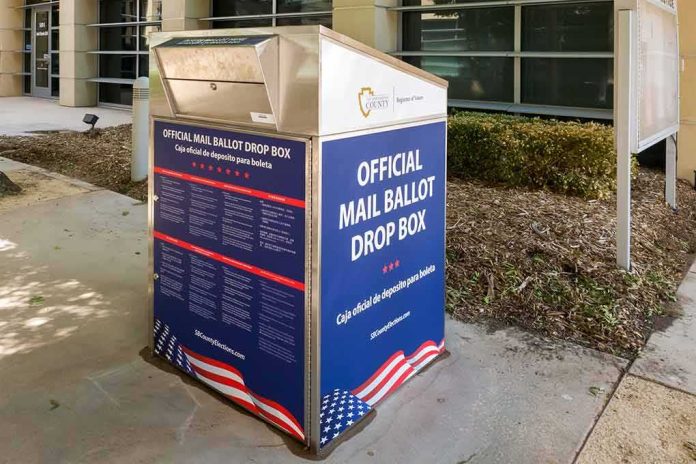
Alaska voters just backed a citizen-only voting rule by nearly 70%, even as state officials say the change will not alter who can vote.
Story Snapshot
- Voters approved Measure 3 with about 69.6% support, changing wording to “only U.S. citizens may vote.”
- State analyses say the measure does not change Alaska’s existing voter qualifications.
- Supporters call the measure a needed clarification that affirms citizenship as a core standard.
- Opponents argue the push was redundant and could confuse voters about current law.
What Alaska Voters Decided And By How Much
Alaska voters approved Ballot Measure 3 by a wide margin. The Associated Press reported 142,991 votes for the measure and 62,336 against, or 69.6% to 30.4%. The race was called on November 4, 2026. The measure updates the voter-eligibility law’s wording. It shifts from “a person may vote who is a citizen” to “only United States citizens may vote.” These are clear results that show strong public backing for citizen-only voting language.
The official voter pamphlet explains the change in plain terms. It says the measure specifies that “only those who are United States citizens and meet the other requirements may vote.” The Alaska Department of Law reviewed the proposal before the vote. The department found that it would not change who can vote under Alaska law. In other words, it is a clarification of wording rather than a new voter rule. That is an important legal point.
What Changes In Practice And What Stays The Same
Alaska law already required that voters be United States citizens. Registration materials already said noncitizens are not eligible to register. The Department of Law analysis states the measure does not change voter qualifications. Alaska Public Media also reported the measure would have no practical effect on who can register or vote. Supporters still argue the clearer “only citizens may vote” line helps close doubt and affirms a core principle.
Backers of the initiative include former state lawmakers. They framed the measure as a direct stand for citizenship as a basic voting rule. Former Senator John Coghill said passage “affirms the importance of citizenship as a fundamental qualification for voting in our elections.” Critics in several outlets described the measure as largely symbolic or redundant. Even so, the vote share shows a strong desire among Alaskans to state this rule in firmer language.
The Arguments That Shaped The Debate
Opponents focused less on the idea of citizen-only voting and more on whether the change was needed. Alaska Public Media reported critiques that the state already barred noncitizen voting. Representative Alyse Galvin called the measure redundant. She also pointed to thousands of voters moved to inactive status pending proof of citizenship during heightened checks, saying the process created fear among new citizens. Those claims spoke to process risks, not to support for noncitizen voting.
Senator Lisa Murkowski’s separate comments on federal “proof of citizenship” ideas show why the issue is tense. Coverage of her remarks said she supports limiting voting to citizens but warned that strict in-person proof rules could burden rural Alaska. She noted Alaska has few election offices and large areas off the road system. That concern reflects a broader tension: tighten rules to boost trust while not shutting out legal voters in remote communities.
Why This Vote Matters Beyond Alaska
The Alaska result fits a national pattern. Since 2018, voters have passed many citizen-only measures, often by large margins. In 2026, multiple states placed similar questions on the ballot. Most passed, with one notable defeat in Arizona. These measures are popular signals about national identity and election confidence. Yet many duplicate existing law and focus on language. That mix of symbolism and policy is part of our current politics.
alaska just voted to require citizenship to vote. common sense shouldn't need a ballot measure.
— Grant Hayes (@TheGrantHayes) November 6, 2026
Many Americans across party lines doubt government will keep elections fair and simple. They see elites argue while basic systems feel broken. This vote shows that citizens want clarity in the rules they live under. At the same time, state analyses say Alaska already had the citizen rule in place. That split—between demand for certainty and the claim that nothing changes—captures a deeper trust problem that leaders in both parties have not solved.
What To Watch Next In Alaska
State officials now must implement the new wording in forms and guidance. Because the measure does not change voter qualifications, major shifts in registration or ballot handling are not expected. Still, legal wording can matter in court cases, future disputes, or agency memos. Watch for any updates in election manuals, litigation that cites the new text, or changes in how the Division of Elections communicates citizenship checks to the public.
Sources:
thegatewaypundit.com, alaskabeacon.com, nytimes.com, alaskapublic.org, cnn.com, stateline.org