A rescue off Alcatraz turned deadly fast, and officials later said the first fire reports were wrong.
Quick Take
- One person died when the Volare pontoon boat capsized near Alcatraz Island.
- Two other people were still missing as Coast Guard crews searched the bay.
- San Francisco Fire Department officials said no fire or explosion was found on board.
- Witnesses reported rough seas, and officials said the boat took on water before it overturned.
What Happened on the Water
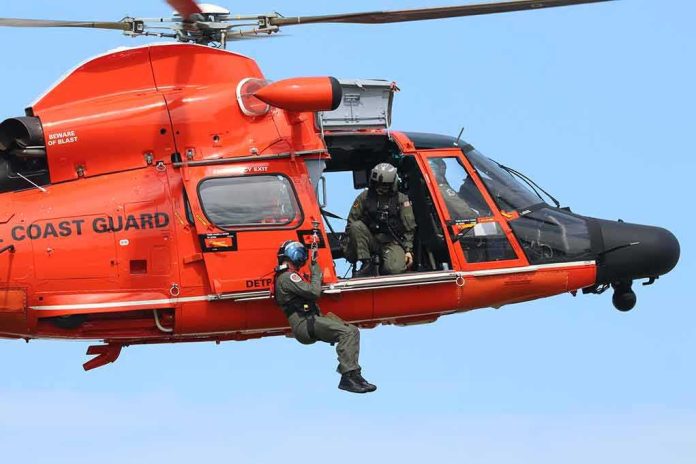
San Francisco authorities said the Volare, a pontoon-style boat carrying 19 people, capsized near Alcatraz Island on Tuesday afternoon. One person died, 16 people were rescued, and search crews kept looking for two missing people as darkness fell. Eleven vessels took part in the search, and emergency teams moved the injured to shore for treatment.
Officials first received reports that the boat was on fire, but San Francisco Fire Chief Dean Crispen said that was not the case. He said investigators found no evidence of fire or explosion on the vessel. That correction mattered because it changed the basic picture of the accident from a blaze at sea to a capsize in open water.
What May Have Caused the Capsize
Witnesses told reporters that rough seas played a major role in the disaster. Early accounts said the boat took on water before it rolled over near the island. That detail remains important because it points to weather and water conditions, not a confirmed onboard fire, as the immediate cause of the emergency.
Officials also said they were still reviewing how the trip began and where the boat launched from. UPI reported that the vessel was reported on fire about 600 yards off Alcatraz, but responders later found no sign of burning. The same report said the rescued passengers suffered impact injuries after falling from the boat, which matches the force of a sudden capsize.
Why This Incident Stands Out
The crash happened in one of the best-known danger zones in San Francisco Bay. The narrow waters near the Golden Gate have a long record of shipwrecks and hard conditions, including strong currents and large swells. National Oceanic and Atmospheric Administration material says the area has wrecked ships for generations, while the National Oceanic and Atmospheric Administration Coast Pilot warns that parts of the San Francisco Bar can become very dangerous during large swell conditions.
That broader setting does not replace the facts of this case, but it explains why a routine passenger outing can turn severe so quickly. The bay’s mix of wind, current, and swell has challenged vessels for decades. In this case, officials had to deal with the same old maritime problem: a crowded boat, sudden instability, and a fast-moving rescue in cold water.
Sources:
military.com, latimes.com, instagram.com, reddit.com, farallones.noaa.gov, en.wikipedia.org, baylightscharters.com