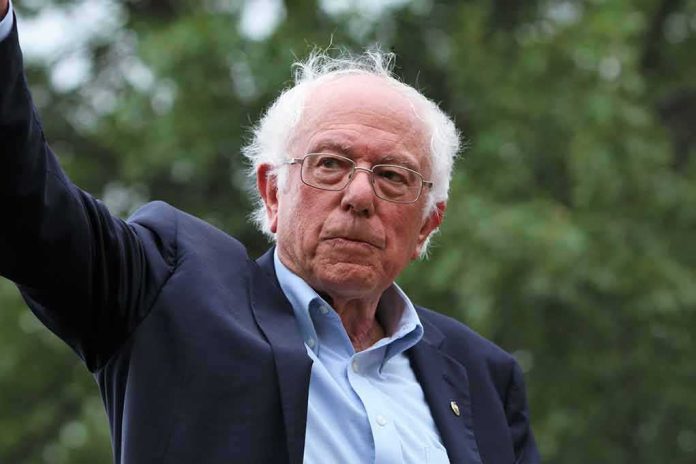
Senator Bernie Sanders says Democratic Party leaders are “way out of touch” with ordinary Americans and warns the party is run by people surrounded by money and consultants.
Quick Take
- Sanders told The Nation that Democratic leadership is disconnected from everyday voters and dominated by wealthy donors.
- He rebuked former Chicago Mayor Rahm Emanuel and other establishment figures, saying “the status quo is not working.”
- Sanders has previously agreed the party’s primary process poses a “threat to democracy.”
- His criticism spans decades, tying back to a 1970s shift he says moved Democrats toward corporate donors.
- The clash highlights a broader fight over money and power that frustrates voters across the political spectrum.
Sanders Says Party Leaders Have Lost Touch
Senator Bernie Sanders, an independent from Vermont, delivered a blunt assessment of his own party’s leadership in a recent interview with The Nation. He said Democratic leaders are “way out of touch with where ordinary people are” and described the anger many Americans feel toward the party as “almost frightening.” Sanders said the party’s top ranks are “mostly made up of folks who have money and consultants”.
Sanders did not stop at generalities. He also took direct aim at former Chicago Mayor Rahm Emanuel, a likely 2028 presidential contender, and other establishment Democrats. Sanders said “the people are sick and tired of the status quo,” while pointing to progressive Senate candidates as a better path forward for the party.
A Decades-Long Pattern of Criticism
This is not new territory for Sanders. He has criticized Democratic Party leadership for decades, arguing the party turned toward wealthy donors and corporations starting in the 1970s. He said that shift moved the party away from its historical role representing working-class Americans, calling the change a “total disaster” for ordinary people.
Sanders has gone further than just calling out donor influence. In an earlier podcast appearance, he agreed with the idea that the Democratic Party has become “a threat to democracy,” accusing party leaders of rigging primaries and closing off fair competition since 2008. Academic research on Sanders’ base backs up part of this picture, showing his supporters hold more negative views of party leadership than supporters of establishment figures.
Tensions Playing Out in Real Time
The fight is not just rhetorical. Sanders has clashed publicly with fellow Democrats over his endorsements of progressive candidates, including a recent back-and-forth tied to Senate primary races. Sanders defended his endorsements, saying the candidates he backs “represent working people” and that the party needs to stop catering to wealthy donors.
Senator John Fetterman of Pennsylvania pushed back, suggesting Sanders backs rising progressives out of ego and should “sit a few out.” The exchange shows the divide is not just between Sanders and party insiders, but among elected Democrats themselves over how far left the party should move and who gets to decide.
Why This Debate Matters Beyond One Party
Sanders’ complaint echoes a frustration shared far beyond his own supporters. Millions of Americans, on the left and right, believe elected officials answer more to donors and consultants than to voters. Sanders frames this as a Democratic Party problem, but the underlying concern about money’s grip on politics cuts across party lines and fuels distrust in government overall.
With Republicans controlling the White House, Senate, and House heading into the 2026 midterms, Sanders’ critique also raises a practical question for Democrats: can a party seen as donor-driven and out of touch win back voters who feel abandoned? Sanders argues the answer requires real change, not just opposition to President Trump. Whether party leaders heed that warning remains an open question as primary season continues.
Sources:
mediaite.com, newsweek.com, x.com, opendemocracy.net, nytimes.com, thefulcrum.us