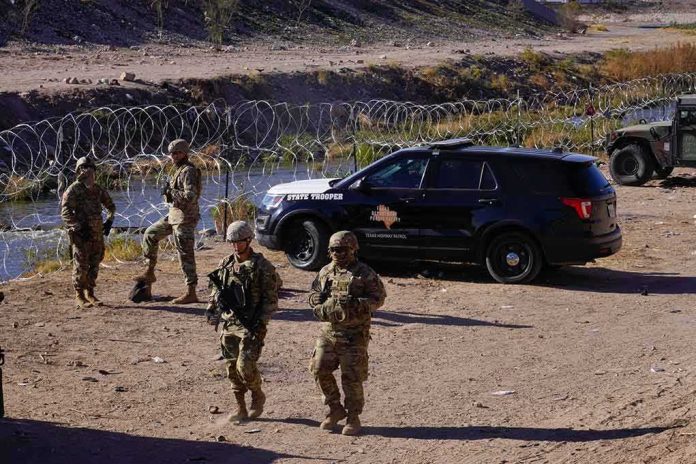
After the Army boosted forces in the Rio Grande Valley, officials showed reporters a quieter river while still reporting large-group apprehensions nearby.
Story Snapshot
- Army presence grew to thousands along the border, with added Coast Guard patrols, as officials described calmer river crossings in Roma, Texas.
- Border Patrol leaders cited more drug seizures, more arrests, and falling traffic in some areas as signs the surge worked.
- Crossings had already fallen after 2024 asylum limits and later rules, and experts credit Mexico’s enforcement too.
- Agents still caught five large groups totaling 648 people over five days in the same sector.
What Changed Along the River
U.S. commanders brought media to Roma, Texas, to see a calmer stretch of the Rio Grande after more soldiers arrived. Military leaders said the Army had about 8,000 troops along the border and that the Coast Guard added more than 300 people to local patrols. Border officials linked the troop movements to a rise in cartel activity and stressed tighter coordination with Texas agencies and Mexico’s forces across the river in Tamaulipas.
Border Patrol’s acting deputy chief patrol agent for the Rio Grande Valley said the agency tracks impact using seizures, apprehensions, and reduced traffic in specific hot spots. He argued those measures showed the surge worked in the areas that troops now support. Officials did not publish the underlying numbers, time frames, or methods, which makes it hard for outside observers to judge the size or cause of the change with precision.
Why Experts Say Crossings Dropped Earlier
Several independent reviews say the fall in crossings began before the recent troop push. Analysts and fact-checkers point to a June 2024 U.S. asylum policy that narrowed access, plus stiffer enforcement by Mexico and other partners. Those combined moves, not a single military action, likely drove much of the decline. That broader policy backdrop means any new troop effect is tough to isolate from earlier rules and Mexico’s stepped-up efforts.
Major outlets and research groups documented how Mexico bused people south, increased detentions, and tightened paperwork, which pushed down the number reaching the border. U.S. officials also cited cooperation with Mexico and related asylum limits as key drivers of the downturn. This does not erase the value of more patrols, but it shows the system works like a chain: multiple links changed at once, and no one link explains the whole result.
The Ground Truth: Quiet Scenes And Active Cases
Even as the river in Roma looked calm, agents in the Rio Grande Valley reported five large groups totaling 648 people over five days in Hidalgo and Starr Counties. One station alone encountered 520 of those migrants. The same sector also reported rescues, medical aid, and fatal incidents in separate releases in recent weeks. These events show that activity continues, even if certain crossings look quieter at certain hours and places.
The Coast Guard described a September 26 exchange of gunfire from the Mexican side of the river and said its personnel returned fire. Military reporting tied that clash to a decision to send more troops into the valley. News outlets said officials had not confirmed exact numbers or how long the deployment would last, which limits public insight into scale and duration. Sensitive operations also restrict what can be shared in real time.
What This Means For Voters Who Feel Let Down
Americans across the spectrum want safety, order, and clear results. A quieter river in one town helps, but people want proof the change is real and lasting. Officials can build trust by releasing standard data for the sector before and after deployments, and by separating what troops did from what policy shifts and Mexican actions did. Clear, shared facts beat headlines. Without them, each side fills the void with its own story — and faith in government erodes.
What To Watch Next
Watch for monthly encounter and seizure updates and whether agencies publish sector-level measures tied to troop hours and patrol locations. Look for signs of route shifts to nearby sectors, which would suggest displacement more than deterrence. Track whether Mexico sustains its deployments in Tamaulipas. Finally, monitor whether the Department of Homeland Security and the Army clarify mission length and scale. Those details will show if this calmer scene can last or is only a snapshot.
Sources:
military.com, cbp.gov, wola.org