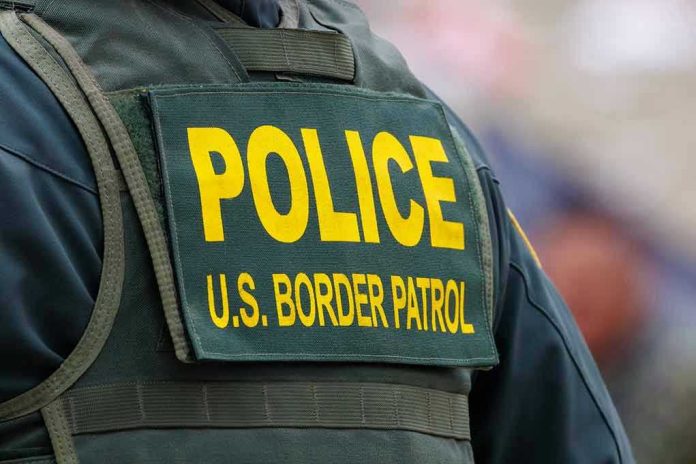
After years of unchecked border chaos and rising crime, the numbers are finally in—and the drastic turnaround at America’s southern border is something the Biden administration never wanted you to see.
At a Glance
- Border encounters have plunged to the lowest levels in over two decades, reversing four years of record-breaking illegal crossings.
- Trump’s aggressive crackdown has slashed daily border encounters by 93%, with nearly total control restored at the border.
- Policies dismantled Biden’s “catch and release” agenda, rapidly deporting illegal entrants and ending loopholes.
- Interior enforcement is back with expanded arrests and deportations, no longer limited to “serious criminals.”
- The historic influx and chaos under Biden led to over 11 million encounters and a public safety crisis now being addressed head-on.
Border Breakdown: The Numbers They Don’t Want You to Know
The facts are as stark as they are undeniable. For the first time in years, U.S. Customs and Border Protection now reports total control of the southern border. March 2025 posted the lowest monthly border encounters ever recorded—fewer than 7,200, according to official Department of Homeland Security data. That’s a 93% drop in daily crossings, with so-called “gotaways” down by 95%. The once-rampant migrant surge has been throttled by policies that finally put American security and sovereignty first.
Contrast this with the chaos unleashed under Biden: an average of 160,000 monthly border encounters, daily spikes reaching 15,000, and a staggering 11 million border crossers over four years. Fentanyl seizures soared to 64,000 pounds—enough to kill every American many times over. Yet the Left insisted the border was “secure,” as millions of criminal aliens were released or simply disappeared into the interior. Common sense took a back seat to radical open-border fantasies, and American families paid the price.
Policies That Actually Work: From “Catch and Release” to Real Enforcement
The turnaround didn’t happen by accident. Trump’s administration moved with speed and clarity, ending the Biden-era asylum loopholes and restoring the rule of law at the border. Officials authorized rapid deportations—no more endless court dates, no more catch and release. Migrants found themselves swiftly returned to Mexico or their home countries, not bused to U.S. cities on the taxpayer’s dime.
Troops were deployed to fortify the border, with some detainees even sent to Guantanamo Bay and others shipped back to notorious foreign prisons. This is what real deterrence looks like, and the results speak for themselves. The asylum system, previously weaponized by cartels and traffickers, has been all but shuttered to bogus claims. And make no mistake: the message went out loud and clear—America’s borders aren’t open for business anymore.
Restoring Law and Order: Inside the Interior Crackdown
For years, the Biden regime handcuffed Immigration and Customs Enforcement, limiting arrests to only the most “serious” criminals and national security threats. Predictably, over 650,000 criminal aliens were left roaming free on ICE’s “Non-Detained Docket,” while law-abiding citizens footed the bill for services, housing, and crime. Now, the handcuffs are off—ICE is back to doing its job, picking up and deporting illegal aliens regardless of criminal record, just as the law requires.
The days of rewarding lawlessness with amnesty, drivers’ licenses, and taxpayer-funded benefits are fading. The Trump administration’s restoration of order is a stark rebuke to the radical policies that drove the border into crisis, and a reminder of what’s possible when government actually does its job. No wonder legacy media and left-wing politicians want to change the subject—because these numbers utterly dismantle their narrative.
Sources:
Homeland Security Committee: FY2025 Begins with Over 140,000 Border Encounters Nationwide
Axios: Border crossings plunge to lowest levels in decades
CBS News: Migrant crossings at U.S.-Mexico border stay at historically low levels
DHS: 100 Days of The Most Secure Border in American History