On a sunny Caribbean beach, a North Carolina mom vanished into a fog of unanswered questions and limited official answers.
Story Snapshot
- Grenada police say Elizabeth “Liz” Waddell disappeared after a beach visit at Grand Anse and remain in an active search.
- Her family is on the island begging for help, while key facts like the last-seen time still do not line up across reports.
- Authorities have asked fishermen, boat operators, and coastal residents to watch the water, but have released little hard evidence.
- The case highlights how regular families can feel shut out when cross-border investigations move slowly and information stays tightly controlled.
North Carolina mom vanishes on a Grenada beach
Friends say Elizabeth “Liz” Waddell has spent years helping patients as a physical therapist and caring for her family in Cary, North Carolina. She went to Grenada with a close friend for a beach vacation and was reported missing on Wednesday, July 22, after a visit to Grand Anse Beach in the capital of Saint George’s. Police say the 44-year-old mother was last seen on the sand and that no one has heard from her since that day.
Royal Grenada Police Force officers have treated the situation as an active missing-person case and put out public alerts with her name, age, and a photo. They say she was last seen in the Grand Anse Beach area and describe the spot as a popular stretch of white sand and blue water on the island’s southwest coast. Local media reports say Waddell reportedly went down to the water for a swim and did not come back to her lodging afterward.
Family-led search runs ahead of clear facts
Her husband, Cailen Waddell, works as an operations manager for the town of Cary and flew to Grenada soon after learning she was missing. He and the couple’s daughter are now on the island taking part in the search, talking with reporters, and asking anyone with information to speak up. In one public post he said he expects nothing less than Liz’s safe return home, showing both deep hope and worry as days pass without solid leads.
Friends back in North Carolina have organized prayer groups, shared her photo, and appeared on local television to keep attention on the case. One close friend told ABC11 that Liz left their Airbnb to go to the beach for a swim, and later they realized she had not come back and could not be found. That account matches what police bulletins say about her going to Grand Anse Beach, but so far no official timeline shows her full movements that day in detail.
Search efforts and missing pieces in the record
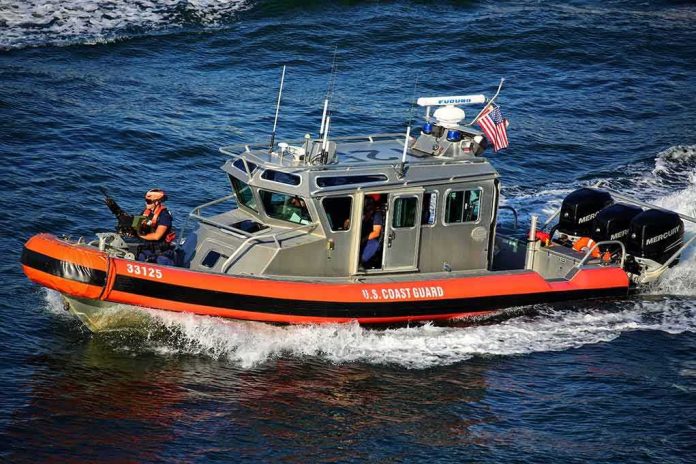
Grenada authorities say they have asked fishermen, boat operators, and residents along the southern coastline to watch the water and report anything they see. Contact numbers for the South Saint George Police Station, the Criminal Investigation Department, and the island’s emergency line have been shared widely so tips can be called in quickly. Reports also mention police divers and support from local students, showing that search-and-rescue work is happening in the water and on shore.
At the same time, some basic facts still do not match from one report to another. Different outlets say she was last seen around 8 a.m., around noon, or around 8 p.m., which makes it hard to know the true window when she disappeared. Family members say she went for a swim and left a towel on a pier, but there is no released video, GPS data, or formal witness statement yet that proves this step by step. Police have not named a suspect or said whether they believe this is an accident, a health event, or a crime.
Why cases like this fuel distrust in global institutions
For many Americans watching from home, this story feels familiar and unsettling. A middle-class family does everything right, yet when disaster strikes in another country, they depend on foreign police and scattered media reports to learn what is happening. The early narrative then gets repeated over and over, even while basic details such as time of last sighting keep changing, which makes people on both the left and right wonder how firm the “facts” really are.
Authorities in Grenada are searching for Elizabeth Waddell after she was reported missing while visiting the Caribbean island.
https://t.co/uxQwypGYjC— WCNC Charlotte (@wcnc) July 27, 2026
People already frustrated with the “deep state” and distant elites see another case where regular citizens have little say. Grenada’s police hold most of the information, but the full case file, search logs, and any camera footage are not public, so the family and the wider American audience must simply trust that everything possible is being done. In a time when confidence in institutions is low, the gaps in this record feed fears that bureaucracies move slowly while ordinary families bear the pain and uncertainty alone.
Sources:
facebook.com, foxnews.com, nypost.com, wral.com, independent.co.uk, youtube.com, abc11.com