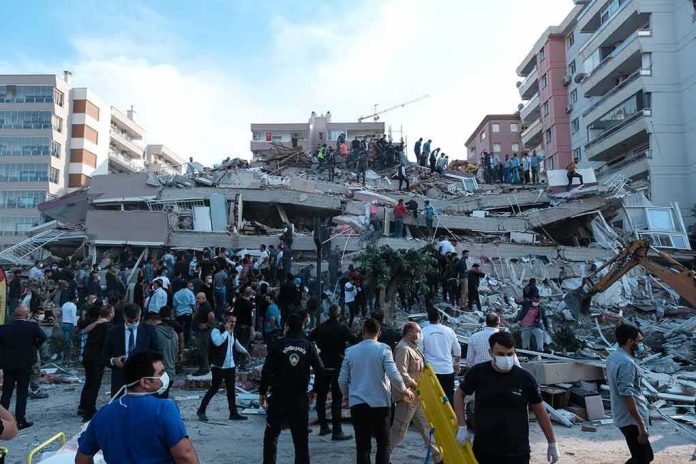
Russian drones struck Kyiv overnight, injuring at least four people and damaging homes and businesses, local officials said.
Story Snapshot
- Officials reported four injuries after overnight drone strikes across several Kyiv districts.
- Fires and blast damage hit residential buildings, offices, a warehouse, and a shopping center.
- The attack follows a long pattern of strikes on cities and civilian sites in Ukraine.
- Repeated barrages have forced round-the-clock alerts and strained emergency services.
Overnight Strikes Injure Four and Damage Civilian Sites
Local authorities in Kyiv said Russian drones hit multiple city districts overnight into Saturday, injuring at least four people and damaging residential and office buildings, a warehouse, and a shopping center. Emergency crews battled fires and cleared debris after the blasts. Photos from the scene showed broken windows and charred facades. The strike timeline and munition details were not fully released by morning. Officials said the injury count could change as searches continue and as first responders assess the sites.
City leaders urged residents to heed air raid alerts and shelter during night hours. Sirens and anti-air fire again echoed over the capital. Ukraine’s emergency services said responders moved block to block to check for gas leaks and hidden embers. Shop owners and families returned at daybreak to assess damage and start basic repairs. Power and water stayed on in most hit areas, though some buildings faced local outages. Crews set up barriers where walls and roofs remained unstable after the blasts.
Pattern of Attacks on Urban and Civilian Infrastructure
This strike aligns with a well-documented trend in the war: repeated long-range drone and missile attacks on cities that often damage homes and other civilian sites. Analysts have tracked thousands of such incidents since the invasion began, with civilian infrastructure making up a notable share of targets and collateral hits. Air defense remains active, but even a few drones slipping through can cause fires and injuries in dense neighborhoods. The pattern keeps residents on edge and strains responders.
Reports this year describe attacks coming both at night and during the day, which erodes normal routines and rest for city residents. Kyiv schools and offices often shift to shelters during alerts, and hospitals drill for mass-casualty care. Apartment towers and shops install blast film and sandbags, trying to limit glass injuries and fire spread. Each wave forces new repairs that drain savings and city budgets. Small businesses face tough choices about reopening in damaged spaces or closing for good.
Why This Matters for Americans Watching From Afar
Attacks that hit apartments, shops, and warehouses are not only battlefield events; they disrupt daily life and local economies. When drones start fires in a capital city, supply chains slow and prices for goods can rise. That kind of shock abroad can ripple into energy, grain, and shipping markets. Many Americans already feel squeezed by higher costs. News like this reminds readers that war risk far from home can still reach family budgets through fuel and food.
Leaders on both sides of America’s politics say they want peace and stability, yet wars grind on and civilians keep paying the price. Scenes from Kyiv show how regular people bear the brunt while elites and entrenched interests debate next steps. Voters across the spectrum see a pattern: government plans often miss the mark while families and first responders carry the load. Clear facts help cut through spin, and today’s facts are simple and stark: drones hit a capital, people were hurt, and civilian sites burned.
What to Watch Next: Air Defense, Frequency, and Civilian Resilience
Future reports will focus on three things. First, the pace of strikes: whether attacks stay nightly or ease for stretches. Second, air defense performance: intercept rates and debris risks over cities. Third, civilian resilience: how fast crews restore services and how businesses recover. Broader data show that major strike waves have recurred, with significant pressure on civilian infrastructure over time. Local officials in Kyiv continue to warn that alert discipline and sheltering save lives during overnight barrages.
At least four people injured after Russian overnight attack in Ukraine’s capital Kyiv, emergency ser #AssociatedPress https://t.co/QLUqNcuXod
— #TuckFrump (@realTuckFrumper) September 26, 2026
For now, the confirmed picture is limited but clear. Four people were injured, and several civilian buildings took damage in Kyiv after an overnight drone attack, according to local authorities and on-the-ground reporting from the Associated Press. That event fits the larger pattern documented by independent tracking: repeated strikes that reach into urban neighborhoods and commercial sites. As the story develops, updated injury counts and repair timelines are likely.