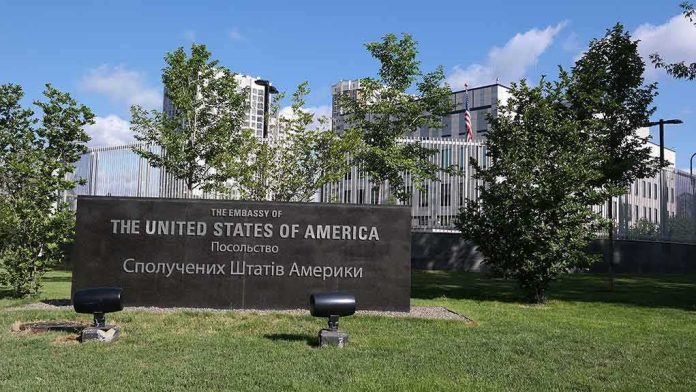
U.S. embassies across the Middle East issued near-identical security alerts telling Americans to stay vigilant and prepare for sudden travel shutdowns.
Story Snapshot
- Multiple U.S. embassies warned that tensions could trigger fast, unforeseen escalation.
- Alerts urged Americans to expect possible flight cancellations and airspace closures.
- Embassy posts used standardized language across several countries, signaling a region-wide posture.
- The State Department often mirrors alerts across posts during fast-moving risk spikes.
What U.S. Embassies Told Americans This Week
U.S. diplomatic missions in several Middle East capitals posted matching warnings. The notices said tensions in the region made the security situation complex and unstable. Americans were told to keep a low profile, plan for quick changes, and watch for updates. The U.S. Embassy in Abu Dhabi used the standard wording and warned about potential flight cancellations, airspace closures, and travel disruptions. The U.S. Embassy in Amman issued a similar September 1 alert with the same core message.
U.S. embassies reinforced the message on social media. The U.S. Embassy in Qatar posted a “Security Alert” and repeated the call for heightened vigilance and readiness for travel problems. Posts from other missions echoed the same phrases across the region. This mirrored approach signals a coordinated warning posture, not a country-specific issue. It helps citizens recognize the alert as a broad regional signal rather than a one-off note from a single post.
Why The Language Sounds The Same Across Countries
The State Department often uses standard alert language when threats could spread quickly or when details cannot be shared. That practice helps warn fast without exposing sources or methods. It also reduces confusion when conditions shift across borders. Embassy alerts in the United Arab Emirates and Jordan carried matching phrases about “unforeseen escalation” and travel disruption risks, showing a deliberate, synchronized approach to public guidance. The Jordan alert displayed the same structure and guidance.
Standardized wording can feel vague, but it serves a purpose. It prompts Americans to review plans, charge phones, carry documents, and track airline notices. It also gives airlines and local partners a clear signal that risk has risen. Media summaries captured the region-wide nature of the alerts, listing several countries where posts issued matching guidance and advised caution about air travel and airspace status.
How Travelers Should Respond Right Now
Americans in the Middle East should take basic steps today. Confirm passport validity and keep copies. Register in the Smart Traveler Enrollment Program if possible. Check airline apps for schedule changes. Map at least two routes to the nearest airport. Keep fuel in the car and a small go-bag with medicine, water, and chargers. Embassy alerts in the United Arab Emirates and Jordan specifically flagged that flights and airspace could be disrupted with little warning.
People planning trips to the region should build in backups. Book flexible tickets. Avoid last-flight-of-the-day options on tight connections. Consider travel insurance that covers delays from security events. Monitor embassy channels for each country on your route. The U.S. Embassy in Qatar’s public post underlined that this is a live situation and that conditions can change without notice, which requires steady attention from travelers and residents alike.
Sources:
njsr.com.ng, yahoo.com, ground.news, x.com