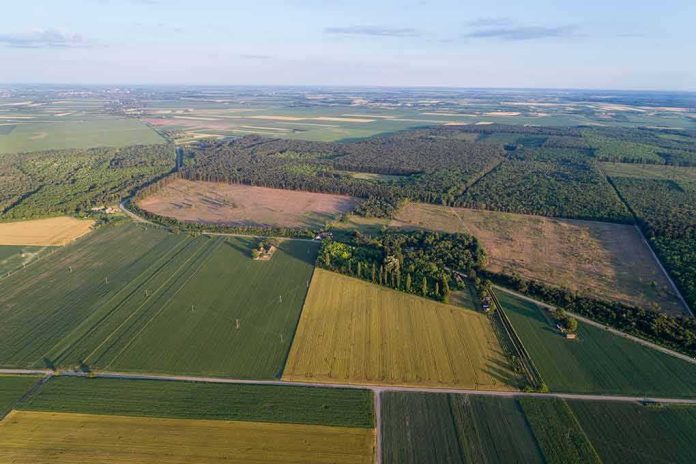
A plan to turn rural land beside Manassas National Battlefield Park into one of the world’s largest data center hubs just collapsed under the weight of the rule of law and local resistance.
Story Snapshot
- Virginia courts threw out crucial rezoning approvals as illegal, freezing a 2,000-acre data center gateway.
- Developers and the county backed away rather than fix the process or keep fighting in higher courts.
- Battlefield advocates say this is a landmark win for “hallowed ground” and basic transparency in government.
- The fight shows how ordinary neighbors can still stop giant tech projects when procedure and property rights matter.
Court rulings that killed the gateway project
The fate of the Prince William Digital Gateway was sealed not by environmental studies or history reports, but by something far simpler: the notice rules in Virginia law. A Prince William County Circuit Court judge first ruled that key rezoning ordinances were “void from the start” because the county did not give proper notice before a crucial December 2023 hearing. That hearing cleared the way for 2,000-plus acres of rural land to become a corridor for dozens of data centers next to the Manassas battlefield.
The court found two concrete failures. First, county staff advertised the public hearing only three days before it happened, despite a state law that requires ads to run twice and to be spaced over two weeks. Second, the rezoning materials themselves were not available for the public to review when the notice went out. In plain English, homeowners were told to show up and comment on a massive land-use change without any real chance to see what was on the table.
Fast-tracked votes and a lame-duck board
This was not a sleepy zoning tweak. The board pushed through rezoning for what battlefield advocates call “the world’s largest data center complex” alongside Manassas National Battlefield Park. The vote came from a lame-duck Board of Supervisors, meaning several members were on their way out after elections. The county attorney warned the board that the notice problem was real and advised them to re-advertise the hearing and slow down. Board members heard the warning, then moved ahead anyway.
The legal analysis of the case describes how developers told the county they would “assume the risk” of litigation if the process was flawed. That might sound like standard corporate confidence, but it created a sharp contrast with everyday residents who simply wanted clear rules followed. When hundreds of people turned out for the December hearing, many believed the deck was stacked and that the county had already chosen tax revenue and tech jobs over homeowner protections and quiet rural land.
Appeals court and the end of county resistance
On March 31, 2026, a three-judge panel on the Virginia Court of Appeals backed the circuit court and made the rezoning defeat much harder to undo. The appeals court agreed that the county had “improperly fast-tracked the votes” without properly advertising the proposal or making its text available to the public. Judges pointed directly to the newspaper ads that ran on December 2, 5, and 9, and said they did not meet the legal timing rules for land-use hearings.
After that, Prince William County officials read the writing on the wall. The Board of Supervisors voted unanimously to drop the county’s legal defense of the 2023 rezoning. Local tax dollars would no longer pay to argue that the process had been fair. That move did not by itself end the project, but it stripped developers of a key ally and signaled that the county would not keep fighting to save a flawed approval.
Developers walk away and battlefield advocates claim victory
Once the rezoning was ruled illegal and the county exited the case, the corporate side began to fold. Compass Datacenters, one of the main companies behind the gateway, pulled out of the project in early 2026. Company president AJ Byers claimed the data center campus would have brought “significant benefits” to the region, but admitted that continued legal and regulatory hurdles had “closed a viable path forward.” Compass chose not to appeal the Court of Appeals decision.
A plan to build the world's largest data center complex next to the Manassas National Battlefield Park is dead — killed by homeowners, preservationists and a string of court defeats. QTS Data Centers confirmed Thursday that it formally withdrew an… https://t.co/cd0MNbZHJk
— Washington Times Local (@WashTimesLocal) July 3, 2026
Another developer, QTS, tried one last maneuver with an appeal to the Virginia Supreme Court. That effort fizzled, and QTS later dropped its appeal, ending any realistic chance that the Digital Gateway would rise next to the battlefield. Battlefield advocates and conservation groups treated the end of the appeals as a hard win. The National Parks Conservation Association hailed the appellate ruling as a “victory” that halted a “massive, destructive data center project” threatening Manassas National Battlefield Park.
Rule of law, conservative values, and the data center boom
For many residents, this fight was not just about views from a Civil War battlefield. It was about whether local government must obey its own rules when powerful companies come knocking. American Battlefield Trust President David Duncan said his group had stood up for “threatened hallowed ground” and “the rule of law” for two and a half years. That framing lands squarely in the wheelhouse of conservative values: respect for property rights, transparent process, and checks on government overreach.
There is a wider backdrop here. Virginia has become the epicenter of America’s data center boom, issuing more than 1,200 data center permits in a single recent year and accounting for over 80 percent of such permits nationwide. National research shows that more than $60 billion in data center projects were delayed or canceled between 2024 and 2025 because local communities pushed back. Residents worry about noise, water use, and land-use changes that feel imposed from above, while counties chase tax revenue that can patch budget holes.
Why this battlefield fight matters for every community
The Manassas case shows how a highly technical dispute over notice dates can become a powerful lever for ordinary people. Homeowners and battlefield advocates did not have bigger campaign war chests than global tech investors. They had something simpler: a statute that said “you must tell the public, and you must give them time,” and courts willing to enforce it. In the end, that was enough to void zoning for what was billed as one of the world’s largest data center hubs.
Developers still argue that these projects bring jobs, tax revenue, and modern infrastructure. In some places, those benefits may outweigh harms. But the conservative common-sense test is straightforward: if a project cannot clear the basic bar of honest notice and open debate, it does not deserve special treatment. Near Manassas National Battlefield Park, that test stopped a massive industrial build-out at the edge of hallowed ground. The message to other counties is clear: follow the law, or be ready to watch the biggest projects die in court.
Sources:
npca.org, pecva.org, youtube.com, beankinney.com, technical.ly, wjla.com, datacenterdynamics.com, pcrehomes.com, facebook.com