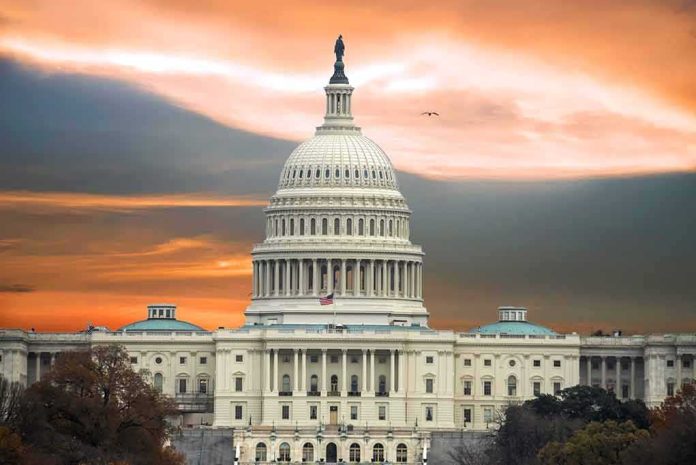
Democrats seized control of both chambers of Congress in the 2026 midterms, ending unified Republican power in Washington and igniting a public blame game inside the GOP.
Story Snapshot
- Democrats won the House and Senate, flipping several seats long held by Republicans.
- Losses spread across red and swing states, pointing to broad Republican weakness.
- Vice President JD Vance and President Trump linked the setback to the Iran conflict.
- Historical trends show presidents often lose midterms, but the scale here stands out.
What Changed in Congress and Why It Matters
Democrats reclaimed majorities in both the House and the Senate, according to live tallies from major outlets tracking certified and called races. Reported numbers showed Republicans falling well short in each chamber, with several seats flipping in a single night. Control of Congress now shifts the balance of power in Washington. Committee gavels, subpoena power, and the legislative calendar will move to Democratic leaders, reshaping fights over spending, immigration, energy, and oversight.
The loss ends a two-year stretch when Republicans held the White House and Congress. President Trump enters the second half of his term facing hostile hearings and a narrower policy path. House and Senate priorities will test whether cross-party deals are possible in an election-charged climate. Millions who feel Washington serves elites, not families, will watch whether either party can focus on prices, wages, safety, and the border, rather than partisan point scoring.
Where Republicans Lost Ground
Reporting points to a wide map of setbacks. Democrats posted Senate gains in places long seen as secure for Republicans, including Texas, Kansas, and South Carolina, along with wins in competitive states. Network and affiliate coverage cited at least seven lost Republican Senate seats, with additional House defeats even in districts Trump carried easily in 2024. That spread suggests a national tide, not a single upset. It also signals trouble with suburban voters and some right-leaning independents.
Several House districts that had been redrawn to favor Republicans fell to Democrats, according to election-day live updates. Those changes matter beyond one cycle. Maps drawn for advantage did not hold under this pressure, which hints at campaign message problems, candidate quality gaps, or issue breaks that overcame local fundamentals. Losses on friendly turf will shape party recruiting, fundraising, and strategy for 2028 and for the next round of state and federal redistricting battles.
The Blame Game Inside the GOP
Vice President JD Vance said the “reason we lost is the war with Iran,” tying foreign policy costs to voter anger. President Trump said that link was “largely true,” while still defending his choices and saying he would make them again. Those remarks put national security, energy prices, and war fatigue at the center of the party’s post-mortem. They also reflect a split between hard-line posture abroad and domestic concerns over inflation and stability at home.
Media coverage highlighted other possible factors, including high prices and district-level candidate issues, but did not settle the weight of each cause. One short clip circulated of Senator Thom Tillis saying many Republican senators had private doubts about Trump but feared primaries. That statement, while newsworthy, lacks full independent documentation here, so the scale of private dissent is unclear. The party’s official discussion remains focused on policy choices and election performance.
How Big Midterm Losses Fit History
Midterms usually hurt the president’s party. Since World War Two, the party in the White House has lost House seats in most midterms, with average losses in the mid-20s. That pattern offers one baseline for 2026. Still, the size and spread of Republican losses this year look larger than the typical midterm penalty, especially with flips in red states and in districts designed to be safe. That scale suggests more than routine churn and will invite deeper analysis of turnout and swing blocs.
What Comes Next for Voters
Democrats now control hearings on spending, the border, health costs, and oil and gas policy. Republicans must decide whether to bargain or to draw sharp lines and run against Congress in 2028. Both paths carry risk. Families want lower prices, safer streets, and steady energy, not drama. If leaders on either side focus on jobs, costs, and corruption oversight that is fair and targeted, they can win back trust. If they do not, the anger at Washington will keep growing.
Sources:
youtube.com, bbc.com, cnbc.com, npr.org, apnews.com, bostonherald.com