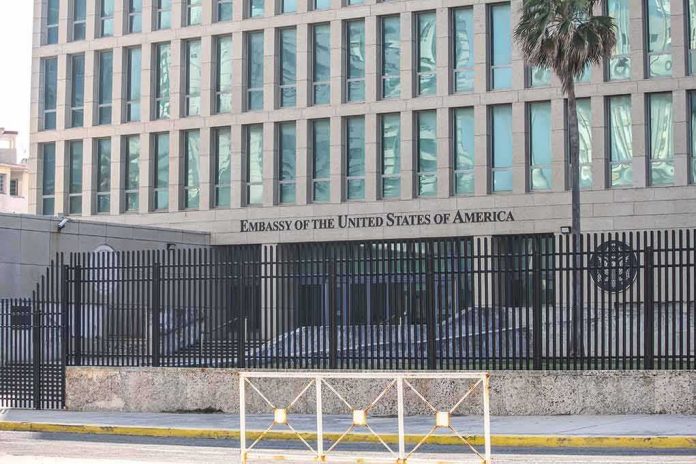
The United States suspended government activity and travel in Mexicali for August 25 after officials warned of a potential threat and told Americans to avoid government buildings and be ready to shelter.
Story Snapshot
- U.S. Embassy alert paused government activity and official travel in Mexicali on August 25 due to threat information.
- Americans were told to avoid government buildings and be ready to seek shelter if an incident occurs.
- The notice follows a pattern of short, location-specific security alerts across Mexico this year.
- Mexico remains a Level 2 advisory, urging increased caution for crime, kidnapping, and terrorism.
What The U.S. Alert Said And Who It Affects
U.S. Embassy officials in Mexico announced that all U.S. government activities in, and official travel to, Mexicali were suspended on August 25 because of threat information. The alert said the step was precautionary and aimed to reduce risk to personnel and U.S. citizens in the city. The notice did not share details about the nature of the threat. The statement urged Americans in Mexicali to stay alert and follow local and U.S. government guidance as updates are issued.
The U.S. Consulate in Tijuana amplified the alert and told Americans to avoid government buildings in Mexicali. The message also urged people to be ready to shelter in place if an incident occurs, and to tell family and friends they are safe once they can. These steps are common in fast-moving security situations where officials prefer to limit details while they check information and coordinate with local partners.
How This Fits The Wider Security Picture In Mexico
The State Department’s Mexico travel advisory places the country at Level 2, which means travelers should exercise increased caution due to crime, kidnapping, and terrorism risks. That nationwide rating coexists with local alerts that rise and fall based on events in specific areas. The U.S. Mission in Mexico has issued temporary shelter-in-place notices and activity suspensions in several states this year during security operations and unrest, then lifted them as conditions stabilized.
The Overseas Security Advisory Council has also highlighted tension in parts of Baja California and nearby areas, including warnings tied to rival criminal groups. These assessments often lead to restricted movement for U.S. government employees in certain zones until the risk eases. While each situation is unique, the pattern shows a cautious, step-by-step playbook: limit exposure, inform the public, and adjust once there is clarity and lower risk on the ground.
Why This Matters For Travelers And Border Communities
Americans cross the border for work, family, and medical visits every day. Short, targeted alerts can disrupt plans, but they also help people make safer choices in real time. When officials suspend travel and close offices, it signals they see a specific risk window, even if they cannot share sensitive details. For families on both sides of the line, clear steps—avoid certain sites and be ready to shelter—give practical tools to ride out a tense period.
The US Embassy in Mexico has issued an urgent security alert for Mexicali near the US border, citing a potential threat and urging travelers to exercise caution.https://t.co/OZ1nREMpzy
— The Traveler (@thetraveler_org) August 25, 2026
Both conservatives and liberals share a basic demand here: transparent safety steps that put people first, not politics. The alert is blunt about action but careful with details, which can frustrate anyone who wants the full story now. Still, the core message is simple and familiar: use caution, avoid government buildings today, and keep your phone charged. As officials update the situation, expect adjustments that either extend limits or reopen normal operations.
Sources:
insiderpaper.com, heraldodemexico.com.mx, osac.gov, travel.state.gov, mexiconewsdaily.com