Police say Selma Blair assaulted airline crew and first responders, while her team says a medical emergency explains everything.
Story Highlights
- Police identified Blair as the suspect after Delta Flight 938 reached the gate at John F. Kennedy International Airport.
- New York prosecutors charged Blair with two counts of assault; she pleaded not guilty.
- A charging document alleges Blair kicked a police officer and injured a nurse during hospital transport.
- The Federal Bureau of Investigation (FBI) issued a federal summons tied to alleged onboard assaults, according to reports.
What Police, Prosecutors, and Flight Reports Say Happened
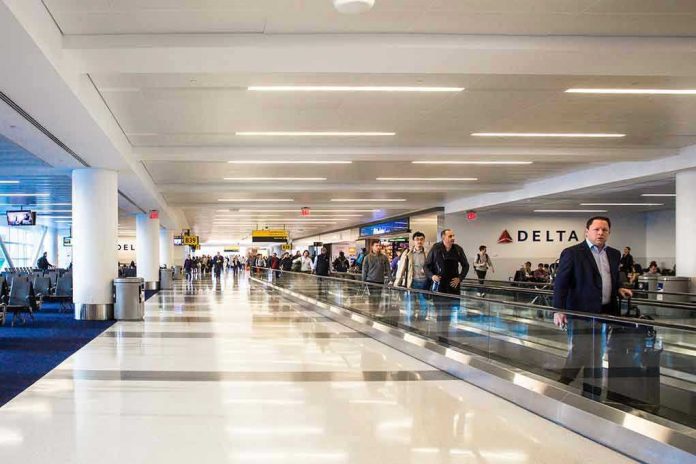
Port Authority police responded around 11 p.m. after Delta Flight 938 from Los Angeles reached its gate at John F. Kennedy International Airport. Officials said officers identified Selma Blair as the suspect after a report of an abusive passenger. News accounts, citing pilot radio, described injuries to two flight attendants, including a bloody nose and bite marks. Police detained Blair at the gate, setting in motion parallel state and possible federal actions tied to the incident.
State prosecutors in Queens charged Blair with two counts of assault linked to events after landing. Court records say she pleaded not guilty. A charging document attributed specific acts to Blair during transport to Jamaica Hospital Medical Center. The officer’s account said Blair freed a leg from stretcher straps and kicked the officer in the face, neck, and chest, causing pain and swelling. The document also referenced injury to a hospital nurse during the same period.
The Federal Angle and Why It Matters
The Federal Bureau of Investigation handles alleged crimes on aircraft under federal law. A federal law-enforcement source told reporters the FBI issued Blair a summons tied to alleged onboard assaults. Federal cases can add penalties beyond any state charges, which raises the stakes for the accused and for the crew. At the same time, a summons signals investigative steps, not a conviction, and does not settle factual disputes about intent or cause.
Big cases like this draw fast headlines, yet the public record still has gaps. Reporters have not published full attendant statements, passenger affidavits, police body-camera video, or the federal summons itself. Without those, readers cannot see every moment that officials will test in court. That missing context includes who made first contact, what force was used, and whether actions were deliberate or tied to a health event.
Blair’s Medical-Event Account and the Open Questions
Blair’s representative said she had a medical emergency on the flight and did not intend to hurt anyone. Her team denied claims that she tried to open a door. Her attorney told the court she missed doses of medication, fell and hit her head, and became severely confused and disoriented. Those statements point to intent as the key legal question. Assault charges require proof that a person meant to cause harm or acted with awareness of their actions.
Selma Blair steps back into the spotlight just days after her arrest over an alleged altercation aboard a Delta flight as her team blames a medical emergency and says there is far more to the story while the actress pleads not guilty to two assault charges#NYI pic.twitter.com/FA8ltfbd6O
— NewYork-Insight (@NewYork_Insight) October 17, 2026
This dispute sits inside a wider air travel problem. The Federal Aviation Administration says reports of unruly passengers surged in 2021 and then fell, but hundreds still occur each year. Only a small share become criminal cases. Crews must act fast to keep cabins safe. Passengers with medical crises can look violent to others who do not know them. That mix makes it hard for the public to judge intent from headlines alone, and it puts more weight on evidence in court.
Why This Resonates Beyond Celebrities
Many Americans think the system protects the powerful and leaves workers exposed. Flight attendants want safe cabins and clear rules. Patients want medical events treated as health crises first. Police and nurses want respect and safe conditions on the job. This case highlights all those tensions at once. The answer should come from full records and fair process, not spin. That is what courts are for, if the public can see the facts tested in daylight.
What to Watch Next
Watch for release of the full Queens charging papers, including sworn statements. Look for any federal filing that follows the reported FBI summons. Seek medical findings that could confirm or challenge the health claims, including hospital records. Finally, watch for video, cabin reports, and witness accounts that can fix the timeline. Those items, far more than viral clips, should decide whether this was criminal assault or a medical emergency gone wrong.
Sources:
people.com, abc7news.com, inquirer.com, reuters.com, faa.gov