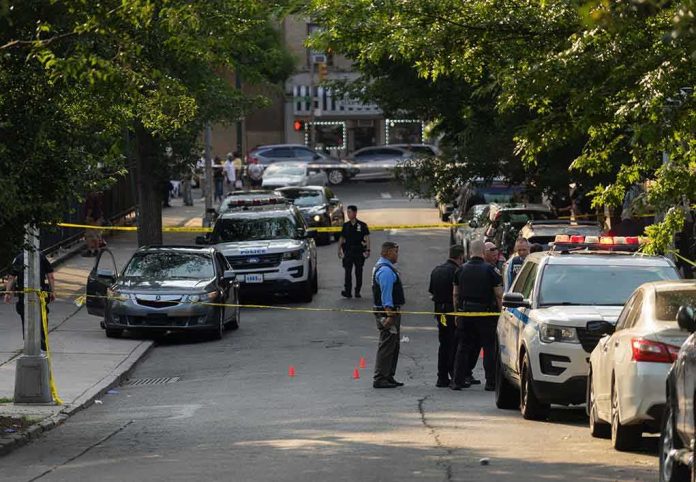
Three people are dead, including the shooter, and three more are injured after gunfire tore through a downtown Minneapolis high-rise.
Story Snapshot
- Police say the attack happened at a high-rise near Loring Park in downtown Minneapolis.
- Three people died, including the suspected gunman; three others were injured.
- Officers reached the scene within minutes after 911 calls reported ongoing gunfire.
- Investigators are working to confirm how the gunman died and to map the full timeline.
What Police Say Happened
Minneapolis police reported an active shooting at a downtown high-rise near Loring Park, drawing a rapid multi-agency response. Initial reports said multiple people were shot inside the building, with gunfire continuing as officers arrived. Police later confirmed three deaths, including the suspected gunman, and three people injured. Early social updates from local outlets described a fast-moving scene with officers securing floors and aiding victims while medics staged nearby for quick transport.
Dispatch records and news timelines show the pattern seen in major incidents. Officers were sent within minutes of the first 911 calls and entered to stop the threat and evacuate bystanders. That early push can save lives, but it also leaves gaps in what officials can confirm in the first hours. Police often release clearer details after interviews, video review, and autopsies are complete. Minneapolis keeps public information releases on an official portal as updates develop.
Who Was Hurt And What We Know So Far
Authorities said three people died, including the shooter, and three others were injured. Officials did not immediately list names or ages. Doctors at local hospitals, including the city’s main trauma center, typically coordinate with police to provide general updates while protecting patient privacy. Past mass-casualty responses in Minneapolis have shown how emergency departments surge staff and resources to handle sudden waves of victims during chaotic scenes downtown.
Investigators now focus on key facts: where each victim was found, which rounds came from which weapon, and when shots were fired. Medical examiners determine cause and manner of death. Crime scene teams match shell casings, bullet paths, and video to build a timeline. This careful work is standard after any deadly shooting in Minnesota and supports any later charging or policy review decisions if they are needed.
Why Early Details Change In These Cases
Major shootings create confusion. Witnesses remember sounds and flashes, but not always the sequence. Officers under stress act fast to stop the threat, then must recall details later. Research shows memory can be unreliable in these moments, which is why video, radio traffic, and forensics matter so much. Agencies in Minnesota and nationwide use after-action reviews to sharpen training and communication after large, public incidents.
NEW INFORMATION: 3 people dead – including alleged suspect – after shooting at high-rise apartment building in downtown Minneapolis, Minnesota. #LiveDesk pic.twitter.com/pKL1jQDJCQ
— Steve McCarron KOMO (@SteveTVNews) September 3, 2026
For many Americans, the pattern itself is the concern. People see another deadly attack in a public space and ask why safety keeps slipping. Conservatives blame rising crime and weak enforcement. Liberals point to guns, frayed social safety nets, and untreated mental health. Both sides agree on this part: families should be able to live, work, and worship without fear, and they want clear answers from leaders who too often offer talk instead of fixes.
What To Watch Next
Expect police to release more details on the shooter’s identity, motive, and the full timeline once forensics and interviews are done. Look for updates on the conditions of the injured and any community support for victims. Watch for whether body-camera or building security video is released to clarify the sequence inside the high-rise. Finally, track whether city leaders outline concrete steps to harden building security and improve rapid medical response downtown.
Sources:
facebook.com, en.wikipedia.org, cbsnews.com, hennepinhealthcare.org, policinginstitute.org, minneapolismn.gov, youtube.com, police1.com, flyoverphilosophy.substack.com