The Senate has confirmed Jay Clayton as President Trump’s new intelligence chief in a tight party-line vote, putting a seasoned prosecutor at the helm of America’s spy agencies after weeks of partisan brawling and media spin.
Story Snapshot
- Senate confirms Jay Clayton as director of national intelligence in a 51–47 party-line vote.
- Clayton brings experience as U.S. attorney for the Southern District of New York and former Securities and Exchange Commission chairman.
- Media critics fixated on his refusal to restate the 2020 election outcome, while supporters stressed his record against terrorists and cartels.
- His confirmation ends the controversial interim tenure of acting director Bill Pulte and clears the way to restore key surveillance tools.
Senate Brawl Ends With Trump’s Intelligence Pick Confirmed
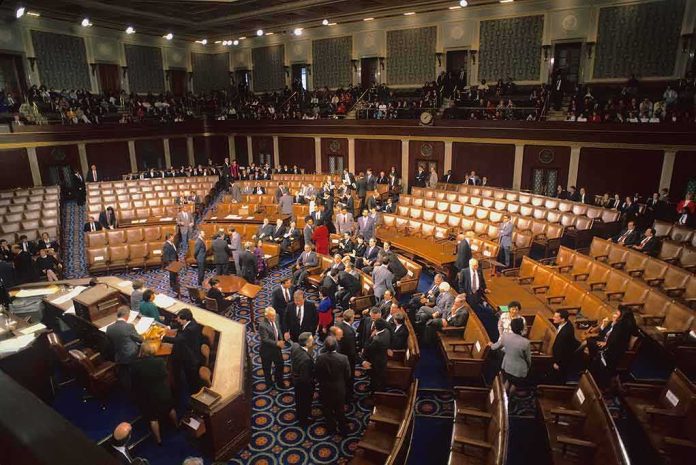
The United States Senate has now approved Jay Clayton to serve as director of national intelligence, by a narrow 51–47 vote that fell strictly along party lines. Republicans backed President Trump’s choice, while Democrats stayed unified in opposition, even after some earlier praise for Clayton’s public service record. The confirmation ends a monthslong stalemate over the post and gives the Trump administration a Senate-confirmed leader for the Office of the Director of National Intelligence at a tense time for national security.
Clayton’s path to the job was rocky from the start, reflecting the deep mistrust many conservatives feel about how Washington treats intelligence power. President Trump named him in June to succeed former director Tulsi Gabbard and to replace acting director Bill Pulte, whose appointment sparked fierce Democratic resistance. The Senate Intelligence Committee advanced Clayton’s nomination on a 9–8 vote, again along party lines, signaling early that the confirmation fight would be more about politics and optics than about basic competence.
Who Jay Clayton Is – And Why Trump Backed Him
Jay Clayton is not a career spy; he is a veteran of federal law enforcement and financial regulation. He has served as the U.S. attorney for the Southern District of New York since 2025, leading major prosecutions out of Manhattan, and he previously chaired the Securities and Exchange Commission during Trump’s first term. President Trump highlighted Clayton’s time at Sullivan & Cromwell, a top law firm, and praised him as “very highly respected” in the legal community, pointing to his work against terrorists, cartels, and major financial crimes as proof he can handle complex, high-pressure threats.
Supporters in the Senate echoed that view, stressing that today’s intelligence battles are not only about spies and satellites but also about dirty money, cyber crime, and foreign economic warfare. Coverage of the floor debate quoted Republicans pointing to Clayton’s “leadership against financial crimes” and his cooperation with intelligence officials on Chinese market exploitation during the pandemic. For many conservatives tired of entrenched bureaucracy, putting a tough-minded outsider with prosecutor experience over 18 intelligence agencies looked like a chance to clean house and force accountability in a system they feel has been weaponized in the past.
Election Question And Media Narrative Clash With Conservative Concerns
Media outlets, however, centered their reporting on one dramatic moment in Clayton’s confirmation hearing. When Senator Jon Ossoff pressed him to say who won the 2020 presidential election, Clayton refused to give the simple soundbite the senator demanded, saying he would not “get into that,” and later referring to Joe Biden as having been “certified” rather than repeating campaign talking points. Critics treated that answer as evasive, turning the hearing into yet another loyalty test instead of a serious discussion of how to secure the country from terrorism, China, Russia, and Iran.
For conservative readers, this clash reveals a familiar pattern. The left and its media allies focus on symbolic questions to paint Trump nominees as suspect, while ignoring the real stakes for border security, drug cartels, and foreign threats that affect American families every day. Clayton’s hearing also touched on subpoenas involving New York Times journalists, and he declined to discuss those details in open session, citing national security concerns. Press groups framed this as secrecy, but many patriots see it as basic prudence: you do not spill sensitive tools and methods on live television just to please grandstanding senators.
What Clayton’s Confirmation Means For Intelligence And Liberty
Clayton now takes over an intelligence office whose authority has been chipped away after years of internal fights, leaks, and politicized appointments. His confirmation is expected to unlock stalled work on reauthorizing key surveillance powers that had lapsed for more than six weeks, a gap that worried both security hawks and civil-liberties advocates. Acting director Bill Pulte, a housing executive with no national-security background, had been using his brief tenure to slash staff at the Office of the Director of National Intelligence, moves cheered by some conservatives but criticized as chaotic by Washington insiders.
Clayton told senators he would carry out his duties “candidly, independently, and with my best judgment,” promising to focus on top threats like terrorism, fentanyl trafficking, Russia, China, and Iran. That pledge matters for readers who want strong intelligence but fear government overreach. The new director will have vast access to classified data; the way he uses that power will affect everything from how we track cartel shipments of deadly drugs to how we guard election systems from foreign hacking without turning surveillance on law‑abiding citizens.
Sources:
facebook.com, youtube.com, nypost.com, pbs.org, en.wikipedia.org, whitehouse.gov, politico.com, nytimes.com, cnn.com, cnbc.com