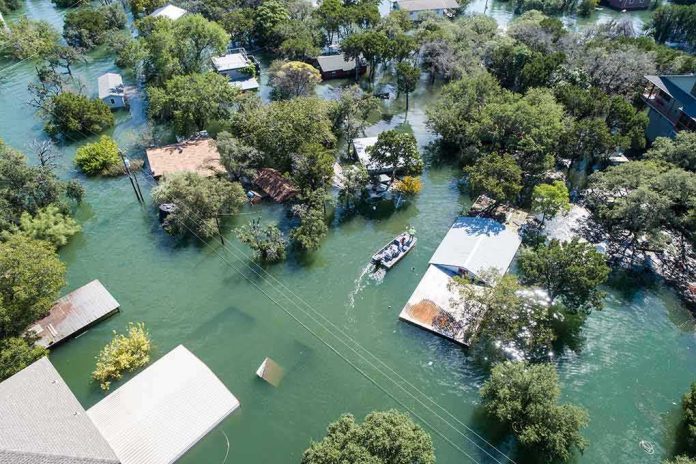
With the death toll surpassing 600 and hundreds still missing, Nepal has pushed every available resource into nonstop search and rescue across the flood zone.
Story Snapshot
- Nepal says security and health agencies are fully mobilized for rescue, medical aid, and relief.
- Search teams resumed work after a weather pause; operations remain active.
- Authorities report hundreds of bodies recovered and many more missing, with counts still being verified.
- Leaders ordered intensified efforts as thousands of personnel support airlifts and shelter setup.
Rescue Operations Continue Under Full National Mobilization
Nepal’s Ministry of Foreign Affairs reports that security forces, disaster managers, local officials, and health workers are fully mobilized for search, rescue, evacuation, emergency care, and relief. The government says it is using all resources at its disposal to aid those affected. This formal update frames the response as a whole-of-government effort reaching into remote valleys and river corridors where debris and fast water still pose risks.
Police statements confirm that rescue work has not stopped. A police spokesperson told international media that operations were ongoing, even as teams adjusted for changing conditions. That message aligns with reports that crews returned to the field after severe weather briefly forced a pause. The restart underscores how fast-changing mountain weather can slow work, then allow teams to surge back into the search areas.
Casualty Counts Are Rising As Verification Lags Behind
Officials and news outlets report rising death and missing numbers as access improves and lists are reconciled. A government update cited 359 bodies recovered and 596 people missing from 33 countries, while noting that figures remain subject to verification as searches continue. Later reports placed the combined death toll above 600 amid continued searches for nearly 3,000 missing, reflecting a wider regional count and the fluid nature of disaster accounting.
Multiple outlets corroborate the ongoing rescue push, with updates over several days showing both active searches and changing totals. This pattern is common in major disasters where roads, bridges, and communications are damaged. In such settings, reconciling reports from police, hospitals, morgues, and local officials takes time. Authorities caution that numbers will shift as new areas are reached and identities are confirmed.
Scale Of Deployment And Leadership Direction
International reporting describes thousands of army, police, and armed police personnel working across the affected region, airlifting the injured, and setting up temporary shelters for survivors. These actions show a broad deployment across difficult terrain. Helicopters and ground teams are moving people to hospitals while engineers and local officials try to reopen routes to isolated communities.
Senior leaders ordered agencies to intensify search, rescue, and relief. An urgent disaster council meeting resulted in clear direction to mobilize resources to flood-hit districts. That push comes as responders face landslides, debris jams, and damaged infrastructure. These obstacles slow the search and complicate medical evacuation, but the order signals sustained political support for field teams and logistics lines.
Why The Numbers Shift And What Comes Next
Himalayan floods often create long, narrow damage paths that are hard to reach. When weather blocks air support or wipes out a bridge, both rescue and recordkeeping suffer. That is why officials stress that current counts are provisional and will change as teams move deeper into river canyons and side valleys. The priority remains finding survivors, reuniting families, and getting medical care to people in need.
India’s 4th relief flight to flood-hit Nepal is now airborne. An Indian Air Force C-130 aircraft is carrying 11 tonnes of assistance, including rescue equipment and essential relief supplies to support ongoing search-and-rescue operations.#Nepal #NepalFlood #India #SJaishankar pic.twitter.com/CPbBbgSXf5
— India Brief (@IndiaBrief365) August 29, 2026
Authorities say they resumed field work after the weather pause and remain on alert for new flood threats. That means search plans can shift day to day based on rainfall and upstream lake levels. For families waiting on news, these swings are painful. For responders, they require flexible plans and constant coordination across police, army units, health services, and local offices to keep the mission going safely.
Sources:
youtube.com, mofa.gov.np, theguardian.com, english.news.cn, english.nepalnews.com