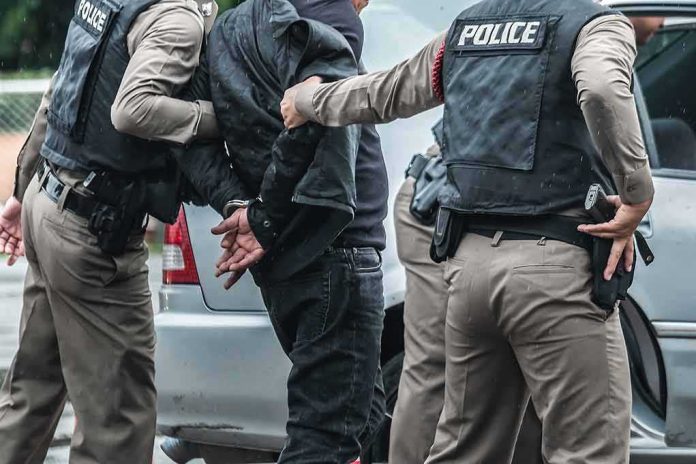
Costa Rica’s most wanted fugitive is now in custody after an armed dawn operation that left officers wounded and raised fresh questions about how much of the story comes from official statements.
Quick Take
- Authorities say Costa Rican police captured Alejandro Arias Monge, known as “Diablo,” after an hourlong struggle.
- Officials reported that six Costa Rican federal agents were injured in the arrest, while other reports gave different injury counts.
- The United States State Department lists Arias Monge as “captured” and says he led a violent transnational criminal organization.
- The public record in the research package does not include the arrest warrant, incident report, or evidence log from the operation.
What Happened in Costa Rica
Costa Rican authorities say they captured Alejandro Arias Monge in the country’s northeast after a long manhunt. CBS News reported that officers met armed resistance during the arrest, and that the struggle lasted about an hour. Other reports say the operation took place before dawn in Sarapiquí or nearby Rio Frio. The basic fact is not in dispute in the record: officials say he was detained after a confrontation.
The arrest drew attention because Arias Monge was not treated as an ordinary suspect. The United States State Department page for him is labeled “Captured” and says he was the head of a violent transnational criminal organization. CBS News reported that the State Department had offered a reward of up to $500,000 and said his group moved narcotics through several Central American countries toward the United States. That framing turns the case into a regional crime story, not just a local arrest.
Why the Case Matters Beyond One Arrest
The operation fits a larger pattern that frustrates people across the political spectrum. Officials announce a dramatic win, then the public is left with press accounts instead of the underlying warrant, charging file, or evidence inventory. In this case, the research package does not include those core documents. It does include official claims, repeated news coverage, and a State Department designation, but not the paper trail that would let outside observers test the full story.
That gap matters because high-profile capture stories often move faster than public proof. One report said six agents were injured, another said eight officers were injured and one person died, and a third described five wounded officers. Those differences do not change the central fact of the arrest, but they do show how quickly a major law-enforcement event can harden into a clean narrative before every detail is settled. For readers wary of official spin, that is the real warning sign.
What the Record Confirms and What It Does Not
The record confirms that Costa Rican authorities and the United States government now treat Arias Monge as a captured fugitive. It also confirms that officials described him as a major figure in drug trafficking and linked him to a violent network. What the record does not confirm is the full legal basis for the arrest, the exact evidence seized, or the complete operational account from police and prosecutors. Those are the missing pieces that matter most after the flash of the shootout fades.
Costa Rica: After over a decade on the run, Alejandro Arias Monge, alias Diablo, identified as Costa Rica’s most wanted drug lord and alleged head of a transnational criminal organization tied to at least 100 murders, was captured during a one-hour operation in Sarapiquí.
The… pic.twitter.com/n3fWOx2Etx
— Crime Intel (@WorldCrimeIntel) July 25, 2026
For now, the case stands as another example of how public safety victories can arrive wrapped in incomplete paperwork. Supporters of tough law enforcement will see a dangerous fugitive removed from the streets. Skeptics will see a familiar pattern of official certainty before full disclosure. Both reactions can coexist. The capture appears real; the deeper documentary record still needs to catch up.
Sources:
pjmedia.com, cbsnews.com, state.gov, freemalaysiatoday.com, youtube.com