Saudi Arabia, Turkey and Pakistan just declared that an attack on any one of them will be treated as an attack on all three.
Story Snapshot
- The three countries signed a mutual defense pact Friday in Mecca, Saudi Arabia.
- The deal builds on a 2025 Saudi-Pakistan agreement and now pulls in Turkey’s military too.
- Pakistan, a nuclear-armed nation, is now bound to defend Saudi Arabia and Turkey if either is attacked.
- The signing followed nearly a year of mixed signals, denials, and leaked drafts about whether Turkey would actually join.
- The pact comes as missile fire and war fears spread across the Middle East following the U.S.-Iran conflict.
A New Collective Defense Clause
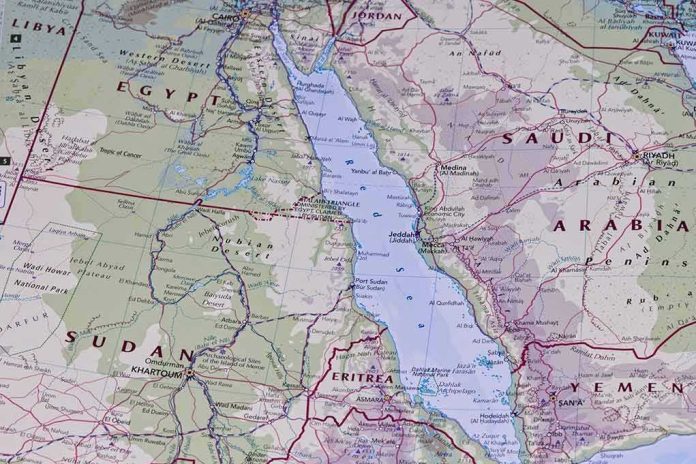
Saudi Arabia, Pakistan and Turkey signed a joint defense agreement in Mecca on Friday. Pakistan’s Foreign Ministry confirmed the deal, which came together during a meeting between Saudi and Turkish leaders. The pact’s core promise treats any armed attack on one member as an attack against all three, a structure similar to NATO’s mutual defense rule.
Built On An Existing Saudi-Pakistan Alliance
This trilateral deal did not start from scratch. Saudi Arabia and Pakistan signed their own Strategic Mutual Defense Agreement back in September 2025, committing each country to treat aggression against the other as aggression against both. That earlier bilateral pact already included language declaring that “any aggression” against one side counts as an attack on the other.
Turkey spent months on the outside of that arrangement, watching and negotiating before agreeing to formally join as a full partner.
A Year Of Denials Before The Deal
The path to Friday’s signing was anything but smooth. In January, Pakistan’s defense-production minister told Reuters a draft trilateral pact was already circulating among all three governments after nearly a year of talks. Days later, Bloomberg reported Turkey was moving toward formal membership. But by the end of that same month, a source close to the Saudi military told reporters flatly that Turkey would not join, calling the arrangement “a bilateral pact with Pakistan” that would stay that way. Those denials turned out to be temporary.
Nuclear-Armed Pakistan Joins The Fold
Pakistan brings something no other partner in this pact has: a nuclear arsenal. Folding Pakistan’s military commitments into a three-way defense pact with Saudi Arabia and Turkey means a nuclear-armed state is now formally tied to the security of two more Middle Eastern and Mediterranean powers. That detail alone has drawn heavy attention from regional analysts watching how far the collective-defense promise actually extends in practice.
Regional Tensions Behind The Timing
The signing did not happen in a vacuum. Reuters reported the agreement was struck as a regional conflict tied to the U.S.-Iran standoff has “rained missile fire onto Gulf oil exporters,” rattling Sunni-majority U.S. allies across the region. For Saudi Arabia in particular, the timing reflects real fear that oil infrastructure and territory could come under direct attack as the broader Middle East conflict widens.
TURKEY, SAUDI ARABIA, AND PAKISTAN SIGN HISTORIC TRILATERAL DEFENSE PACT IN MECCA
Muslim world, Turkey, Saudi Arabia, and Pakistan signed a trilateral mutual defense treaty—officially named the Mecca Joint Defense Agreement—in the holy city
Read more : https://t.co/JZbC4fHZOJ pic.twitter.com/HrbDq66Y26
— Update News Room (@Updatenewsroom) August 7, 2026
Some commentators have already labeled the arrangement an “Islamic NATO,” though the pact so far lacks NATO’s integrated command structure or standing joint forces. What operational commitments actually mean in a real crisis, and whether Qatar or other nations eventually join, remains unsettled. For now, the headline fact stands on its own: three regional powers, one of them nuclear-armed, have formally agreed that an attack on one is an attack on all.
Sources:
insiderpaper.com, dailysabah.com, chathamhouse.org, timesofisrael.com, youtube.com, hindustantimes.com, facebook.com