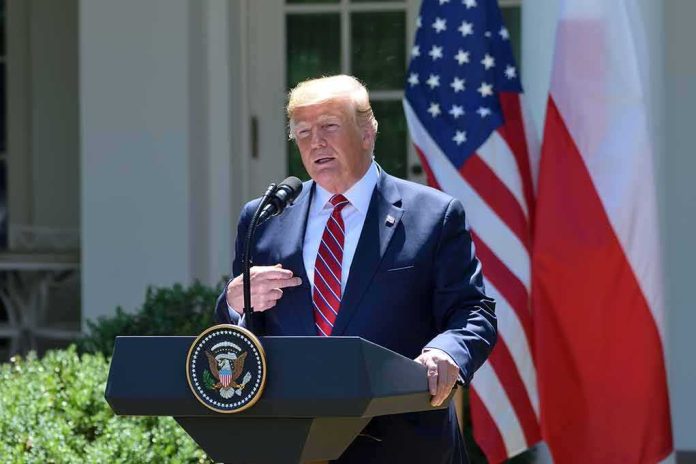
President Trump said he expects to meet North Korean leader Kim Jong Un later this year, signaling a fresh push for direct talks after years of stop-and-go diplomacy.
Story Snapshot
- Trump said he plans to meet Kim Jong Un later this year, reviving leader-to-leader talks.
- The White House remarks align with past signals of openness to a summit during his second term.
- Analysts say such meetings often move faster than working-level deals, limiting results.
- Both sides gain optics and leverage even before terms are set, raising stakes for outcomes.
Trump Signals a Return to Direct Summit Diplomacy
President Trump told reporters he expects to meet Kim Jong Un later this year, making clear he wants to restart direct talks with North Korea. The comment follows earlier statements in his second term that he was open to a new face-to-face meeting. The timing and location were not announced. The message matches Trump’s style of top-level diplomacy, where leaders set the tone and pace. That approach has, at times, produced movement and attention, but not lasting, written deals.
Trump’s renewed outreach comes after years of mixed results from first-term summits and later pauses. Past meetings created major images and brief openings but fell short on concrete nuclear steps that could be verified and sustained. The public record shows leaders often signal intent first, while detailed negotiations lag behind. That gap can slow real progress, especially on nuclear limits, sanctions relief, and security guarantees that require careful drafting and follow-up.
Why a Meeting Matters for Both Washington and Pyongyang
A meeting with a sitting United States president offers North Korea status and attention on the world stage. That visibility can help Pyongyang manage pressure at home and abroad. For Washington, a summit lets Trump claim momentum on a hard problem that frustrates both parties. Americans on the right and left want leaders to fix big threats, not just argue. A direct talk suggests action, but it also raises pressure to deliver something real, not only a photo moment.
Experts who watched prior summits point to a pattern. Leader-level headlines come first, while the tough parts arrive later. Those include caps on warheads and missiles, site access for inspectors, and rules for phasing any sanctions relief. Without those details, promises fade and risks grow. This time, both sides must map steps that can be checked and enforced. If they do not, the cycle of bold openings and thin outcomes will likely repeat again.
What Success Would Need to Look Like Now
Clear goals and sequencing would give a new meeting a better shot. The United States could aim to halt new bomb fuel, stop long-range missile work, and set firm timelines for inspections. North Korea could seek limited, reversible relief that depends on meeting each step. That kind of staged trade lowers risk for both sides. It also answers public demands for results that last beyond one news cycle and respect American security and taxpayer interests.
Asked by a reporter at the White House if he expects to meet with Kim later this year, President Trump replied, "Yeah, I will be."
The White House has not confirmed plans for a meeting, nor has Pyongyang. https://t.co/frYasw5800
— CBS Mornings (@CBSMornings) August 19, 2026
Congressional leaders will watch closely, even with Republicans in charge. Lawmakers from both parties have warned against giving away leverage without concrete action in return. Voters see a nuclear-armed North Korea as a real threat. They also see elites in Washington fail to lock in gains after big announcements. A focused plan, regular briefings, and measurable benchmarks could show that this summit is about hard results, not just stagecraft or talking points.
Sources:
facebook.com, yahoo.com, nypost.com, nytimes.com, wilsoncenter.org