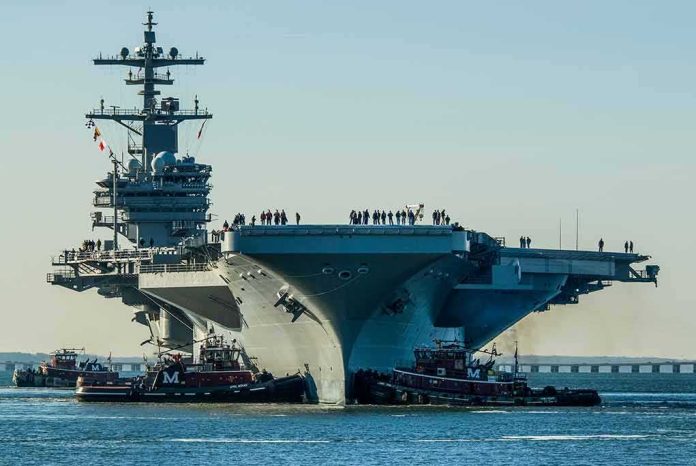
A Navy carrier just spent 265 straight days at sea and finally came home to San Diego.
Story Highlights
- USS Abraham Lincoln returned after a roughly 10-month deployment tied to the Iran war.
- The crew set a modern record with 265 consecutive days at sea without a port visit.
- Reports cite eight suicide attempts within the strike group during the mission.
- Analysts say long, unpredictable deployments have become more common since 2023.
Carrier Returns After Grueling Middle East Mission
On October 8, the aircraft carrier USS Abraham Lincoln sailed into San Diego Bay after more than 10 months deployed, capping an unusually long and intense mission linked to U.S. operations against Iran. Associated Press and National Public Radio described sailors pouring onto the pier to reunite with families, including parents meeting babies for the first time. The homecoming followed months of sustained operations in the Middle East and left many relatives relieved, proud, and exhausted by the wait.
Defense leaders framed the deployment as historic. Multiple outlets reported the Lincoln completed a record 265 consecutive days at sea without a port visit, a modern benchmark for a U.S. carrier. Coverage placed the total deployment at about 321 to 322 days, making it one of the longest for a carrier since the end of the Cold War. The day count varies by outlet, but all agree the ship stayed out much longer than the Navy’s typical seven-month target.
Strain on Sailors and Families Was Evident
Reports during the return highlighted severe strain across the strike group. ABC News and local reporting cited Navy confirmations of eight suicide attempts during the deployment. Families described months of worry and few breaks as the carrier remained on station. The long gap without port calls cut off normal rest, repair, and morale boosts that port visits often provide, adding pressure on crews who worked high-tempo flight and ship operations for months.
Defense Secretary Pete Hegseth greeted the carrier near the end of the mission and acknowledged signing two extensions that kept the Lincoln at sea longer than planned. His remarks underscored how mission demands can stretch deployment schedules. While leaders praised the crew’s performance, the mental health incidents and reported hardships drew notice from officials and the public. That mix of honor and hardship defined the mood on the pier as sailors stepped ashore.
Why Deployments Are Getting Longer
Security analysts say these long deployments are part of a wider trend since 2023. The Royal United Services Institute noted that many recent carrier cruises ran eight to nine months or longer, often exceeding the Navy’s own norm of about seven months. Hot spots in the Middle East and elsewhere pull limited assets in many directions. That strain shows up as longer, less predictable deployments, heavier maintenance loads, and rising stress for sailors and families.
For leaders, highlighting mission success and “historic” metrics answers critics who question readiness and posture. For others, the same facts support calls for more ships, more stable schedules, and better support for crews. Both views accept the core reality shown by the Lincoln’s return: demand stayed high for months, and a single carrier group had to carry that weight far from home.
What This Homecoming Means Now
The San Diego reunions showed the human side of strategy. Thousands of sailors finally came home to hugs, kids, and quiet nights after flight deck noise and red alerts. The record sea streak and near year-long timeline will enter Navy lore. So will the toll. As the nation debates budgets and force structure, the Lincoln’s story offers one clear lesson: when Washington sends a ship for months on end, people bear that choice up close.
US Navy's USS Abraham Lincoln Returns to San Diego After Record-Breaking 10-Month Deployment at Sea
Watch: https://t.co/Saa9zSBza8 pic.twitter.com/nKXuqCtsJo— India Today Global (@ITGGlobal) October 9, 2026
Next steps involve recovery, maintenance, and time with family. Commanders will review what worked and what broke under the strain. Lawmakers will point to these facts when they argue for more carriers, more crew support, or both. The crew earned a quiet welcome and a long rest. The country owes them more than thanks; it owes them plans that match missions to means before the next long watch begins.
Sources:
zerohedge.com, apnews.com, ocregister.com, irishnews.com, newsnationnow.com, nbcconnecticut.com, crow.house.gov