A new State Department report says a Cuba-linked network shared a plan for protests at U.S. military bases, Immigration and Customs Enforcement offices, and federal buildings.
Story Snapshot
- State Department cites a “National Rapid Response Plan” targeting bases, Immigration and Customs Enforcement, and federal sites.
- Report links the plan’s promoters to a Cuban government arm now under U.S. sanctions.
- Justice and Treasury officials are probing nonprofits over alleged coordination with Cuban officials.
- Some claims lack direct proof of orders or funding, and depth of group involvement is unclear.
What The Report Says About Planned Protests
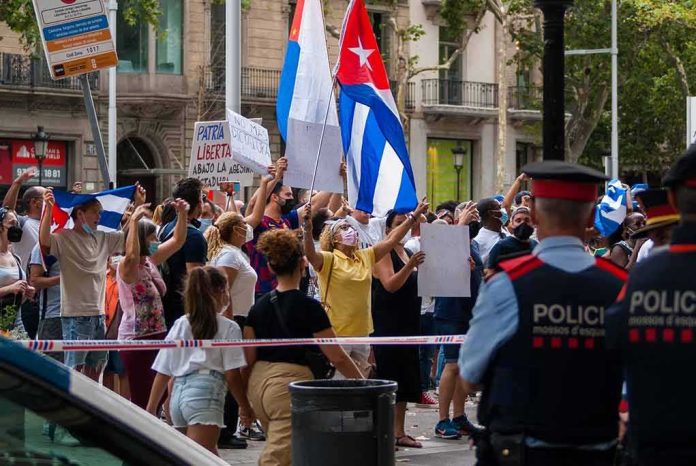
State Department officials described a publicly posted “National Rapid Response Plan” that calls activists to mobilize at U.S. military bases, Immigration and Customs Enforcement facilities, and federal buildings. The plan was distributed by the National Network on Cuba, a coalition of more than 60 groups, and lays out steps for a 24-hour response to trigger events. The department’s summary frames the plan as part of a broader effort to pressure U.S. policy and security sites inside our borders.
Officials also highlighted six U.S. organizations with overlapping ties to Cuba outreach operations, including People’s Forum, Code Pink, and the National Lawyers Guild. The report cites travel, shared events, and public pledges among these groups to show alignment. It stresses that overlap does not prove command-and-control, but it does show a network that can move fast when called. That speed is the point of the rapid response plan at sensitive federal locations.
Why Cuba’s ICAP Sanctions Matter
The State Department sanctioned the Cuban Institute of Friendship with the Peoples, known as ICAP, as a Cuban government entity tied to subversive and anti-American activity. The department identifies ICAP as involved in developing, funding, and spreading the regime’s revolutionary network. The new designation places ICAP within a larger push to expose foreign actors who cultivate U.S. protest infrastructure for strategic gain, including efforts aimed at defense and immigration enforcement targets.
The report connects the National Network on Cuba to ICAP through relationship-building and exchanges. That link raises alarms when the same network promotes protests at bases and Immigration and Customs Enforcement sites. For conservative readers, the risk is plain: a hostile regime’s outreach arm may be shaping where and how protests hit key American institutions. Sanctions are the legal backstop, but the frontline is public vigilance and firm local security plans.
Funding, Travel, And An Active Federal Probe
Investigators say Code Pink received about one quarter of its funding since 2017 from entities tied to Neville Roy Singham, who is linked in government and congressional reporting to foreign states hostile to U.S. interests. The State Department report also notes that People’s Forum leader Manolo de los Santos has traveled to Cuba since at least 2009 and appeared in regime media. The National Lawyers Guild adopted a 2026 resolution to work with the National Network on Cuba.
Justice Department and Treasury Department officials are reviewing 145 nonprofits for alleged coordination with Cuban government officials on lobbying, messaging, delegations, and organizing. That probe is ongoing. It has not produced public charges, but it signals that federal agencies view the risk of foreign-directed activism as real and current. If proven, coordination would show a foreign influence campaign touching sensitive American security and immigration operations.
Gaps, Pushback, And What Comes Next
The State Department report admits limits. It does not name Cuban intelligence officers driving the protest plan, show direct orders to U.S. groups, or provide audited transfers that funded specific actions. It also says the level of each group’s role in the rapid response plan is unclear. These gaps will fuel critics who call the threat overblown, even as the public evidence still ties the plan’s promoters to a sanctioned Cuban government entity.
State Department Report: Cuba-Linked Activists Now Planning Protests at US Bases, ICE Siteshttps://t.co/nHk22kKKib
— RedState (@RedState) July 20, 2026
Conservative readers should watch two tracks. First, compliance: base commanders and Immigration and Customs Enforcement directors must secure perimeters and coordinate with local police. Second, transparency: the administration should press for declassification where safe, release clear summaries, and seek court-tested evidence. Sunlight is the best answer to foreign influence. Peaceful protest is legal. Foreign-directed pressure on U.S. security sites is not. The line must be bright and enforced.
Sources:
redstate.com, foxnews.com, en.cibercuba.com, state.gov