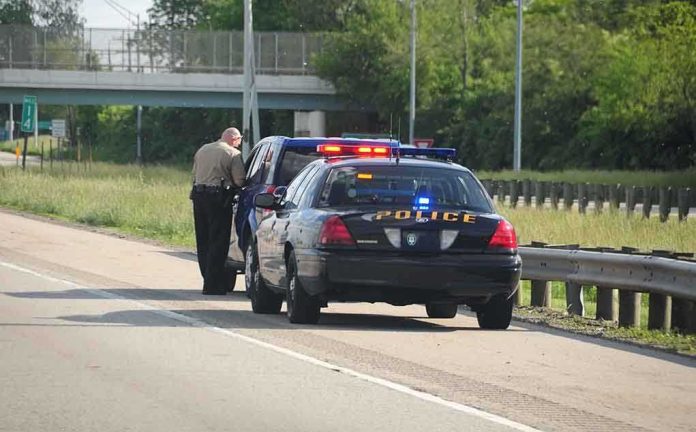
A deployed National Guard specialist was arrested in Washington after a routine traffic stop revealed a pistol he could not legally carry under District law.
Story Highlights
- U.S. Park Police arrested Oklahoma Guardsman Jakob Noonan after a stop for an expired tag.
- Court records show he lacked a District of Columbia concealed-carry permit, a key legal requirement.
- The case highlights the clash between strict District gun rules and out-of-state service members.
- Other recent Guard arrests in the capital add to scrutiny of the long-running deployment.
What Police Say Happened During The Traffic Stop
U.S. Park Police stopped a vehicle in Washington on Monday for an expired registration tag and arrested Specialist Jakob Noonan, 22, of the Oklahoma National Guard, after finding a pistol in the car, according to Associated Press reporting and local outlets. Police charged him with carrying a pistol without a license. The arrest occurred while Noonan was deployed to the capital as part of a mission launched by President Trump, outlets reported. Officials have not reported any injuries tied to the stop.
Court records cited by multiple reports say Noonan did not have a District of Columbia concealed-carry permit, which District law requires to carry a loaded handgun, including in a vehicle. The District’s rules differ from many home states for Guard members. In the District, a person must register the firearm and hold a local carry license. Police in Washington often enforce these licensing rules during traffic stops that begin over vehicle violations.
How District Gun Rules Differ From Many States
District law sets detailed steps for legal concealed carry. The Metropolitan Police Department states that, if stopped while carrying, a license holder must disclose the firearm, present the carry license and registration, identify the gun’s location, and follow all lawful orders. Carrying a loaded gun in a vehicle without a District-issued permit is illegal, even if a person is legally allowed to carry in another state. These differences can catch out-of-state visitors, including service members, off guard.
The District also limits where even authorized carriers can bring firearms, including many government properties and parks under city code. These locations overlap with areas where Guard units operate or travel while on duty in Washington. That overlap increases the chance for mistakes. Training on local rules can reduce risk, but compliance still rests on each person. Police and prosecutors decide charges based on the facts of each stop and the relevant sections of District code.
Why This Arrest Fuels A Broader Debate
This case arrives amid a wider discussion over the National Guard’s long deployment in the capital and what roles troops should have on city streets. Recent reporting found that off-duty soldiers have been arrested before under the District’s gun laws, and prosecutors later dropped some of those cases, adding to public debate over enforcement and mission scope. In a separate recent incident, police arrested a different Guard member after an alleged gun confrontation with a fellow soldier.
A National Guard member deployed to Washington, D.C. has been arrested for carrying an unauthorized firearm after a traffic stop by U.S. Park Police. https://t.co/Adm5A9u7UE
— FOX 5 DC (@fox5dc) October 3, 2026
These events feed concerns from both right and left. Conservatives point to strict rules that can turn a paperwork mistake into a crime. Liberals question why troops remain on city patrols and worry about armed encounters among service members. Many Americans across the spectrum see a common problem: complex rules, unclear training, and a mission that strains local norms. Clear guidance, steady leadership, and consistent accountability can lower the temperature while the courts handle each case on the facts.
What Comes Next In The Noonan Case
Next steps will likely include an initial court appearance, where a judge addresses release terms and schedules later hearings. Prosecutors will review evidence tied to the traffic stop and the firearm. Defense counsel may raise questions about possession, transport, and knowledge of District rules. Past District cases show outcomes can range from plea agreements to dismissed charges, depending on the record and facts. Until a verdict or plea, the charge remains an allegation, and Noonan is presumed innocent.
Sources:
washingtontimes.com, kdhnews.com, bostonherald.com, pressdemocrat.com, fox5dc.com, wn.com, ground.news