A new federal partnership will expand safety tools for autistic Americans, aiming to prevent dangerous wandering and help families find missing loved ones faster.
Story Highlights
- Health and Human Services announced a partnership focused on autism safety in Rochester, Minnesota.
- Officials highlighted community coordination with law enforcement and local partners to protect at-risk families.
- Federal research and data-sharing efforts on autism continue under President Trump’s administration.
- Studies show about half of autistic children have wandered at least once after age four.
HHS Unveils Autism Safety Partnership In Minnesota
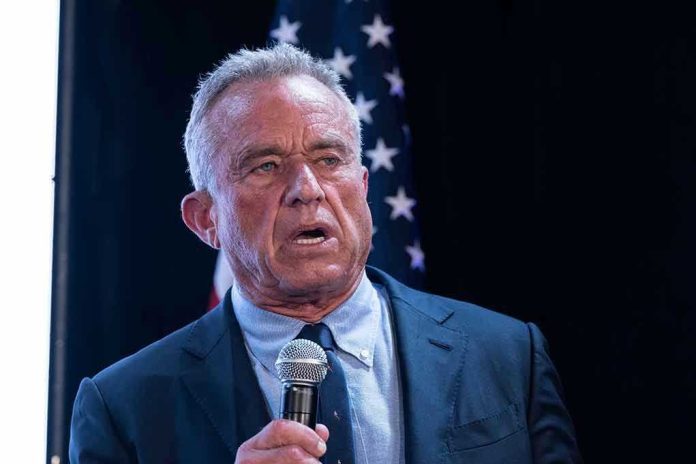
United States Health and Human Services Secretary Robert F. Kennedy Jr. announced a new federal partnership in Rochester, Minnesota that targets safety for autistic individuals. The event followed a closed roundtable with federal, local, and community partners, including law enforcement. Officials described the effort as focused on practical safety steps for families, with attention to tools used when a person wanders or goes missing. Local leaders framed the announcement as a way to connect federal support to on-the-ground needs.
Organizers linked the partnership to coordinated response and prevention. They emphasized how federal agencies can back proven community tactics, like rapid alerts, tracking support with caregiver consent, and first responder training. The focus on safety matches a core risk many families face: wandering and elopement. That risk puts children and adults in danger near traffic, bodies of water, or unfamiliar places. Federal help can boost local readiness so time is not lost when every minute matters.
Why Safety Measures Target Wandering And Elopement
Medical and community studies show the scope of the problem. A nationally cited study found forty-nine percent of caregivers reported their child with autism attempted to elope at least once after age four, and more than a quarter went missing long enough to cause concern. Those numbers help explain why safety programs focus on locating technology, caregiver planning, and fast law enforcement response. The pattern holds across multiple reviews, which report high rates of wandering among autistic children.
Families report that elopement often happens from familiar places, including the home, not just crowded public sites. That can make prevention hard and raise stress for caregivers. Safety steps can include door and window alarms, sensory-friendly identification items, and caregiver drills for quick search. When communities and police have shared protocols, searches start faster and end sooner. Federal support can fund training, help standardize playbooks, and share data on what works best.
Broader Federal Efforts On Autism Data And Research
The administration has paired local safety work with federal data initiatives. The National Institutes of Health and the Centers for Medicare and Medicaid Services announced a partnership to build a data platform that links claims, electronic records, and wearable data for autism research. The plan is to enable secure research access and improve understanding of autism patterns, services, and outcomes. Officials say this work can reveal gaps and guide smarter policy and funding over time.
🇺🇸 HHS Sec. RFK Jr. Announces MAHA Partnership for Autism Safety in Roch… https://t.co/PXhsBwfhZK via @YouTube
— Ceara (@ceara2378) August 21, 2026
Supporters argue that better data can refine safety strategies as well. If researchers can see when and where high-risk events cluster, communities can target training and tools to those hotspots. Policymakers can also measure which programs reduce missing incidents or shorten search time. Caregivers want clear results, not slogans. Federal platforms that protect privacy while delivering insight can help agencies spend less and save more lives. That approach aligns with limited, effective government that serves families on the ground.
What This Means For Families, Police, And Taxpayers
Families gain when first responders know autism behaviors, have de-escalation skills, and can access approved tools to locate a missing person. Police gain when clear protocols and federal support reduce search time and risk. Taxpayers gain when agencies use data to back only programs that deliver results. Studies show that wandering is common, costly, and dangerous. A safety partnership that links Washington support to local action tackles a real problem with practical means, not new bureaucracy.
Next steps will hinge on execution. Communities will watch how funds flow, how training scales, and how outcomes are tracked. Parents will look for faster alerts, better responder coordination, and clear points of contact. Law enforcement will want stable support for gear and training, not one-off grants. With strong leadership and accountability, this partnership can help keep vulnerable Americans safe while respecting families, police, and taxpayers alike.
Sources:
facebook.com, fox9.com, apnews.com, medpagetoday.com