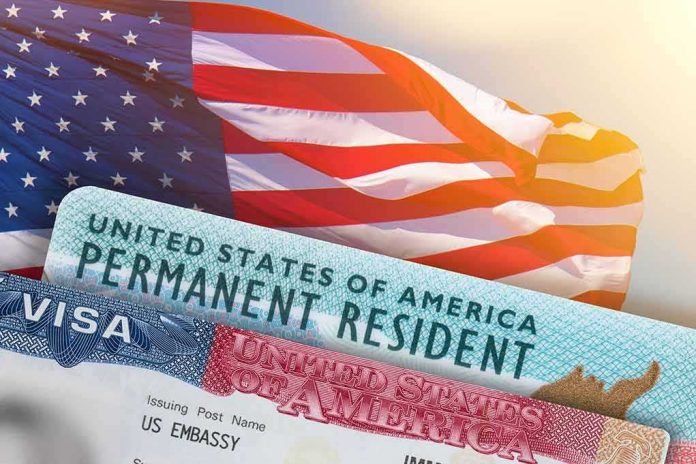
The State Department has revoked more than 175,000 visas, and it says most of those cases involved crimes, fraud, or security risks.
Quick Take
- The State Department says it revoked **more than 175,000 visas** under President Trump.
- Officials say the biggest drivers were law enforcement encounters, especially assault, driving under the influence, theft, and drug crimes.
- The department also says some revocations involved violence, fraud, abuse of the immigration system, and national security concerns.
- The move fits a broader pattern of aggressive visa screening, where the government has wide legal discretion.
What the State Department Said
The State Department said the revocations were part of continuous vetting meant to keep visa holders in line with the law. In its public statement, the department said visas were pulled from foreign nationals who violated visa terms, committed crimes, called for violence against Americans, defrauded Americans, abused the immigration system, or endangered national security. Reuters earlier reported a similar pattern when the total had passed 100,000, with officials citing overstays, driving under the influence, assault, and theft.
The latest total is larger than the figure the department publicized in January, when officials said more than 100,000 visas had already been revoked since Trump returned to office. The new statement does not break down every case, but it says the majority came from law enforcement encounters tied to criminal activity. That makes the headline number clear, but not the details of each case.
How the Revocation Power Works
Visa revocation is not unusual in law. State Department guidance says officers may revoke visas for several reasons, including ineligibility, removal of the visa, and certain criminal issues, and federal regulations say revocation can happen at the Secretary of State’s discretion. The Congressional Research Service has also said the executive branch has wide latitude in this area, which helps explain why the department can move quickly and often gives the public only broad totals.
That broad power is why this story matters beyond immigration paperwork. Supporters see a basic public-safety screen that removes people who broke the rules or pose a threat. Critics on both the left and the right worry that the same system can be opaque and too easy to use as a blunt tool, because the public rarely sees the underlying case files. The State Department’s own rules show why both views persist.
What the Broader Pattern Shows
The new total fits a much wider enforcement push during Trump’s second term. Earlier reporting showed the administration pairing revocations with tighter visa screening, including student and worker cases, and with other immigration restrictions. The department’s own phrasing also shows a shift from simple processing toward continuous monitoring, where a visa can be revoked after later law enforcement or security concerns appear.
🚨 JUST IN: The State Department says it has revoked 175,000 VISAS since the Trump administration began!
The administration says visa revocations have targeted individuals involved in crimes, fraud, or other conduct that made them ineligible to remain in the U.S.
🇺🇸 Enforce the…
— Stephen Gardner (@StephenGardnerX) August 10, 2026
For many Americans, the number will read as proof that the government is finally acting more forcefully. For others, it will raise the same old question about how much power Washington should have when it can cancel a person’s entry rights with little public detail. Both reactions point to a deeper truth: immigration enforcement now sits at the center of the fight over security, trust, and government accountability.
Sources:
townhall.com, state.gov, visahq.com, straitstimes.com, travel.state.gov, everycrsreport.com, fam.state.gov, instagram.com, nafsa.org, uscis.gov