One hundred twenty undocumented commercial truck drivers were arrested in Oklahoma in just three days—raising urgent questions about how far enforcement can reach, who is targeted, and what ripple effects will hit the state and industry next.
Story Snapshot
- Oklahoma Highway Patrol and ICE conducted a coordinated enforcement sweep on commercial trucking corridors
- 120–125 undocumented immigrants were arrested and detained within three days
- The operation targeted the critical infrastructure of interstate transportation, not general traffic
- Short- and long-term consequences for trucking, immigrant communities, and state-federal cooperation are already unfolding
Oklahoma’s Interstate Crackdown: A Numbers-Driven Power Play
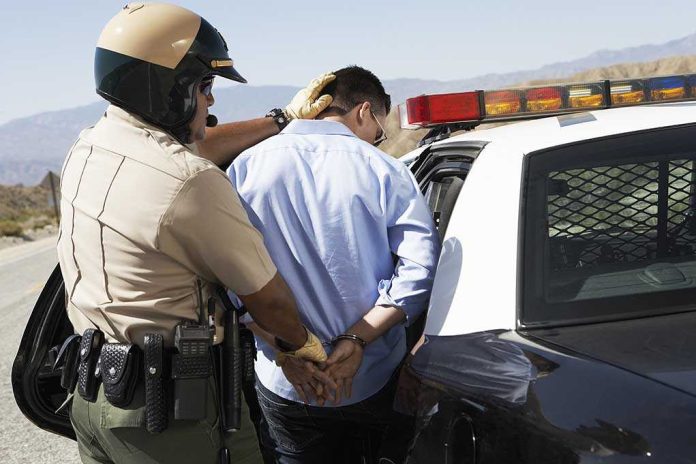
Oklahoma Highway Patrol (OHP) and U.S. Immigration and Customs Enforcement (ICE) launched Operation Guardian. The target was clear: commercial truck drivers traveling western Oklahoma’s interstates. In seventy-two hours, the joint task force detained approximately 120 to 125 undocumented immigrants—a volume rarely seen in Oklahoma sweeps. OHP led the charge on the highways, while ICE handled detentions and processing. By October 1, local media captured the magnitude and speed of the operation, sparking a wave of commentary from officials, advocates, and industry observers.
90 drivers arrested. Trucks impounded. Oklahoma warns more ICE raids are coming. https://t.co/v3NCArUxPu
— Overdrive (@OverdriveUpdate) October 3, 2025
The scale of the arrests set a new precedent, with the operation’s focus on commercial trucking corridors—critical arteries for goods and labor—rather than routine traffic stops. This deliberate targeting signaled a shift: state and federal agencies can and will disrupt key infrastructure sectors when enforcement priorities align. Trucking companies, local economies, and advocacy groups felt the shockwaves almost immediately. The message spread quickly through immigrant communities, stoking anxiety and prompting urgent calls for legal aid and due process protections.
How State and Federal Forces Collide—and Cooperate
Oklahoma’s history of collaboration with ICE dates to the late 2000s, when state legislatures empowered law enforcement to assist federal immigration authorities. Operation Guardian built on this foundation, leveraging both OHP’s jurisdiction and ICE’s federal mandate. The sweep’s logistics required tight coordination: troopers identified and stopped vehicles, ICE agents conducted rapid status checks, and detainees were transferred for federal processing. The Oklahoma Department of Public Safety and the governor’s office oversaw the deployment, balancing political pressures from both enforcement advocates and immigrant support groups.
Power dynamics played out in real time. OHP maintained authority on the ground, but ICE ultimately controlled the fate of those arrested. Local officials faced scrutiny for the operation’s legality, scale, and impact on public safety. Advocacy organizations monitored for civil rights violations, seeking to ensure that the operation’s rapid arrests did not bypass due process. The interplay between state and federal actors highlighted a growing trend: immigration enforcement increasingly relies on strategic, sector-specific sweeps rather than broad-brush approaches.
Aftershocks: Trucking, Communities, and the Rule of Law
The immediate aftermath of Operation Guardian brought disruption to Oklahoma’s trucking industry. Labor shortages loomed as detained drivers left companies scrambling to reroute shipments and cover shifts. Commercial carriers reported delays and rising costs, passing the burden onto local economies that depend on steady transport of goods. For immigrant communities, the sweep deepened mistrust of law enforcement and heightened fears of future raids. Legal proceedings began for those in ICE custody, with advocacy groups mobilizing to challenge detention conditions and arrest procedures.
Long-term, the operation may set a template for similar sweeps in other states—particularly those with heavy commercial transportation traffic. Legal scholars warn about the risks of targeting a specific labor sector, arguing that such moves can exacerbate workforce shortages in industries already struggling to recruit and retain talent. Supporters of the operation point to public safety and the rule of law, citing the need to secure critical infrastructure against undocumented operators. Critics contend that these sweeps risk overreach, erode civil liberties, and disproportionately impact the most vulnerable populations.
Sources:
KOSU, “Oklahoma troopers arrest more than 100 people in 3-day immigration blitz”
The Oklahoman, “125 arrested by OHP, ICE crackdown on commercial vehicles”