Donald Trump’s recent rhetoric is not just another political speech—it’s a stark warning that challenges the very fabric of U.S. military neutrality.
Story Highlights
- Trump’s speech at the Navy’s anniversary event labels Democrats as adversaries and suggests military vigilance against domestic threats.
- The comments deviate from the U.S. military’s tradition of nonpartisanship, raising concerns about potential politicization.
- Trump’s rhetoric includes dehumanizing language, intensifying the divide between political factions.
- Military leaders remain cautious, maintaining nonpartisanship amidst escalating political tensions.
Trump’s Speech and Its Implications
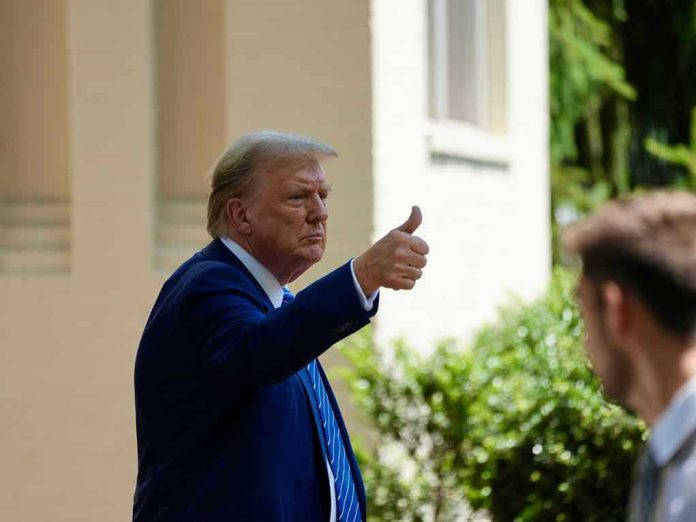
During a recent speech at the Norfolk Naval Base, Donald Trump called on the military to view Democrats as domestic threats. This rhetoric, delivered at the Navy’s 250th anniversary, marks a significant shift from the traditional nonpartisan stance of the U.S. military. By framing Democrats as a “gnat” and “the enemy within,” Trump has potentially jeopardized the longstanding separation between political discourse and military operations.
Trump’s remarks were not isolated incidents. In the week leading up to this event, he addressed top military officials, insisting that the U.S. faces an “invasion from within.” This language underscores a pattern of escalating rhetoric that paints political opponents as existential threats. Such statements could have profound implications for civil-military relations, challenging the military’s commitment to political neutrality and civilian oversight.
Historical Context and Potential Consequences
The U.S. military has always emphasized political neutrality, governed by norms like the Posse Comitatus Act, which restricts military involvement in domestic law enforcement. Trump’s presidency, however, has seen frequent clashes with Democratic leaders, often accompanied by inflammatory language. His latest speeches amplify this trend, threatening to erode democratic norms and civil-military relations. If the military were to act on such rhetoric, it would set a dangerous precedent, blurring the lines between political and military spheres.
While the military leadership has not acted on Trump’s incendiary remarks, their silence suggests discomfort. The tradition of nonpartisanship remains a cornerstone of military ethos, and any deviation could risk public trust and morale. Moreover, the potential for federal intervention in Democratic-run cities, as Trump suggests, raises concerns about undermining local governance and autonomy.
Reactions and Broader Implications
Military and defense experts warn against the politicization of the armed forces, emphasizing the critical importance of maintaining nonpartisanship for national security. Past incidents, like the 2020 Lafayette Square event, drew criticism from military leaders for involving the armed forces in political displays. Trump’s current rhetoric echoes those concerns, posing risks to democratic stability and public trust in military institutions.
In the broader context, Trump’s speeches reflect the growing political polarization in the U.S. Conservative commentators may support his stance on crime in Democratic cities, but mainstream analysts argue that such rhetoric is unprecedented and dangerous. The military’s hesitation to engage with Trump’s suggestions highlights the tension between maintaining traditional norms and addressing contemporary political challenges.