A measurement you’ve trusted your entire adult life to gauge your health may have zero ability to predict whether you’ll live or die.
Story Snapshot
- University of Florida study tracking 4,252 adults over 15 years found BMI shows no statistically significant link to mortality risk from any cause
- Body fat measurement via bioelectrical impedance predicted 78% higher all-cause mortality and 3.5 times higher heart disease death rates
- New obesity criteria combining waist measurements with BMI reclassify up to 70% of U.S. adults as obese, up from 40% under BMI alone
- One in four Americans has normal BMI but dangerous abdominal fat accumulation, putting them at equal risk to those classified as obese
The Metric That Can’t Tell Muscle From Flab
Body Mass Index originated in the 1830s when Belgian statistician Adolphe Quetelet wanted to describe the “average man” for population studies, not predict individual health outcomes. Insurance companies later co-opted his formula, and by the late 20th century, the World Health Organization adopted it as the global standard for obesity surveillance. The calculation divides your weight in kilograms by your height in meters squared, spitting out categories: underweight, normal, overweight, or obese. The formula makes no adjustment for gender, muscle mass, or where fat accumulates on your body.
This crude approach creates absurd real-world outcomes. A bodybuilder with 8% body fat and sculpted musculature gets labeled obese because muscle weighs more than fat. Meanwhile, someone with a “normal” BMI who carries dangerous visceral fat around their organs receives a clean bill of health. Dr. Frank Orlando, medical director at University of Florida Health, puts it bluntly: BMI isn’t accurate like vital signs such as blood pressure or heart rate. The measurement treats a 200-pound marathoner the same as a 200-pound couch potato.
Fifteen Years of Data Destroy BMI’s Credibility
The University of Florida Health study published in June 2025 in the Annals of Family Medicine examined 4,252 U.S. adults through National Health and Nutrition Examination Survey data linked to the National Death Index. Researchers controlled for age, race, income, and other variables across 15 years of follow-up. The conclusion shattered conventional medical wisdom: BMI demonstrated zero statistically significant association with death from any cause, including heart disease. The number your doctor has been recording at every checkup predicted nothing about your longevity.
The same study tested bioelectrical impedance analysis, which sends a harmless electrical current through your body to measure actual fat versus lean tissue based on electrical resistance. BIA identified people with high body fat who faced 78% higher risk of dying from any cause and 3.5 times higher risk of heart disease death. Unlike DEXA scans, the gold standard for body composition that requires expensive equipment and trained technicians, BIA devices cost little and work in any clinic. Lead researcher Arch Mainous noted BIA’s practicality makes it viable for routine office use where DEXA remains inaccessible.
The New Obesity Math That Changes Everything
The Lancet Diabetes and Endocrinology Commission proposed updated obesity criteria in 2025 that add waist circumference, waist-to-height ratio, and waist-to-hip ratio to BMI calculations. Mass General Brigham researchers applied these criteria to over 300,000 Americans in the All of Us database. The results stunned the medical establishment: 68.6% of U.S. adults qualified as obese under the new system versus 42.9% using BMI alone. Among adults over 70, the rate hit 80%. Asian populations saw particularly dramatic reclassification due to their tendency to accumulate dangerous visceral fat at lower body weights.
The most alarming finding involved the 25% of Americans with “anthropometric-only obesity,” people with normal BMI but elevated waist measurements. This group faced diabetes and cardiovascular risks matching those of traditionally obese individuals. Dr. Steven Grinspoon, chief of the Metabolism Unit at Mass General Brigham, emphasized that BMI fails to account for fat distribution, the key factor determining health outcomes. Where you carry fat matters infinitely more than how much you weigh. A beer gut poses far greater danger than thick thighs, yet BMI treats them identically.
When More Diagnoses Mean More Problems
Reclassifying 70% of American adults as obese carries profound implications beyond semantics. Short-term, millions of people previously considered healthy will receive obesity diagnoses, spurring interventions from dietary counseling to pharmaceutical treatments. The pharmaceutical industry stands to profit enormously as the addressable market for obesity drugs expands by tens of millions of patients overnight. Insurers face pressure to cover treatments for newly diagnosed populations, while healthcare systems already straining under demand must absorb millions more patients requiring weight-management services.
Long-term projections paint a grimmer picture. Studies predict 126 million American adults will be obese by 2035 using BMI criteria alone. New metrics suggest even higher numbers. Globally, high BMI contributed to 3.7 million deaths in 2021 from cardiovascular disease, diabetes, and other conditions. Better risk prediction through BIA and waist measurements could save lives by identifying at-risk individuals BMI misses, but the wholesale reclassification risks overmedicalization. People who exercise regularly, eat well, and feel healthy may find themselves labeled obese and pushed toward unnecessary interventions based on waist measurements that lack the 15-year validation the UF study provided for BIA.
What Doctors Now Recommend You Actually Measure
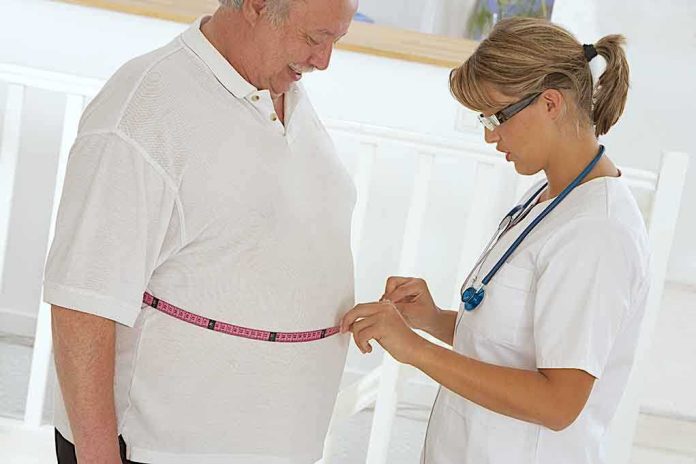
The evidence points toward a practical path forward that abandons BMI as a primary health metric. BIA devices, already available in many medical offices and even high-end bathroom scales, provide direct body fat measurement at minimal cost. Dr. Orlando specifically advocates for BIA to address cases like bodybuilders whose muscle mass skews BMI readings. For those without access to BIA, waist circumference offers a simple home measurement that captures abdominal fat accumulation BMI ignores. Waist-to-height ratio provides another accessible option: your waist measurement should be less than half your height for optimal health.
The medical establishment moves slowly, however. WHO and CDC continue using BMI for population surveillance despite its documented failures at the individual level. Clinical guidelines take years to change, meaning your doctor will likely continue recording BMI at checkups even as evidence mounts against its usefulness. You can take control by requesting body composition analysis or simply measuring your waist circumference at home. For Americans worried about their health based on BMI alone, the message is clear: that number tells you almost nothing about your actual disease risk or longevity. What matters is the composition and distribution of tissue on your frame, not your position on a chart invented in the 1830s for entirely different purposes.
Sources:
UF Health Study Shows BMI’s Weakness as a Predictor of Future Health
Nearly Half of American Adults Will Be Obese by 2035, Study Warns
Science Daily: New Obesity Criteria Reclassify American Adults
Mass General Advances: Updated Obesity Criteria Impact
Under New Criteria, 3 in 4 U.S. Adults Considered Obese
WHO Fact Sheet: Obesity and Overweight
ABC News: Obesity Rise to Affect 126 Million Americans