A viral claim that “judges issued over 7,000 rulings” against ICE collapses under scrutiny—but the verified detention numbers still raise serious due-process questions Americans shouldn’t ignore.
Quick Take
- No credible evidence supports the headline claim of “over 7,000” recent judicial rulings finding ICE detained migrants without proving they are a threat.
- Verified datasets and trackers report roughly 70%–73% of people in ICE detention lack criminal convictions, with major disputes over what counts as “charges.”
- ICE detention capacity expanded from roughly 40,000 in early 2025 to about 70,000 by early 2026, reflecting the administration’s push for faster removals.
- Advocates document cases where families struggle to locate detainees due to transfers and locator-system failures, raising transparency and accountability concerns.
The “7,000 rulings” narrative doesn’t match the documented record
Researchers looking for a specific, aggregated set of “over 7,000 rulings” in recent months have not identified a matching court action, docket trend, or credible reporting that substantiates the figure. The more documented story is not a wave of mass judicial findings, but a clash over detention practices and how ICE selects targets. The lack of verification matters because big numbers can inflame public debate without clarifying what is actually happening in court.
That said, the absence of proof for the “7,000” claim does not automatically vindicate every detention decision. The stronger, source-supported debate centers on whether immigration enforcement has leaned too heavily into volume-based arrests and detention while leaving the public with incomplete visibility into who is being held, why they were picked up, and how quickly they can challenge custody. Those are measurable questions tied to data, process, and constitutional expectations of transparency.
Detention surged toward 70,000 as enforcement scaled up
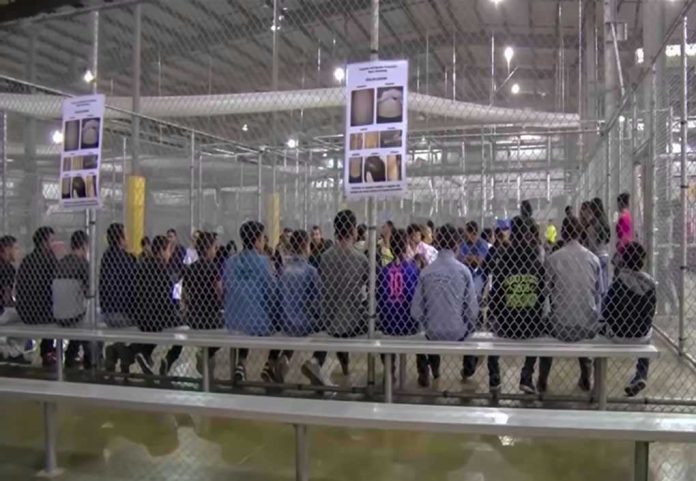
Tracking summarized by major policy and research organizations shows ICE detention expanding sharply after early 2025, moving from a daily population around 39,000–40,000 to roughly 70,000 by early 2026. That build-out aligns with the administration’s stated goal of increasing removal capacity and accelerating enforcement operations. The operational reality is simple: when detention grows that quickly, pressure rises on bed space, transport, case processing, and detainees’ ability to contact counsel and family.
Detention growth also concentrates in certain states. TRAC’s quick facts place large detainee populations in Texas in particular, with other major detention footprints in places such as Louisiana and California. The same tracking also notes a sizeable number of immigrants monitored through Alternatives to Detention (ATD) programs, which underscores that the system is not just “detain or release,” but a broader enforcement pipeline. The policy argument turns on when detention is necessary, and when monitoring is sufficient.
What the data says about convictions, charges, and “threat” standards
Multiple sources cited in the research converge on a politically explosive statistic: about 70%–73% of those in ICE detention reportedly have no criminal convictions. Cato’s reporting on leaked and FOIA-confirmed data describes a similar share for ICE “book-ins,” and TRAC’s detention snapshot reports 73.6% without convictions as of early February 2026. Those figures are not the same thing as “no wrongdoing,” but they do mean conviction-based public-safety narratives can be overstated.
DHS has disputed aspects of the critics’ framing, arguing that counting “charges” and pending cases changes the picture. That distinction matters for public understanding: “no conviction” is different from “no charges,” and “charges” are different from a proven criminal threat. The research summary also notes data suggesting a large share had no charges at all in the period discussed, which intensifies concerns about whether detention decisions are consistently tethered to individualized risk rather than broad enforcement volume.
Opacity, transfers, and locator failures fuel distrust—and deserve oversight
AFSC’s case-based reporting describes families needing repeated calls to locate detainees, with transfers and locator-tool failures contributing to periods when people are effectively hard to track. Even when detention is lawful, a system that makes people “untraceable” undermines confidence and invites abuse—because accountability depends on accurate, timely information. From a constitutional and conservative limited-government perspective, enforcement power is strongest when paired with transparent process, clear records, and meaningful access to review.
For Trump-supporting voters focused on sovereignty and rule of law, the practical takeaway is not to accept viral claims uncritically, even when they seem to confirm suspicions about activist judges or a broken system. The better approach is to demand verifiable numbers and insist on standards that protect Americans and respect due process: prioritize truly dangerous offenders, keep records reliable, and ensure courts can rapidly test detention when the government restricts liberty. The research here documents the scale and the disputes, but not the “7,000 rulings” punchline.
Sources:
New Data Prove DHS Lied About Cato Report on ICE
How ICE’s detention system makes people untraceable
Trump 2.0 Immigration: The First Year
Increase in ICE Detention Capacity Paves Way for Mass Deportations