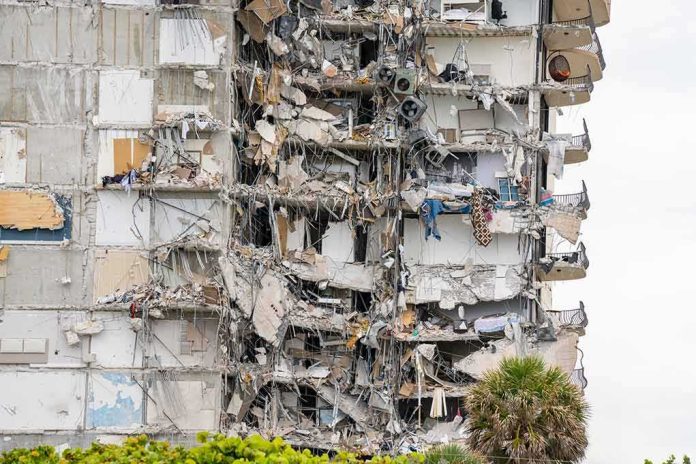
Hundreds died as towers pancaked in Venezuela, and experts say weak buildings—not just shaking—turned streets into mass graves.
Story Highlights
- Rescuers report concrete high-rises collapsed floor by floor after the double earthquakes [10].
- Experts warn decades of underinvestment and lax standards left millions at risk [1][4].
- United States aid and rescue teams arrived as Venezuelans dug with bare hands [13].
- Fatality figures vary widely, but evidence of structural failure is consistent across reports [2][9].
Double Earthquakes Expose Deadly Building Failures
Field teams described widespread collapse of reinforced concrete residential towers after Venezuela’s back-to-back quakes, a failure pattern known to kill fast when floors stack like pancakes [10]. A leading seismologist put it plainly: earthquakes do not kill people, weak buildings do. He blamed poor construction for turning heavy shaking into mass casualties [3]. Reporters on the ground said most people live in quake zones and many homes were not built to withstand major shaking, multiplying the danger for families [4].
International coverage tied the death toll to years of decay. A senior United Nations official said Venezuela was ill-prepared, with crumbling infrastructure after long underinvestment [1]. That breakdown shows in the rubble. United States media and emergency briefings cited government models warning of catastrophic losses, given the size and location of the quakes [2]. Those models flagged trouble because dense cities sat on soft soils where shaking hits harder, and where older buildings often lack seismic upgrades.
Why Towers Pancaked: Soft Soils, Old Concrete, Weak Oversight
Engineers warned for years that tall concrete buildings on soft ground could fail in a strong quake. A 2023 study cited by experts found such towers had a high chance of collapse under violent shaking if built to bare-minimum code and placed on soft soils [15]. Past Venezuelan school failures after smaller quakes showed the same flaws: low lateral strength, poor shear resistance, and brittle frames common in older designs [25]. Reporters and analysts now see those same weaknesses in today’s wreckage across La Guaira and Caracas [22].
Rescue professionals arriving from the United States saw the pattern up close: reinforced concrete residential structures failed in large numbers, a hallmark of weak columns, poor detailing, and soft-story ground levels [10]. This matches video and image reviews by outlets that verified multiple high-rises collapsed floor by floor. That collapse mode traps families between slabs, making survival windows short and recovery brutal. The technical picture is consistent: where standards were weak, the toll climbed fastest [29].
Competing Claims: Rare Doublet Versus Man-Made Risk
Scientists confirmed a rare double earthquake struck within seconds, releasing major energy near dense coastal cities. That explains strong shaking, but it does not explain why so many towers failed at once. Government voices leaned on the disaster’s rarity, yet offered no building code audits to show the fallen towers met seismic rules. By contrast, independent experts, field teams, and past studies point to substandard construction and thin enforcement as the decisive factors in deadly collapse [4].
Two boys rescued after days under the rubble in Venezuela – Moments of hope amidst the tragedy!
• Rescuers worked for six hours to pull two young boys alive from the rubble following the earthquakes.
• Dramatic video: The children, dehydrated but alive; cheering crowds.…
— klevinjo (@KlevinjoArchive) June 28, 2026
Fatality counts remain fluid across outlets. Some tallies show hundreds, while others cite well over a thousand. Exact numbers will change as searches continue. What has not changed is the structural story: many buildings were not ready. Citizens reported digging with neighbors while waiting for official help, which shows how fast state capacity was overwhelmed. United States urban search and rescue teams deployed to backstop those efforts, bringing dogs, shoring gear, and medical support [13].
What Matters Now: Accountability, Transparency, and Real Fixes
Families deserve proof, not spin. Authorities should release pre-quake inspection records, year-built data, and post-quake failure findings for collapsed towers. Independent engineers must be allowed full site access to separate what the quake did from what builders and regulators failed to do. Transparent audits will guide retrofits for surviving buildings and set new standards where old rules fell short. The lesson from Chile’s success is clear: strict codes and real enforcement save lives [28].
America can help without writing blank checks. Targeted aid should deliver rescue gear, field hospitals, and structural experts who train locals, then publish results. Taxpayers expect oversight and outcomes. This is not about politics; it is about protecting families from preventable loss. Strong buildings stand between a hard shake and a tragedy. When standards collapse, people do too. The fix is known: build right, enforce hard, and never hide the records [25].
Sources:
[1] Web – 189 buildings totally collapse following Venezuela earthquakes; death …
[2] Web – Venezuela earthquakes kill 920 people as families desperate for news
[3] Web – Venezuela earthquakes cause widespread damage, hundreds dead …
[4] YouTube – Venezuela earthquakes death toll rises to nearly 600 …
[9] Web – The death toll from Venezuela’s devastating twin earthquakes rose …
[10] Web – Venezuela earthquakes: More than 230 confirmed dead, thousands …
[13] Web – Venezuela Earthquake Disaster Highlights Systemic Failure
[15] Web – Venezuela double quake death toll climbs, and thousands feared trapped
[22] Web – [PDF] Reducing Seismic Risk of School Buildings in Venezuela – …
[25] Web – Why did so many buildings collapse in the Venezuela earthquake …
[28] Web – Pancake Buildings: Death Traps in the Venezuela Earthquake
[29] Web – A resident captured the moment a building collapsed in Carabobo …