When a sitting president says car companies “don’t want people to fix their car,” he is really talking about who owns your freedom and your wallet.
Story Snapshot
- Trump’s Oval Office clash with Ford and General Motors put Right to Repair on national stage.
- Car makers hide key repair data behind “trade secrets,” locking work to their dealerships.[21]
- A 2014 industry deal promised repair info sharing but has no teeth and is widely ignored.[21]
- At stake is a basic property right: if you own it, can you really control how it is fixed?[1]
Trump’s Oval Office moment turns a niche fight into kitchen table politics
Donald Trump did not wander into a sleepy policy meeting. He sat in the Oval Office and told the country that major automakers “don’t want people to fix their car,” then mocked them for it.[4] That single line ripped a long-running fight out of trade journals and dropped it in front of millions of working owners who rely on an affordable mechanic just to keep getting to work. This is not about hobby tinkering. This is about whether the guy who owns the car gets to control the car.
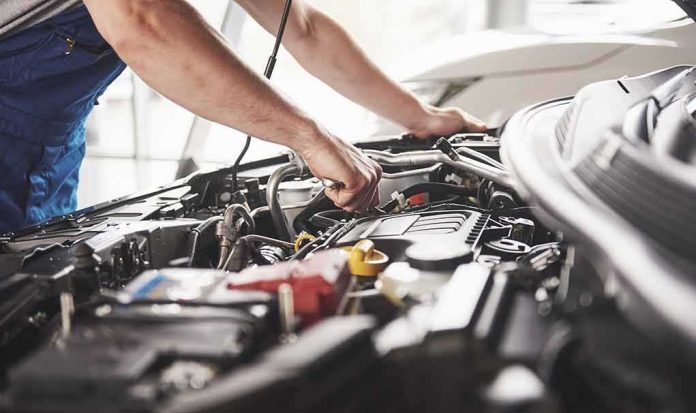
Right to Repair sounds technical, but the core idea is simple. If you own a product, you should be able to fix, modify, or upgrade it without begging the manufacturer for permission.[20] In cars, that means access to the same repair data and tools the dealership has, and the freedom to choose your own shop. Consumers and small garages see that as common sense. Corporations see it as a direct threat to a business model built on captive service and repeat bills.[1]
How automakers quietly boxed in your ability to fix what you own
This fight did not start in 2026. It goes back decades, but the modern phase kicked off when Massachusetts passed a landmark automotive Right to Repair law in 2012.[21] That law forced automakers to sell the same diagnostic and repair information to independent shops and owners that they gave their dealers. Faced with copycat bills in other states, industry groups signed a 2014 memorandum promising similar access nationwide.[21] On paper, it looked like a win. In practice, it was voluntary, non-binding, and had no enforcement teeth, which is exactly how big companies like it.[21]
As cars turned into rolling computers, automakers kept control in new ways. Important data now flows wirelessly from vehicles back to the company, instead of through a simple plug under the dash.[25] That telematics data can include trouble codes, advanced driver assistance information, and more. When independent shops cannot reach that data, they cannot fully diagnose or repair modern vehicles. Owners are then pushed back toward the dealer, even if a trusted local shop sits two miles away. The 2014 deal never really covered these new systems, and companies took full advantage.[21]
The “trade secret” shield and the safety talking points
Automakers lean on two big arguments: protecting trade secrets and protecting safety. The 2014 memorandum openly said manufacturers would not be forced to hand over trade secrets, a phrase broad enough to cover almost any software or encrypted code they want to hide.[21] That carve-out became a tunnel, not a loophole. Companies now claim key software solutions and secure access methods are proprietary. Without them, real-world repairs become harder, slower, or impossible unless they happen on company turf.
Safety claims sound reasonable at first. Executives warn that improper access to electronic systems or advanced driver assistance features could lead to bad repairs and accidents.[24] They say warranty work should stay with factory-trained techs using approved tools. But so far, they offer little hard data comparing crash or failure rates between dealer repairs and independent repairs.[23] Without that evidence, “safety” starts to look less like a shared concern and more like branding for a monopoly. For many conservatives, that clashes with both free market instincts and basic common sense.
Trump, conservatives, and the property rights angle
Trump’s remarks did not come out of nowhere. The Consumer Access to Repair Coalition, a pro-repair group, frames Right to Repair as an extension of the constitutional right to private property.[1] They quote Thomas Jefferson’s warning that republican government rests on the equal right of every citizen in his person and property and in their management.[1] If Ford or General Motors can effectively dictate who touches your car’s brain, even after you bought it, how much of that “management” is left in your hands?
In-town pool report #5
President Trump briefly took questions in the Oval Office after signing a presidential memo on “right to repair” secondary market auto parts. More info on this coming out shortly from White House.
POTUS discussed the housing bill, the SAVE America Act,…
— White House Press Pool Reports (@WHPressPool) June 29, 2026
For American conservatives, that framing hits home. The idea that a distant corporation can use software locks and legal tricks to control what happens in your own driveway feels wrong. It also means less competition, higher prices, and fewer small repair businesses in towns across the country.[25] The federal Right to Equitable and Professional Auto Industry Repair Act aims to fix this by guaranteeing access to diagnostic data and tools and giving the Federal Trade Commission real enforcement power.[21] But lobbyists have already pushed changes that weaken key parts, especially around telematics.[22]
Where things stand after the cameras leave the Oval Office
Trump’s public scolding of Ford and General Motors put pressure on automakers at a rare vulnerable moment.[4] Yet so far there is no released presidential memo that spells out binding steps for federal agencies, and regulators like the Environmental Protection Agency and the Federal Trade Commission remain quiet. Congress is still wrestling with repair bills that look strong at first glance but lose real bite once industry lawyers rewrite key sections.[22] Meanwhile, state laws grow in a patchwork while cars keep getting more complex.
The stakes are easy to miss until your “check engine” light comes on and your local shop shrugs because the data is locked away. Then Right to Repair stops being a slogan and becomes a bill you cannot avoid. Whether Trump’s Oval Office moment was a turning point or just a sound bite depends on what comes next: real enforcement, clear legal rights for owners, and limits on how far companies can go in turning “trade secrets” into control over your daily life.[21]
Sources:
[1] YouTube – LIVE: TRUMP SPEAKS FROM OVAL OFFICE
[4] YouTube – Trump Says Drivers Should Be Able to Fix Their Own Cars, So What …
[20] Web – Right to repair – Wikipedia
[21] Web – Right to repair | History, Controversies, & Facts | Britannica
[22] Web – A comprehensive primer on the automotive right to repair debate
[23] YouTube – Congress Tried To Pass Right To Repair. Automakers Got It Rewritten
[24] Web – Right to Repair Movement – Repair Act – Old World Industries
[25] Web – Congress Reintroduces Bipartisan Auto Right to Repair Legislation …