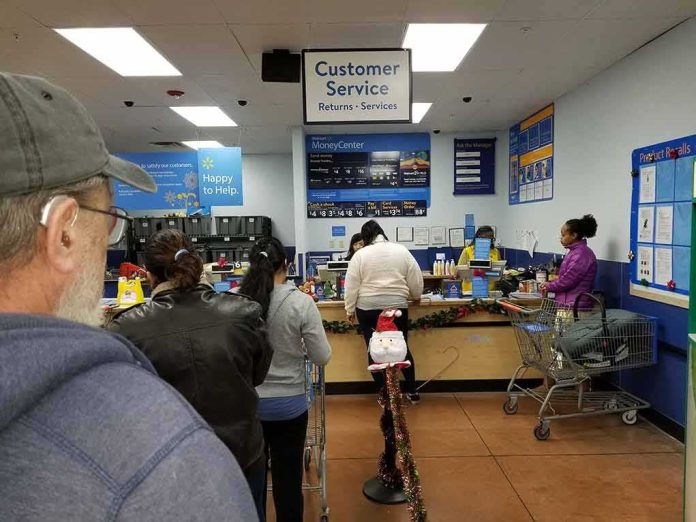
The fifteen minutes you spent on hold yesterday were not an accident of bad luck or a temporary staffing shortage — they were, in most cases, the predictable output of a system engineered around a cost formula, one where your patience is treated as a resource to be budgeted rather than a courtesy to be protected.
Key Points
- A Harris Poll conducted for AT&T found most Americans will tolerate only 15 minutes on hold, and nearly one in five expect help within five — expectations that modern call centers routinely fail to meet.
- Sixty percent of surveyed consumers reported getting stuck in an “infinite transfer loop,” while 58 percent described hitting an “AI wall” — an automated system that never routes them to a human.
- Queueing science shows why the pain feels disproportionate to the cause: shaving staffing by even one person per shift can multiply long waits several times over.
- Companies face a genuine, well-documented incentive to under-staff slightly and accept a predictable rate of abandoned calls rather than pay for a cushion.
- AI and automation are marketed as the fix, but the honest record shows mixed results — real efficiency gains for some operations, a frustrating dead end for customers in others.
What the complaint actually sounds like
Strip away the corporate language and the modern service call has a familiar shape: an automated voice announces an estimated wait, apologizes, updates your position in the queue, apologizes again, and then — often — ends without ever producing a human being. That is not a caricature. It is the literal structure recorded in consumer call transcripts showing a caller’s queue position moving from seventh to third over roughly 25 minutes while a system repeats “our representative will be with you shortly” and then never delivers one. USA TODAY’s October 2026 investigation into the phenomenon found this experience is now common enough to have a name among frustrated customers: the “AI wall,” a loop that offers no path to a live agent at all.
The scale of the frustration is measurable, not just anecdotal. The Harris Poll data shared with USA TODAY found three in four Americans are willing to wait no more than 15 minutes before giving up or growing angry, and close to a fifth expect resolution inside five minutes. Measured against that bar, the “infinite transfer loop” reported by 60 percent of respondents and the “AI wall” reported by 58 percent represent a direct mismatch between what companies deliver and what customers consider reasonable. That gap — not any single bad call — is the real story.
The math behind why a small staffing cut feels like a catastrophe
Call-center veteran Brad Cleveland has spent decades explaining why customer wait times behave so strangely: they do not degrade in a straight line as staffing drops, they explode. In a modeled scenario of 100 customers arriving over 30 minutes, each needing five minutes of service, 20 staff members keep only five customers waiting more than three minutes — the point at which, Cleveland notes, impatience and irritation set in, much like waiting at a stoplight. Cut staffing to 19, just one person, and that number nearly triples to 12. Drop to 17, and 74 of the 100 customers wait past three minutes, with the longest wait exceeding half an hour. This is queueing theory, not opinion: utilization near capacity behaves nonlinearly, so a tiny reduction in headcount produces an outsized spike in delay. Cleveland calls it “the power of one” — the outsized difference a single employee makes when a system runs close to its limit.
This dynamic matters because it explains a pattern companies rarely state outright: staffing just below the level needed to clear every call isn’t negligence, it’s a deliberate trade-off between labor cost and a tolerable rate of abandoned calls. Workforce-management software is built precisely to find that line. None of the available evidence proves that any specific company has adopted this strategy to shortchange customers — the research package contains no internal staffing records, contracts, or named decision-makers confirming intent at a particular firm. But the underlying mechanics are well established in operations literature, and they fit the pattern callers are describing.
Where AI genuinely helps — and where it becomes the wall
The customer-service industry’s own data complicates any simple “automation ruined everything” narrative. Industry surveys cited alongside the USA TODAY findings report that many service organizations have held staffing levels steady while handling higher call volumes, crediting AI-assisted agents with resolving more issues per hour. Vendor and research reports go further, claiming reductions in handling time and improvements in resolution rates when AI is paired with human oversight. Those numbers describe a real category of success: AI that triages, summarizes, and routes so a human agent moves faster once engaged.
The failure mode customers describe is different in kind, not degree. It is not that AI makes human agents slower — it’s that AI increasingly stands between the customer and any human agent at all. A system can be efficient at the back end and still function, from the caller’s seat, as a wall with no door. Whether that outcome is intentional design or an unintended side effect of cost-driven automation isn’t resolved by the available evidence; what’s clear is that satisfaction scores and operational efficiency metrics are measuring two different things, and companies reporting the latter as improving tells us little about the former.
🚨 X EXCLUSIVE | BIG BUSINESS
An eBay seller reports an 82% sales collapse. Neurodivergent and trapped in a customer-service doom loop.
Who's accountable when automated decisions affect livelihoods?
Our investigation reveals troubling questions. https://t.co/4c28yCQPNp
— Dean Pitchforth (@nicknackpaddy71) October 15, 2026
Why this isn’t going away on its own
None of the forces producing long holds are temporary. Call volumes rise with product complexity, not fall; outsourced contractors paid per resolved ticket have every incentive to close conversations quickly rather than thoroughly; and workforce-management software, however sophisticated, is still optimizing for cost against a tolerance threshold rather than against customer goodwill. The honest caveat is this: the available evidence does not isolate how much of today’s frustration traces to deliberate understaffing versus AI deployment versus simple demand growth — those causes are almost certainly tangled together, and no company has opened its internal staffing and routing data to settle the question. What the evidence does establish, repeatedly and from multiple angles, is that the gap between what customers expect and what they receive has become structural rather than occasional — which means the burden of proof has shifted to any company claiming its hold times are an accident.
Sources:
youtube.com, usatoday.com, huggingface.co